Northrop Grumman Supports Centenary Programme to Transform Royal Air Force Museum, London

RAF Museum London

Northrop Grumman Corporation (NYSE: NOC) has entered into a sponsor partnership with the Royal Air Force (RAF) Museum to support the museum’s RAF Centenary Programme that will transform its London site as part of the Royal Air Force’s centenary celebrations in 2018.

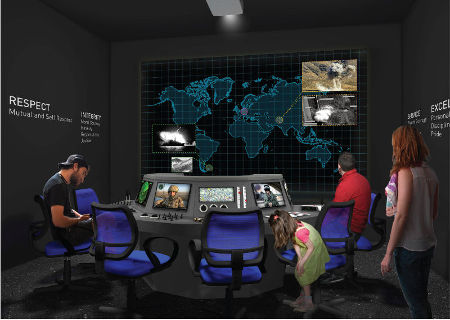
The museum’s plans include a series of new permanent exhibitions which will open in the summer of 2018. Northrop Grumman will be a themed sponsor in the new Now & the Future exhibition area with a particular emphasis on air intelligence, surveillance and reconnaissance, and unmanned aircraft systems. The Now & the Future exhibit area will enable visitors to understand the story of the RAF from its earliest years in the First World War to its global role today.

“The RAF Museum plays an important role in ensuring the RAF’s story endures and inspires future generations,” said Andrew Tyler, chief executive, Northrop Grumman Europe. “Through our partnership with the museum we have an exciting opportunity to play our part in educating and informing visitors about the technology innovations of today and the future, and encourage a deeper interest in aeronautics among all age groups.”

The multi-million pound development programme will transform the London site through investment in new exhibitions, improved education and volunteering opportunities, and landscaping that will emphasise the site’s importance as a heritage airfield. It will improve the visitor experience, extend the museum’s reach to new audiences and create a lasting legacy to mark the Centenary. The museum has received substantial funding from Heritage Lottery Fund grants as well as public and corporate benefactors. It needs just under £7m to reach its target.

“The Trustees of the RAF Museum would like to take this opportunity to thank Northrop Grumman for their generous support. The museum is committed to sharing the story of the women and men of the Royal Air Force and we are looking forward to redeveloping the site to make it more engaging and accessible for future generations,” said Karen Whitting, director of public programmes, RAF Museum.

The RAF Museum was established in 1968 as a legacy of the RAF’s 50th anniversary. It opened its London site at Hendon in 1972. The museum is a National Museum and a registered charity and welcomes approximately 700,000 visitors a year.

Northrop Grumman is a leading global security company providing innovative systems, products and solutions in autonomous systems, cyber, C4ISR, strike, and logistics and modernization to customers worldwide. Please visit www.northropgrumman.com for more information.

www.rafmuseum.org

Newark Restoration Updates

Newark Air Museum Monospar

The winter restoration work at Newark Air Museum is refocusing onto two of the long-term in-depth restoration projects at the museum’s site in eastern Nottinghamshire.

In the on-site workshop work continues on the North American Harvard II B, 42-12417 (Dutch AF B-163 and RCAF FE930). At the present time work is focused on the rear fuselage and cockpit areas of the airframe; with some additional panel repair work being undertaken on one of the wings.

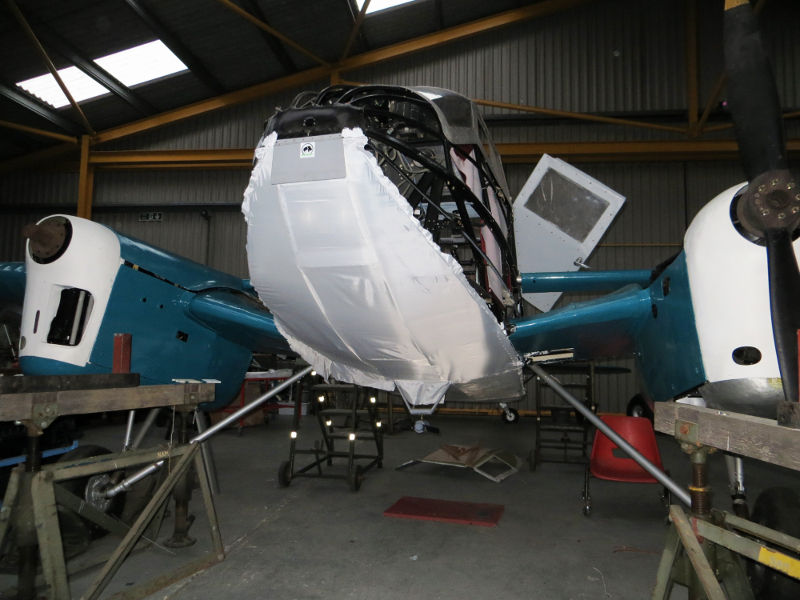
Elsewhere on site, work is also ongoing on the General Aircraft Monospar VH-UTH. Now that much of the internal work on the cockpit and fuselage areas has been completed the aircraft has been taken off the trestles. This has also allowed work to be started on the application of the fabric to the underside of the fuselage.

www.newarkairmuseum.org

Take a flight with Santa!

Sleigh Ride at RAF Museum

For the Christmas period, up to and including 31st December, our 4D theatres will be taking on a Christmas theme.

Dates: Saturday 3rd Dec – Saturday 31st December
Tickets: £5 (£16 discount for families)

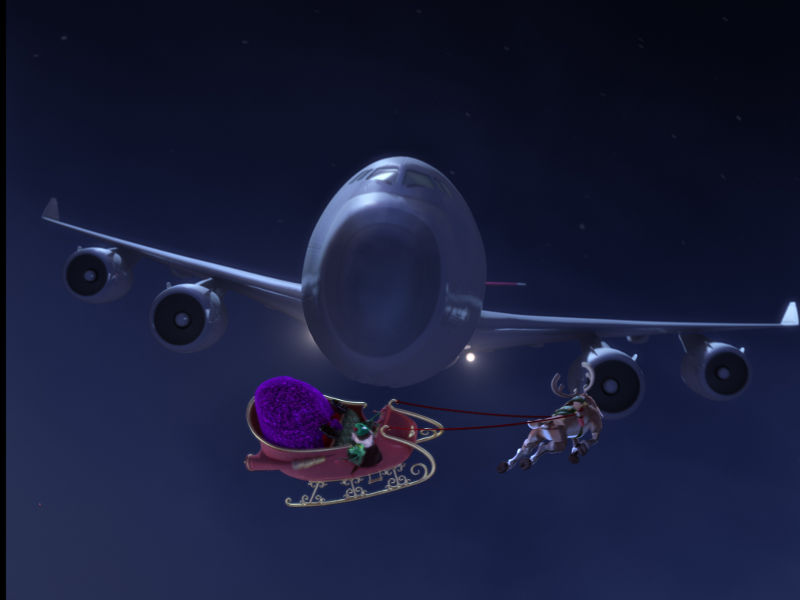
The 4D “Sleigh Ride” experience takes you to Christmas Eve where Santa is making last minute preparations for the big night.

But when disaster hits, it only leaves a stuffy reindeer and a brave but clumsy elf to take the reins. Will this unlikely duo be able to save Christmas by putting their differences aside?

Find out by taking a making a magical journey across a starry Christmas-tide sky.

Available from 3 December at the Royal Air Force Museum London until December 31.

Cost £5 for a single ticket : £16 for a family ticket.

Sleigh Ride 4D is suitable for all.

Tickets may be purchased at the Museum shop, Main Entrance or 4D Theatre itself.

Check out the trailer: https://www.youtube.com/watch?v=FCTAQznWFy4

www.rafmuseumshop.com

Air Show Tickets Make Ideal Christmas Presents

Pitts Muscle Biplane

With Christmas fast approaching, tickets to the RAF Cosford Air Show are now on sale and they make great presents for all your loved ones. With accompanied under-16s entering for free and early bird tickets costing only £22.00, the Air Show is a great value for money day-out for the entire family.

As well as an action packed six-hour flying display there are also a huge variety of things to do and see on the ground at the RAF Cosford Air Show to excite all ages. With six hangars jammed with interactive exhibitions, the 1960s Vintage Village, plenty of military ground displays, vintage vehicles, funfair and over 1km of trade stalls – you might struggle to see it all in one day!

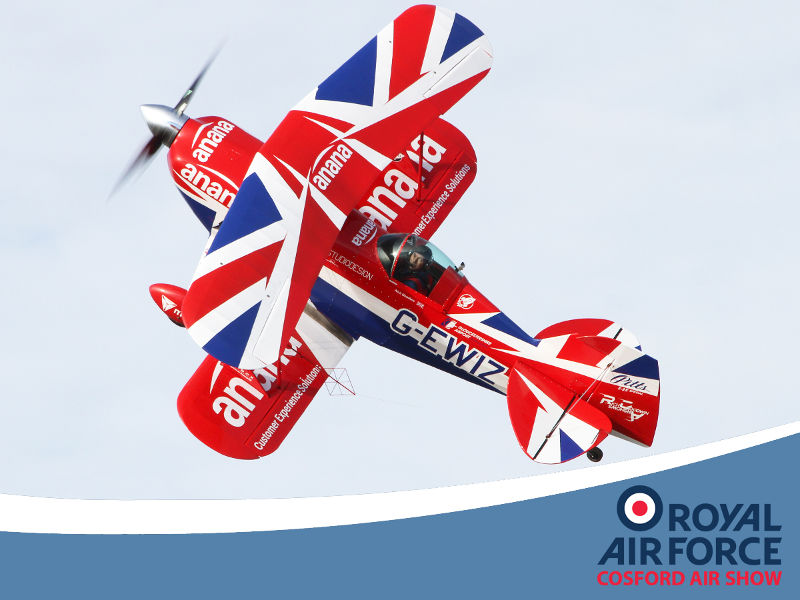
Another reason to buy your tickets soon is that today the Air Show Organisers announced another aircraft which will wow the crowds on Sunday 11th June 2017; dare-devil pilot Rich Goodwin will be flying his unique Muscle Biplane at the Air Show. Rich’s aircraft is based on the world-famous Pitts Special but a special modification programme has given this aircraft enhanced capabilities which means that Rich’s Muscle Biplane can hover like a Harrier, fly the amazing Tower of Power and master high-alpha knife-edge flypasts!

The Muscle Biplane wears a spectacular colour scheme based on the Union Jack; fitting for a man who served in the Royal Air Force as a Tornado GR1 ground attack pilot and flew in combat. Rich said; “As an ex-RAF pilot I’m honoured to be invited back to display the Muscle Biplane and demonstrate my passion for aviation in front of a capacity crowd. I continue to develop the aircraft and at RAF Cosford I will be flying a new enhanced elevator and wing. I also look forward to updating the crowds on the development of the new Anana Jet Pitts which I hope will be ready to display in 2018.”

Those who purchase their Air Show tickets soon will be able to take advantage of the Early-Bird ticket offer, with adult tickets priced at only £22.00. Accompanied under-16s enter the show for free, making the RAF Cosford Air Show a great value for money day-out!

Early-Bird tickets for the RAF Cosford Air Show 2017 are on sale now, priced at £22.00 and with free entry for accompanied Under-16s. Tickets are available online from www.cosfordairshow.co.uk

The National Museum of the Royal Navy secures medals and log books of Captain Eric ‘Winkle’ Brown for the nation

Eric

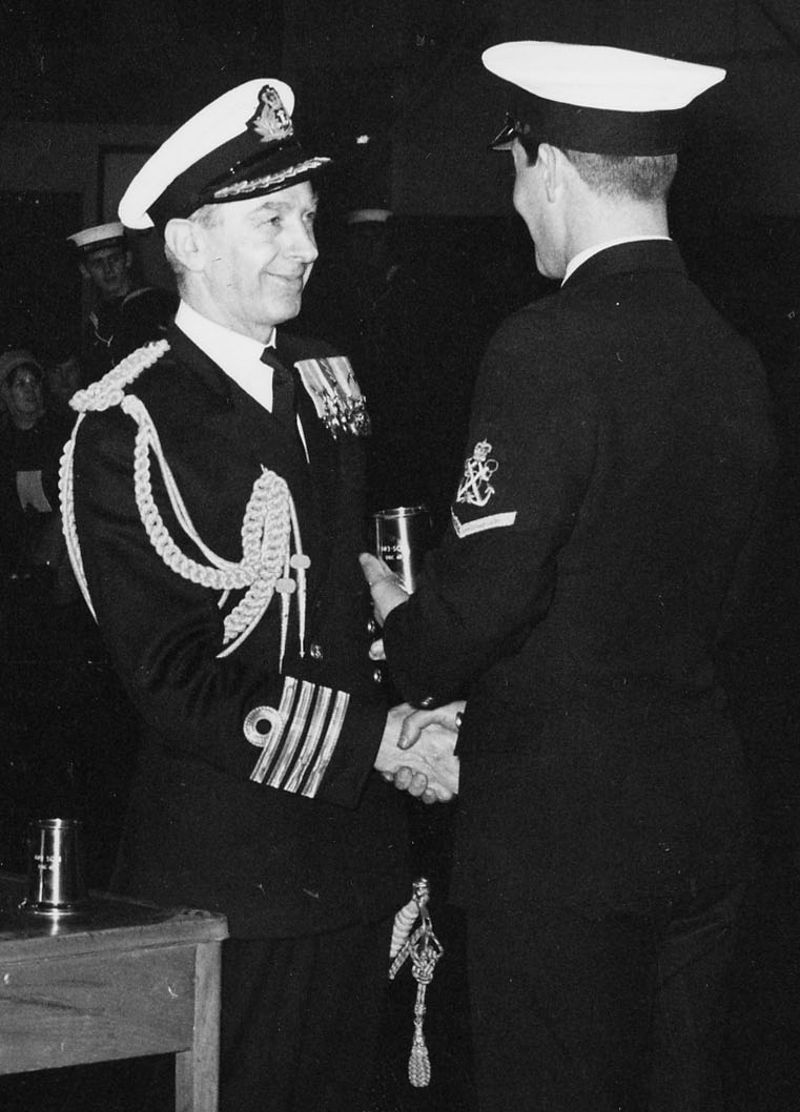
We are delighted to announce that The National Museum of the Royal Navy has been able to secure the medals and log books of Captain Eric “Winkle” Brown following the intervention of an incredibly generous donor. It is fair to say that Captain Brown was by many measures the Fleet Air Arm’s most significant pilot of the post-war period and we are thrilled and honoured to be able to class this collection as one of our own.

We can now preserve the record of innovation which is contained within Captain Brown’s log books which includes previously untapped information and display them for the world to see. The Fleet Air Arm Museum is the spiritual home of the service and a right and fitting place for the medals and logbook to be displayed at.

Captain Brown holds a world record for the most aircraft carrier take-offs – 2,407 and the most landings – 2,271, and on 3rd December 1945 became the first ever pilot to take off and land a jet aircraft – the Sea Vampire – on a carrier. He went on to make many contributions of wider significance to aviation history , using his Fleet Air Arm experience to fly a world record breaking 486 types of aircraft, and to test aircraft for other services and for allies.

The Fleet Air Arm Museum was fortunate to work with Captain Brown in the last decades of his life and have been able to mark and honour his contribution in a number of ways.

The Museum’s collections include the very Vampire Mk1 in which he completed his jet-powered flight, as well as the goggles and gloves which he wore during his tests; in 2015 Captain Brown himself unveiled a new bronze bust commissioned by the Museum which stands proudly in our galleries.

Just as importantly the Museum worked with him to record in detail the long span of his service to form a key part of the archive – which includes the nation’s most significant collection of naval pilots’ flying logs – of the Fleet Air Arm.

www.fleetairarm.com

Christmas has come early at Cosford!

RAF Museum Cosford Gladiator

It’s being to look a lot like Christmas at the Royal Air Force Museum Cosford, as the Shropshire attraction has received a rather large delivery in the form of three Second World War aircraft!  The Boulton Paul Defiant Mk 1, the Gloster Gladiator 1 and the Westland Lysander III have all been safely transported by road from the museum’s London site and are currently being prepared for display at Cosford.

It is a homecoming for the Boulton Paul Defiant Mk 1, the last surviving example of its kind, built by Boulton Paul at its Pendeford, Wolverhampton factory in 1938.  This two-seat turret fighter, operated with mixed fortunes during the Battle of Britain period but found its niche as a night fighter during 1940-42.  They were used extensively later in the war for air-sea rescue and target tug roles in the UK and Middle and Far East. The museum’s example, serial number N1671 was operated by the newly formed No 307 (Polish) Squadron RAF, who became operational in December 1940.  It was painted in its all black night fighter colour scheme the following January and carried out 15 patrols before moving to No 285 (Anti-aircraft Co-Operation) Squadron in June 1942, its last operational user.  It was originally set aside for preservation in 1944 and spent several years moving between RAF bases for display.  N1671 was eventually acquired by the RAF Museum in 1971 and after almost four decades on display at the museum’s London site, the aircraft was completely restored by Medway Aircraft Preservation Society at Rochester Airport in 2009, going back on display at the museum in 2012. Now the sole surviving intact example of its type has made the 130 mile journey from London to Cosford where it will go on public display early in the New Year.

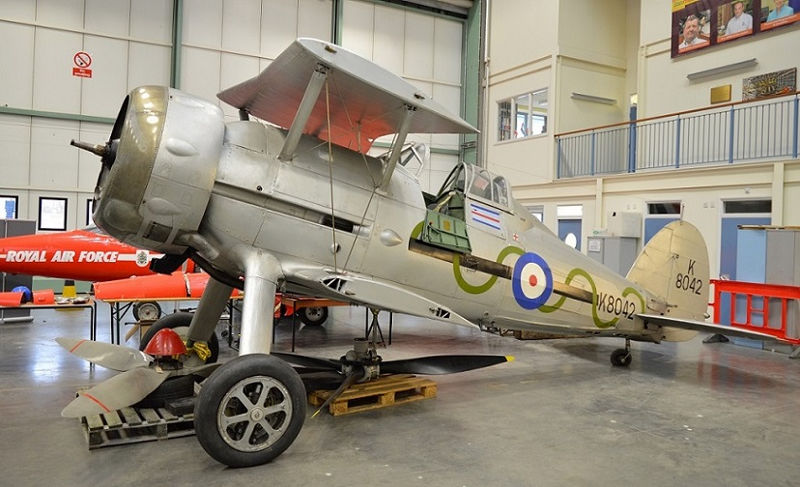
Another new aircraft to wing its way to Cosford is the Gloster Gladiator 1, the first enclosed cockpit and last biplane fighter introduced into RAF service.  Although Gladiators saw operational service at home it was most successfully employed overseas particularly in the defence of Malta.  At the outbreak of the Second World War, four home based RAF fighter squadrons equipped with Gladiators were sent to France and after just ten days of hard fighting, all the aircraft had been lost. In a desperate attempt to provide fighter cover for the ‘little ships’ involved in the Dunkirk evacuation, a detachment of home based aircraft known as ‘G’ Flight was formed at RAF Manston, Kent.  They were quickly deployed to assist with the rescue of more than 338,000 British and French soldiers trapped on the beaches. During the early war years, Gladiators were used by the RAF in several other overseas operations including; Norway, Greece, North Africa and the Middle East.

The museum’s example, serial number K8042 has been displayed at the RAF Museum London since opening in 1972 and this is the first time the aircraft will be displayed at the museum’s Cosford site.  It’s not however, the first time the aircraft has visited the Midlands, having been stationed with No 5 Squadron at RAF Ternhill and No 61 Squadron at RAF Rednal, Shropshire in the early 1940s.  K8042 was also used for gun trials and experiments, whereby an additional pair was fitted under the top wing, giving a total of six guns instead of the usual four. Also joining the aircraft collection at the RAF Museum Cosford is the Westland Lysander III, the only surviving Special Duties variant of this aircraft.  It was designed to operate closely with the Army and had a remarkable performance which enabled it to get into and out of extremely small fields.  A radical change in Army co-operation tactics meant that its lasting fame is not in this role but as a Special Duties aircraft ferrying Allied agents in and out of enemy occupied Europe.  Four Lysander squadrons went to France in 1939 and despite some notable successes the Army Co-operation units suffered extremely high casualties – over 170 Lysander’s were sent to France; only 50 came back.  After their withdrawal from France, they patrolled the coastal areas of south and east England as an anti-invasion reconnaissance measure. Late in 1940 they began air-sea rescue duties in the Channel and North Sea – not only could the Lysander spot airmen in the sea and bring surface vessels to them, it was able to drop a lifesaving dinghy and supplies.

The museum’s example, serial number R9125 first became operational with No 225 Squadron in 1940 as a coastal patrol and photo reconnaissance aircraft, based along the south coast of England.  It took on the Special Duties role with No 161 Squadron in 1944 and was operational for a further two years until they became obsolete from the RAF in 1946.  For a brief period in 1961 the aircraft was placed into storage at RAF Cosford and ten years later it was acquired by the museum and placed on display at its London site, where it has remained until its recent move to Cosford.

The Defiant and Gladiator will both go on public display in the museum’s ‘War in the Air’ hangar in January 2017, whilst the Lysander will be heading to the museum’s Conservation Centre for an in depth inspection and condition assessment, before work is carried out over the next few years to replace its fragile linen outer skin.

Head of Collections at the RAF Museum, Ian Thirsk said:

“It’s been a busy month at Cosford with five new aircraft arrivals.  We took delivery of the Bf109 and the Tiger Moth earlier this month and now we welcome the Defiant, Gladiator and Lysander to the collection at Cosford.  The Junkers Ju 88R-1, a sub-type of the most versatile German combat aircraft of the Second World War will complete the new line-up and is due to arrive before the New Year.  The museum’s centenary plans have provided an exciting opportunity to relocate significant aircraft in the collection closer to aviation fans in the Midlands. In total Cosford will have received six new aircraft in the final few months of this year.”

The new collection of aircraft will enable the RAF’s story to be more comprehensively represented to museum audiences in Shropshire and is in preparation for the centenary of the Royal Air Force in 2018. The centenary plans at Cosford will also include exploring the first 100 years of the RAF, the role it plays today and its future contributions by sharing this story online with a global audience.

Aviation fans can keep up to date with the centenary aircraft moves and on-going developments by signing up to the museum’s free e-Newsletter http://www.rafmuseum.org.uk/contact-us/newsletters.aspx

Visitors will be able to see five of the new arrivals fully reassembled and in their new display positions by early 2017.  Entrance to the museum is free of charge and the museum is open daily from 10am until 4pm.  For further information, please visit the museum’s website www.rafmuseum.org/cosford or call 01902 376200.

Chancellor provides RAF Museum with £3m in Autumn Statement

Age of Uncertainty

Financial penalties levied on banks involved in the LIBOR lending rate-fixing scandal will benefit the RAF Museum in North West London, the Chancellor Philip Hammond announced today.

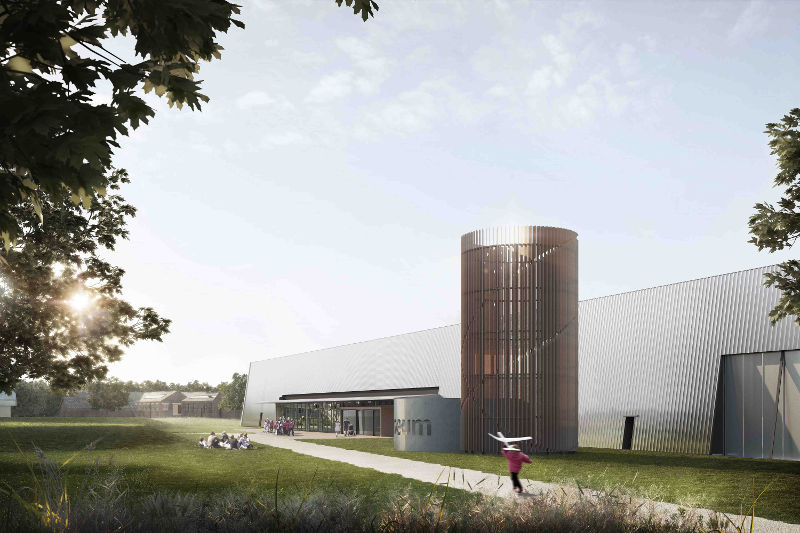
In today’s Autumn Statement, the Chancellor Philip Hammond announced that the RAF Museum will receive £3m LIBOR funds for its 2018 RAF Centenary Programme. The money will specifically support the development of a new exhibition and a dedicated Learning Centre – both of which are part of the Museum’s wider RAF Centenary Programme which celebrates and commemorates 100 years of the RAF in 2018.

The new exhibition will explore the impact of the Royal Air Force on world events, society and technology since the Cold War through its many roles during the past 40 years – during an ‘age of uncertainty’. As part of the Museum’s contemporary collecting strategy, it is actively seeking out inspiring objects and stories that will engage visitors with the RAF’s recent history, to display in this innovative new gallery.

The dedicated Learning Centre will underpin the Museum’s Science Technology Engineering and Maths (STEM) programme along with hosting both formal and lifetime learning activities in history, literacy, art and design.

Chief Executive of the RAF Museum Maggie Appleton said “It’s wonderful to be given such a high level of support from the Chancellor of the Exchequer for the Museum’s RAF Centenary Programme. The stories we want to share reflect the bravery, ingenuity and dedication of RAF men and women  working in today’s complex and challenging environment with space for our visitors to reflect on and join in the discussion from their own personal perspectives..” 

The RAF Museum’s RAF Centenary Programme is a £23.5m project which will transform the site in North West London making it more accessible and welcoming to a new generation of visitors. Work has already begun for a completion date of summer 2018 and today’s grant of £3m means that the Museum is now in the final stretch of fundraising.

To find out more on the Museum’s exciting RAF Centenary Programme for 2018 CLICK HERE


Plans for Air Show 2017 Take Off

Cosford Air Show 2017 flyer

Tickets for the RAF Cosford Air Show 2017 are now on sale! The award-winning Air Show, which will be held on Sunday 11th June 2017, is expected to attract a crowd of 60,000 visitors to the Home of Royal Air Force Engineering.

Accompanied under-16s enter for free, giving families an excellent opportunity to have a fun day out with great entertainment for every generation. Whether it’s children wanting to experience first-hand what it’s like to sit in the cockpit of a fast jet, or a grandparent who wants to reminisce about their childhood while sipping tea in the 1960’s themed Vintage Village, there is something to keep everyone entertained.

For the second year, organisers are offering an incentive to buy your ticket early with early-bird discounted tickets if you buy before Tuesday March 28th 2017. Tickets are once again Advance Purchase only and will not be available to buy on the gate.

The RAF Cosford Air Show 2016 raised £115,000 which will be donated to the RAF Association, RAF Benevolent Fund, RAF Charitable Trust, RAF Museum and local charities to further support and encourage those who are involved with the Royal Air Force and the local community.

The primary focus of the RAF Cosford Air Show is to give visitors the opportunity to engage with the Royal Air Force, and to better understandthe work they do, not only in the West Midlands and the United Kingdom, but across the world. Air Show Director, Clive Elliott, said “Opening the gates of RAF Cosford is a fantastic chance for the public to see what goes on behind the scenes on an operational Royal Air Force base. With early-bird discounts the Air Show is also a great value for money day out!”

www.cosfordairshow.co.uk

Huge response anticipated for scholarship scheme

The RAF Flying Clubs’ Association (RAFFCA) has announced that the application window for its Junior Rank Pilot Scholarship Scheme (JRPSS) 2017 is now open.

The Royal Air Force Charitable Trust (RAFCT)sponsored scheme is open to serving RAF Regular and Reserve Junior Ranks (JR) across the UK who have been invited to submit their applications before 31 January 2017, after which 30 lucky candidates will be selected to receive flying training.

The scheme has received an £80,000 grant from Trustees who recognise the huge benefits it has had on previous scholars. The annual grant, which has increased year on year, will enable the select 30 to each receive 15 hours of flying instruction on a light aircraft, which may count towards a Light Aircraft Pilot Licence (LAPL). All necessary equipment to undertake the training at selected RAF flying clubs will also be provided through the scholarship, including flying suits and study packs.

RAF Flying Clubs’ Association Project Officer Flight Lieutenant Chris Hives said: “Since its launch, we have received a tremendous response to the JRPSS. We had more than 360 applications in 2016 and received submissions for 2017 before the application process had even opened!

“This is an extremely generous grant from the Trust, which negates the need for any personal contribution – it couldn’t get any better for our JRs! Some of the lucky JRs may even get to learn to fly in the new Tecnam training aircraft, based in Scampton, which was purchased by the RAFCT last year to enhance the delivery of the scheme.

“This support means that our young personnel can gain the experience and support they need to pursue a career in aviation.”

Once candidates have successfully completed the scholarship there is also the opportunity to apply for the JRPSS Top-Up-Scheme which provides additional funding for those selected to continue their flying training and achieve their LAPL.

RAFCT Director Amanda Butcher added: “The JRPSS presents a fantastic opportunity for aviation minded JRs to achieve a flying licence, which has so many benefits, both personally and professionally. The number of people benefitting from the scheme has increased each year and is on track to reach 100 by the centenary in 2018. We are thrilled to be able to provide this level of support to help secure the future of aviation.”

The 30 successful applicants will be announced on Monday 13 February 2017. Any applications made after the closing date will not be accepted. All training for successful candidates must be completed between 1 April and 30 September 2017.

The JRPSS was launched to improve the airmindedness of Junior Ranks by offering them flying experience and the opportunity to increase their knowledge and understanding of the technologies used in aviation.In just two years, the scheme has already benefitted 40 serving personnel.

To apply,or to find out more information, please visit http://www.jrfly.co.uk/

Two new aircraft wing their way to Cosford

BF109 RAF Museum Cosford

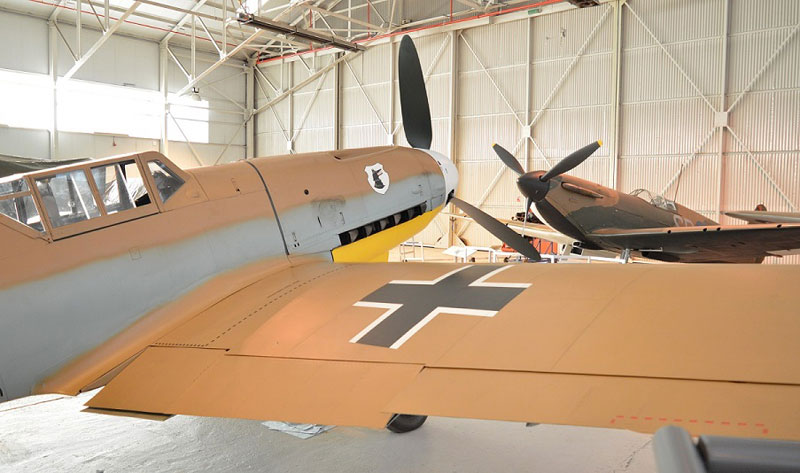
A Messerschmitt BF109G-2 and a de Havilland Tiger Moth II, are the first of six new aircraft to arrive at the Royal Air Force Museum Cosford, having been transported by road from the museum’s sister site in London.  Visitors can now view the brand new arrivals on display in the museum’s hangars with four more aircraft due to arrive before Christmas.

The Messerschmitt BF109G-2, designed by Willi Messerschmitt, is a legend alongside the British Spitfire, American P51 Mustang and the Japanese Zero.  First flown in 1935, the Bf109 was obsolescent by the second half of World War Two yet it remained the backbone of the German Air Force’s day fighter force and was flown by many of her allies. In production right up to the end of hostilities, more than 33,000 were built second only to the Russian ‘Sturmovik’ as the most prolific military design, and post-war versions served with the Czech, Israeli and Spanish Air Forces, the latter until the mid-1960s – with Rolls Royce Merlin engines.  Compact, rugged, fast and heavily armed the Bf109 has the distinction of being flown by the highest-scoring fighter aces in history. With the promised availability of the new Daimler-Benz DB 605A German built engine, design work began on the Bf109G series where higher speeds were obtained, but manoeuvrability and handling were adversely affected. The Bf109G series will be forever linked with the daylight bomber-killing missions in defence of the Reich. German fighter pilots found themselves facing heavily armed American B17 Fortress and B24 Liberator bombers and later long range P38 Lightning, P47 Thunderbolt and P51 Mustang fighters. Ground down by the overwhelming odds, few survived the war. 

The museum’s rare example was disassemble by the museum’s team of Aircraft Technicians and Apprentices in London and transported on a low loader lorry along the M1, M6 and M54 before being reassembled in its new display hangar at Cosford. Members of the public can now view the aircraft in the museum’s ‘War in the Air’ hangar alongside fellow German fighter the Focke Wulf Fw190, facing their British equivalents the Supermarine Spitfire 1 and Hawker Hurricane IIc.

The second of the two new arrivals is the 1930s bi-plane the de Havilliand Tiger Moth II, originally produced as a development of the well-known Gipsy Moth.  The Tiger Moth went on to become one of the world’s most famous training aircraft and provided the majority of RAF pilots with their elementary flying training during the Second World War.  In the aftermath of the Dunkirk evacuation in 1940, almost any anti-invasion idea was considered and three extraordinary Tiger Moth conversions were put forward.  Some were fitted with light bomb racks ready to undertake the bombing of enemy troops attempting a landing, whilst others were fitted with a tank in the front cockpit with powder dispensers located under the wings intended to dust the German troops with a poisonous insecticide as they waded ashore.  A more revolutionary idea was the ‘paraslasher’; a scythe-like blade fitted to the aircraft and intended to cut parachutist’s canopies as they descended to earth. Fortunately none of these ideas had to be used, leaving Elementary Flying Training Schools to their vital role of pilot training. 

The Tiger Moth was eventually succeeded and replaced by the de Havilland Chipmunk in the early 1950s and both aircraft can now be viewed alongside each other in Hangar 1 at Cosford, positioned next to the Scottish Aviation Bulldog T Mk 1, a further progression in training aircraft.  The Tiger Moth also travelled by road to Cosford, alongside the Bf109 .

Other aircraft still to wing their way to Cosford before Christmas include the Wolverhampton built Boulton Paul Defiant M1, Junkers Ju 88R-1, Gloster Gladiator 1 and the Westland Lysander III.  Work is already underway at the museum’s London site to prepare the aircraft for transportation by road to Cosford.  Visitors will be able to see all of the new aircraft fully reassembled and in their new display positions by early 2017, with the exception of the Lysander which will spend a short period in the museum’s Conservation Centre before eventually going on display.

RAF Museum Cosford Curator, Al McLean said:

“This will be the first time that we have been able to display a Bf 109 in the War in the Air hangar at Cosford and appropriately it will be seen confronting a Hurricane and a Spitfire.”

The new aircraft arrivals will enable the RAF’s story to be more comprehensively represented to museum audiences in Shropshire, as the museum prepares to celebrate and commemorate the centenary of the Royal Air Force in 2018.  Whilst there are major transformations planned for the museum’s London site, some exciting additions for Cosford will include exploring the first 100 years of the RAF, the role it plays today and its future contributions, as well as sharing the story online with a global audience.

Aviation fans can keep up to date with the centenary aircraft moves and on-going developments by signing up to the museums free e-Newsletter http://www.rafmuseum.org.uk/contact-us/newsletters.aspx

Entrance to the museum is free of charge and the museum is open daily from 10am until 4pm.  For further information, please visit the museum’s website www.rafmuseum.org/cosford.