Cockpit-Fest Newark Air Museum

Newark Cockpit Fest

This year’s Cockpit-Fest ‘migration’ has started with the first cockpit already on site at Newark Air Museum’s site in eastern Nottinghamshire; close to the border with Lincolnshire

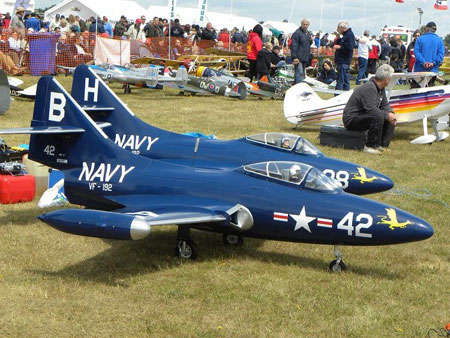
Newark Air Museum is a registered charity located on part of the former site of RAF Winthorpe and its two day Cockpit-Fest event attracts exhibitors from across the UK and Europe, to sample what one aviation magazine editor calls “grass roots aircraft preservation”.

From its humble beginnings, when a few like-minded enthusiasts first displayed the cockpit sections at the museum; Cockpit-Fest now regularly attracts, many more visiting cockpits and associated displays. This year twenty-five (25) visiting cockpits are already booked to attend. It has also developed a word to describe the participants – ‘Cockpiteer’; many of whom have lovingly rebuilt and restored these projects at home, Cockpit-Fest giving them the chance to display them in public.

The event is supported by a range of organisations and individuals; with the public being encouraged to have a say in deciding, which is the best cockpit by voting on their favourite display and from these results prizes are awarded.

Cockpit-Fest also attracts other visiting displays like the Raptor Foundation with its owls; local history / archaeological groups; book launches; and even more aviation related displays such as clothing and historical artefacts. As an added bonus this year’s event has flypasts by the Battle of Britain Memorial Flight on both days.

Running alongside Cockpit-Fest is an Aeroboot aviation and avionics sale, which allows Cockpiteers and the public to search out those aviation artefacts, books and models.

This year’s event takes place on Saturday 15th and Sunday 16thth June; and full details can be found on the News & Information page of the museum website at www.newarkairmuseum.org 

Raising the Dornier

On Sunday 2nd June the Royal Air Force Museum attempted to lift the world’s last surviving Dornier 17 from the bottom of the English Channel, just off Goodwin Sands, following three weeks of intensive engineering and archaeological work. After three years of planning, the Museum came within 40 minutes of success when a sudden increase in winds around the Goodwin Sands area made the sea too choppy to complete the lift. Regrettably, and with the safety of the crew and the aircraft in mind, the lift was called off.

With success within grasp, the Royal Air Force Museum has been hugely encouraged by the support received from across the globe. Not only has this taken the form of messages of goodwill, but the Museum has received substantial additional funding from private individuals and organisations in Europe and America determined to see this historic project brought to a successful conclusion.

The forecast now suggests two weather windows this week when we can return to the wreck site and complete the lift. These are Monday 10th June between 1530 – 1800hrs and early Tuesday morning between 03.30 – 06.30hrs.

If this proves to be the case, and we know how erratic the weather has been this year, we will raise the Dornier early this week for transfer to our conservation facility at Cosford.

Despite the exceptionally poor weather over the past month, which has required the salvage team to return to port on at least four occasions, everything is now set for the aircraft to be successfully lifted from the seabed where it has lain for over seventy years.

Because of the weather difficulties and strict deadline to save the aircraft, the Museum has instructed the dive company SeaTech to alter their methodology of assembling a lifting frame around aircraft to ensure the operation is complete within the given boundaries.

The new method which is more delicate in nature, involves attaching lifting equipment to specific points on the aircraft that the Museum have identified as the strongest parts of the airframe. An attempt will still be made to raise it complete, and in a single lift.

Once the aircraft has been laid on onto the support barge it will be transported directly to Ramsgate Harbour where it will be dismantled for travel to the Museum’s Conservation Centre at Cosford.

Peter Dye Director General, Royal Air Force Museum “We have adapted the lifting frame design to minimise the loads on the airframe during the lift while allowing the recovery to occur within the limited time remaining. The RAF Museum has worked extremely closely with SeaTech throughout this process and both organisations remain determined to complete this challenging task and see the Dornier safely recovered as planned and delivered to the Museum’s Conservation Centre for preservation and public exhibition.”

Dornier Project – A recap

The Royal Air Force Museum is undertaking an exciting, challenging and historically fascinating project to remove a German bomber, the last remaining Dornier 17, from the sea-bed off Kent right now. The project was made possible with funding by The National Heritage Memorial Fund.

The complex project has not been entered into lightly and has used a number of ground-breaking techniques for underwater recovery and conservation. It has been undertaken with an impressive group of experts ranging from chemists and physicists from Imperial College London who advised on the conservation and structural integrity of the aircraft, to SeaTech who are managing the actual lift.

The project has stimulated a huge amount of interest across the world and events are being followed closely by millions around the world.

This is not the first time the Museum salvaged an aircraft wreck, as a visit shows, other examples have been found and reassembled before. Should the weather provide additional challenges to the actual integrity of the aircraft, the Museum is committed to salvaging the parts it can in order to treat, examine and exhibit this incredible part of aviation history.

www.rafmuseum.org

Museum Celebrates Armed Forces Day

Dakota Flypast - Armed Forces Day

Saturday 29th June 2013

11.00am – 2.40pm

Veterans and their guests must pre-register

Dakota flypast 2:35pm (weather permitting)

On Saturday 29th June, events across the country will celebrate the contributions made by those who serve and have served in Her Majesty’s Armed Forces. The annual Armed Forces Day is an opportunity to reflect and pay tribute to our heroes past and present, including current serving personnel, service families, veterans and cadets.

The Royal Air Force Museum Cosford will once again participate in this annual event by hosting veterans young and old from all three services. During this special reunion, hosted by Museum staff, all Veterans will be treated to a full day’s programme. There will be free refreshments for guests on arrival at 11.00am followed by guided tours around the Museum’s Conservation Centre. For lunch, veterans will have the unique opportunity to dine with other guests amongst the aircraft and artefacts on display in the Museum’s Hangar 1. During the afternoon, guests will then be treated to a 1940’s Home Front Cabaret Show performed by Rebecca Grace lasting approximately one hour.

A highlight for Armed Forces Day guests and visitors to the Museum will be a spectacular flypast from the Battle of Britain Memorial Flight Dakota, scheduled for 2:35pm (weather permitting). All-in-all this promises to be an exciting day which will enable Veterans to meet up with old friends, reminisce over shared experiences, and enjoy themselves in the authentic atmosphere and setting of the Royal Air Force Museum.

Event organiser, Nina Mitchell says:

“With former Service Men and Women joining in from across Shropshire and the West Midlands, Armed Forces Day is set to be a truly memorable and sentimental gathering for Veterans and their guests to enjoy. We look forward to welcoming new faces as well as regular attendees to the event”

Attendance to the event is free of charge and by advance registration only. Any Veterans who would like to attend the event, are asked to book their place now by calling 01902 376 252 or for more information visit www.rafmuseum.org/cosford. Parking for Armed Forces Day guests is also free.

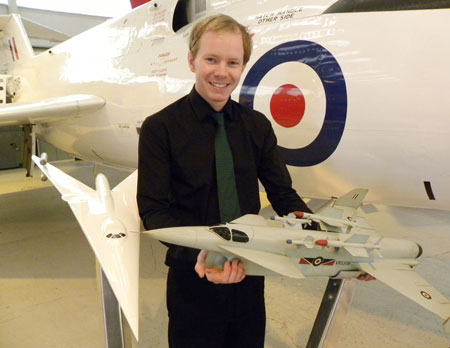
Airfix Making History at the RAF Museum

Airfix has been a ‘household’ word for decades. In the same way that ‘Hoover’ has meant vacuum cleaner for generations, Airfix means model kits. From being the largest manufacturer of plastic combs by 1947, Airfix branched out into toys and other domestic products, but in 1952 embarked, with the little ship The Golden Hind, on producing construction kits, this was rapidly followed by the first of its aircraft kits, the 1:72 scale Spitfire in 1953.

Airfix : Making History celebrates the artists who decorated the packaging for the company’s products. Stirring scenes of combat and heroism stimulated the juvenile market of the 50s, 60s, 70s & 80s to part willingly with its pocket money, and the pleasure of making your own toy was a thrill which the generation of thumb-twiddling, computer game addicts – exposed as they are to hugely more violent and destructive ‘amusements’ than modelling – has abandoned to its loss. Modelling teaches patience, discipline and the advantages of following the instructions, virtues which are, regrettably, held in little esteem today.

Older visitors of Airfix : Making History are therefore invited to indulge in nostalgia. Younger viewers are encouraged to marvel at the imagination of the engineers who designed the vehicles, aeroplanes and tanks which are represented in miniature, at the skills of the mould makers who devise the kit components and to be thrilled by the artists whose work makes these products so attractive.

Paul Hudson, Head of Marketing of the Royal Air Force Museum said :

‘ As someone who spent their formative years making 1:48 scale Spitfire and Lancaster models, plus a very fulfilling summer at the age of 11 making the model of the HMS Victory, I would like to take this opportunity to thank Airfix and Hornby Ltd for allowing the Museum to tell the story of Airfix through these beautifully executed pieces of art during the 60th anniversary year of the first Spitfire Kit and 75th anniversary year of the company itself. Each of them is a mini masterpiece, which inspired the imaginations of generations of children to explore, learn and make.’

Darrell Burge, Marketing Manager, Airfix said :

‘ Given that Airfix has used the collection at Royal Air Force Museum regularly over the years on which to base it models, we felt that holding an exhibition which explored an often overlooked element of the Airfix experience, our box art, was both logical and pertinent. Having viewed the exhibition on display, I would urge Airfix fans across the globe to visit London and see it.’

‘Airfix : Making History’ will be on display at the Royal Air Force Museum London’s Art Gallery from Saturday 1st June 2013 until 3rd May 2014. On Saturday 1st and Sunday 2nd June to celebrate the opening of the exhibition, visitors to the exhibition are also invited to discover the virtues of modelling by participating in free make and take sessions, which will run from 11am to 1pm and from 2pm to 4pm on each day.

The exhibition will be open daily from 10am until 6pm. Admission to the exhibition and to the Museum is free of charge.

www.rafmuseum.org

Newark Air Museum’s Contribution To Armed Forces Day

Newark Air Museum has recently announced how it plans to contribute to the Armed Forces Day celebrations in the region. The museum, which is located on part of the site of the former World War II training base of RAF Winthorpe in Eastern Nottinghamshire, close to the county border with Lincolnshire, is making special arrangement for visiting service personnel.

Amongst its famous collection of 76 aircraft and cockpit sections from across the history of aviation the Newark Air Museum already displays representative airframes from the Royal Navy, the Army and the Royal Air Force. So in recognition of the valuable contribution made by the Armed Forces the museum trustees have agreed to join in the celebrations by granting serving members of the Armed Forces a Special Discounted Admission Offer from Monday 24th June through to Sunday 30th June, 2013 inclusive.

Service personnel who visit the museum during this period in uniform, or with a current military I.D. card will be granted FREE access to the museum. Any additional members of their group i.e. wives, partners, children, parents etc. will each be entitled to admission at a standard fee of just £4.00 per person. (The museum would be extremely grateful if these additional ‘donations’ were made using the Gift Aid scheme).

The discounted offer is also being extended to members of Seafarers UK who are celebrating Seafarers Awareness Week during the same period: plus Armed Forces veterans who are able to show a Veterans Badge/Pin or a valid Association I.D card – all will be able to benefit from this offer.

During this special period, normal museum admission rates will apply for all other visitors and the museum trustees hope that all visitors will join in welcoming the members of the Armed Forces to the museum and its site in eastern Nottinghamshire, close to the county border with Lincolnshire.

Normal museum opening times will apply; 10am to 5pm each day; with the last admission at 4pm. If the museum’s Cockpit Opening Team is able to open aircraft and helicopter cockpits during this time normal additional admission fees / donations will still apply for people accessing these exhibits.

http://www.newarkairmuseum.org/

70th anniversary commemorative flypast from IWM Duxford

Today, Monday 27 May, the Eagle Squadron, with B-17 Flying Fortress Sally B and P-51 Mustang Miss Velma, carried out a commemorative flypast of American Second World War airfields to honour the American airmen who died whilst fighting for their country from British soil.

The Eagle Squadron’s historic Hawker Hurricane X, Supermarine Spitfire Mark I, Republic P-47G Thunderbolt and North American P-51 Mustang Princess Elizabeth flew alongside B-17 Flying Fortress Sally B in a poignant commemoration of the legendary fighter and bomber aircraft flown by the United States Army Air Forces (USAAF) in England.

B-17 Flying Fortress Sally B was the first aircraft to take off from IWM Duxford, followed by two-seater P-51 Mustang Miss Velma, carrying a very special passenger, United States Army Air Forces veteran Clarence ‘Bud’ Anderson.

The Eagle Squadron then took off and moved into formation with B-17 Sally B and P-51 Mustang Miss Velma.

This year, IWM Duxford commemorates the 70th anniversary of the United States Army Air Forces arriving at RAF Duxford. From its arrival at RAF Duxford in April 1943, the 78th Fighter Group flew P-47 Thunderbolts on bomber escort duty, switching to P-51 Mustangs in December 1944.

From IWM Duxford, the Eagle Squadron formation’s first destination was Bassingbourn Barracks, which was home to the USAAF 91st Bomb Group from August 1942 to June 1945. The 91st Bomb Group flew B-17 Flying Fortresses, the most famous of which was the Memphis Belle.

On leaving Bassingbourn, the Eagle Squadron flew over Cambridge American Cemetery at Madingley, where a memorial ceremony was being held.

The formation then continued to RAF Mildenhall, home to the modern-day United States Air Force in Europe, and from there to Bodney airfield, which was home to the 352nd Fighter Group from May 1943 until V E Day.

From Bodney, the aircraft continued to RAF Snetterton Heath, which was used by the 8th Air Force 96th Bombardment Group from June 1943 until its deactivation in December 1945.

Then onwards to RAF Knettishall, which was built for the 8th Air Force during 1942-1943 with a specification to accommodate heavy bombers. It was home to the 388th Bombardment Group from June 1943 until V E Day.

The next destination was RAF Horham, which was handed over to the 13th Combat Bombardment Wing of the 3rd Bomb Division in 1942. Horham was mostly home to the 95th Bombardment Group (Heavy) which flew B-17 Flying Fortresses in bombing campaigns until V E Day.

From Horham, the Eagle Squadron overflew RAF Thorpe Abbots, which was originally built as a satellite station to RAF Horham.

The 100th Bombardment Group of the 8th Air Force arrived at Thorpe Abbots in June 1943. The Group earned the nickname The Bloody Hundredth due to heavy losses incurred during eight missions to Germany. A dozen or more aircraft were lost on a single mission.

The 100th Bombardment Group flew its last mission on 10 April 1945; its 306th combat mission.

The commemorative flight then continued to RAF Halesworth, which was home to the 56th Fighter Group, flying P-47 Thunderbolts, and then to the 489th Bombardment Group (Heavy), flying B-24 Liberators.

From Halesworth, the Eagle Squadron made its way to RAF Leiston. This was an emotive experience for veteran Bud Anderson, as he flew his P-51 Mustang Old Crow with the 357th Fighter Group from this airfield. At this point, P-51 Mustang Miss Velma, carrying Bud Anderson, peeled away from the formation for a reminiscent return to RAF Leiston.

The Eagle Squadron’s final destination before returning to IWM Duxford was RAF Debden. This airfield was home to RAF Eagle Squadrons which were later formed into the 4th Fighter Group when the USAAF took over the airfield.

It was a poignant and historic commemoration to the American airmen who lost their lives fighting for freedom from British shores.

www.iwm.org.uk

Flying display honours National Service Veterans

2nd June 2013

Lancaster display 1:00pm (weather permitting)

The Battle of Britain Memorial Flight Lancaster will be taking to the skies over Shropshire in honour of the thousands of National Service RAF veterans. This iconic aircraft will perform for visitors and guests at the National Service (RAF) Association parade, taking place at the Royal Air Force Museum Cosford on Sunday 2nd June.

Starting at 11:00am, this event is expected to see hundreds of ex National Service men and women participate in the parade, led by the Central Band of the Royal Air Force. Following a short 100m march the parade will form up next to the Museum’s Hangar 1 where Air Chief Marshal Sir Stephen Dalton will be the reviewing officer, accompanied by Group Captain Sansom, Station Commander at RAF Cosford. All veterans who served in the Armed Forces are welcome to participate, providing them with the opportunity to reunite with lost friends and colleagues.

Following the parade, Air Chief Marshal Sir Stephen Dalton, will be officially presenting Arctic Star medals and the Bomber Command Clasp to eligible veterans. These prestigious accolades are awarded to members of the British Armed Forces and the Merchant Navy who were involved in action in the Arctic Circle or Bomber Command during World War II. Both awards are retrospective, coming almost seventy years after the end of the war. Veterans from all three services who have been awarded either honour are invited to put their names forward in order to have their medals officially presented to them on the day by the Chief of the Air Staff.

Around 600 veterans are anticipated to take part and hundreds more visitors are expected to turn out to watch. Following the ceremony, visitors and guests will be treated to a flying display from the Battle of Britain Memorial Flight Lancaster scheduled for 1.00pm (weather permitting). Plus, National Veterans Organisations and training camp associations will be represented in Hangar 1. On completion of the formal events, guests will have access to the RAF Museum site where they can catch up with old friends and view the exhibits.

The Museum gates will open at 9am on Sunday 2nd June, although the Museum itself will open at 10am. Entry to the Museum and participation in the parade is FREE. Any veterans wishing to put their names forward for the presentation should contact the event organiser Pat Honey on 01782 516887.

For further information, please call the Royal Air Force Museum Cosford on 01902 376200 or visit the museum website at www.rafmuseum.org.

Bloodhound Missile Acquisition

After several failed attempts the Newark Air Museum has finally been able to secure a long-term acquisition target in the shape of a Bloodhound surface-to-air missile.

This recently acquired missile was transported to the museum’s site on the former RAF Winthorpe airfield in Nottinghamshire; close to the border with Lincolnshire on Tuesday 21st May, 2013.

After refurbishment the Bloodhound missile will be displayed alongside the museum’s Type 86 Radar Cabin, which recently underwent an external repaint. This is a complete cabin that was acquired several years ago from the Royal Radar and Signals Establishment and is believed to have carried the codename ‘Indigo Corkscrew’.

The museum also displays a Thunderbird surface-to-air missile, which was acquired several years ago.

Some key items are missing from the new acquisition and the museum is hopeful of sourcing these items in the coming months.

www.newarkairmuseum.org

Outdoor concert to hit the right note

6th July 2013Gates open 5.00pm

The Royal Air Force Museum Cosford will be staging a ‘Proms in the Park’ concert on 6th July to celebrate the 75th anniversary of RAF Cosford. This spectacular outdoor party will not only feature classic and modern music but also two aerobatic displays and a fireworks pageant that will end the night on a climactic note.

Taking place on Saturday 6th July, this captivating evening of music and entertainment will be staged in the Museum’s grounds under the wings of Cosford’s Hercules aircraft. A giant stage will be erected to accommodate a variety of live musical performances that will include a full Orchestra, Soul band, local Military Wives Choir and an Electric Violinist. The Wessex Concert Orchestra with Soprano will perform a two hour concert for guests who are encouraged to join in the spirit of things and sing along to some well-known numbers including the ever popular ‘Land of Hope and Glory’. Present for the whole evening will be a RAF hot air balloon that will loom large over the stage and provide the perfect backdrop to the evening events

One of the many highlights of the evening will be a full flying display from the Battle of Britain Memorial Flight’s Spitfire (weather permitting). Visitors will also enjoy a parachute display from the RAF Falcons, which will see the squad’s members jump from an aircraft to parachute in formation to the ground before attending the concert and meeting with the public. .

In addition to the night’s musical performances and entertainment, there will be refreshments available all evening including a fully licensed bar, hot food and snacks. As this is an outdoor event, attendees are welcome to bring along their own picnic and refreshments. Camping chairs and blankets are highly recommended so guests can sit back and enjoy the show including a spectacular fireworks finale which will conclude the evening’s events at 10.00pm.

The Prom will be raising money for the RAF Benevolent Fund – the RAF’S leading welfare charity and the RAF Museum. The RAF Benevolent Fund has been supporting the RAF family since 1919. The RAF Benevolent Fund is there, through thick and thin, to support RAF personnel and their families, whenever assistance is required no matter whether they are current or ex serving members of the Service. The RAF Benevolent Fund team will also be present on the night and will be happy to answer any questions that guests might have about the great work they do.

Anyone wishing to attend this spectacular evening can purchase tickets online via the Museum’s website www.rafmuseum.org. Tickets are now on sale and are priced at just £20.00 for adults and children under 16 are free of charge when accompanied by an adult. Gates open at 5.00pm with music starting at 5.30pm and the fun continues late into the night.

Westland Lynx Mark 7 helicopter takes up residence in the Battle of Britain exhibition

We’re delighted to announce that we’ve recently taken delivery of an exciting new addition to our collection at IWM Duxford.

Westland Lynx Mark 7 helicopter XZ194, gifted to Imperial War Museums by the Ministry of Defence, now sits within the Battle of Britain exhibition.

It had been in service since 3 January 1979, when it began life as a Mark I Lynx helicopter. It was converted to a Mark 7 in September 1992 after 3,104 flying hours. This Lynx flew with 7 Regiment Army Air Corps, the main helicopter pilot training unit for the Army, at Middle Wallop until May 2012, when it was declared Non-Effective after 6,667 flying hours. The remainder of its serving life was spent with 9 Regiment Army Air Corps at Dishforth and with the School of Aviation at Middle Wallop.

The Westland Lynx was, until recently, the British armed forces’ main multi-role helicopter. The Lynx Mark I entered operational service with the Army and the Royal Navy in 1977 and was later adopted by the armed forces of over a dozen nations. It primarily served in the roles of battlefield utility, anti-armour, search and rescue and anti-submarine warfare.

Lynx helicopters have served in every British Army combat theatre since 1979, bar the Falklands. They have been present in Afghanistan in a variety of roles, including liaison, troop transport, medevac, resupply and light gunmanship, since 2006. They also served with 16 Air Assault Brigade in Operation Iraqi Freedom 2003 and the subsequent occupation of Iraq. Lynx helicopters recently started to leave service, being replaced by the upgraded ‘Super Lynx’ (Wildcat) helicopter.

The addition of the Westland Lynx Mark 7 to the IWM Duxford collection enables us to demonstrate the close ground-to-air co-operation needed on the contemporary battlefield.

IWM Duxford is the first UK museum to display a Westland Lynx Mark 7. This is also the first Army helicopter to be displayed at IWM.

We are delighted that it will now tell the story of helicopter capability in modern warfare at IWM Duxford.

John Delaney, Collections Manager, IWM Duxford said “The Lynx helicopter would have been seen by every soldier serving on operations over the past 35 years. The majority would have benefited by receiving supplies from them, being carried by them or receiving gunfire support from them. This is the first Army helicopter to be displayed at IWM and it helps us to demonstrate the unique role played by helicopters on the modern battlefield.”

 www.iwm.org.uk