RAF Museum Cosford 2017 Events Diary

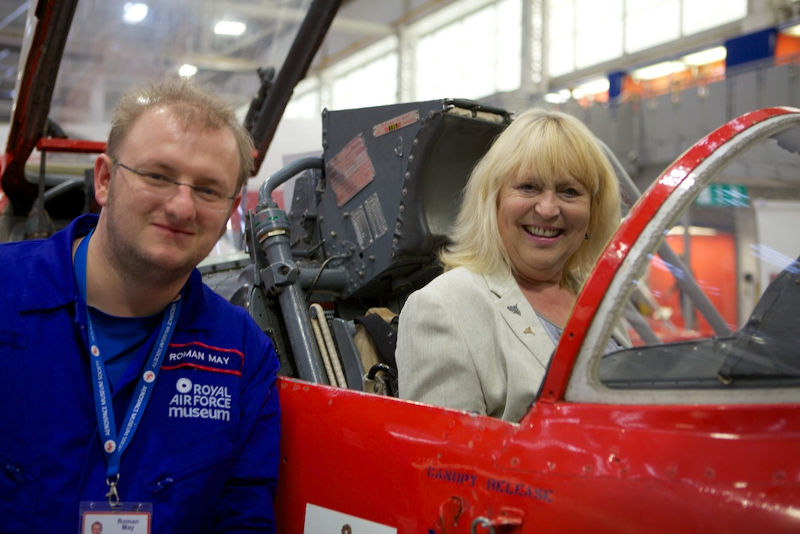
RAF Museum Cosford Open Cockpits Evening

Date                              Event

7 February               National Cold War Exhibition 10 year anniversary
20-24 February      Airfix Make and Take
22 February             Airfix V-Bombers Walking Talk

17 March                   Cold War Lunchtime Lecture

2 April                        Shropshire Scale Model Show
8-23 April                  Easter Activities

19-20 May                  Open Cockpits Evening

30 May – 2 June       Half Term Activities

11 June                        RAF Cosford Air Show
16 June                       Cold War Lunchtime Lecture
24 June                       Armed Forces Day

15-16 July                   Large Model Aircraft Rally
22-23 July                  Cosford Food Festival

1-31 August                Summer of Spies

3 September              Spitfire 10K
15 September            Cold War Lunchtime Lecture
15-16 September       Open Cockpits Evening

23-27 October          Airfix Make and Take

12 November            Remembrance Service
13-18 November      Conservation Centre Open Week

15 December            Cold War Lunchtime Lecture

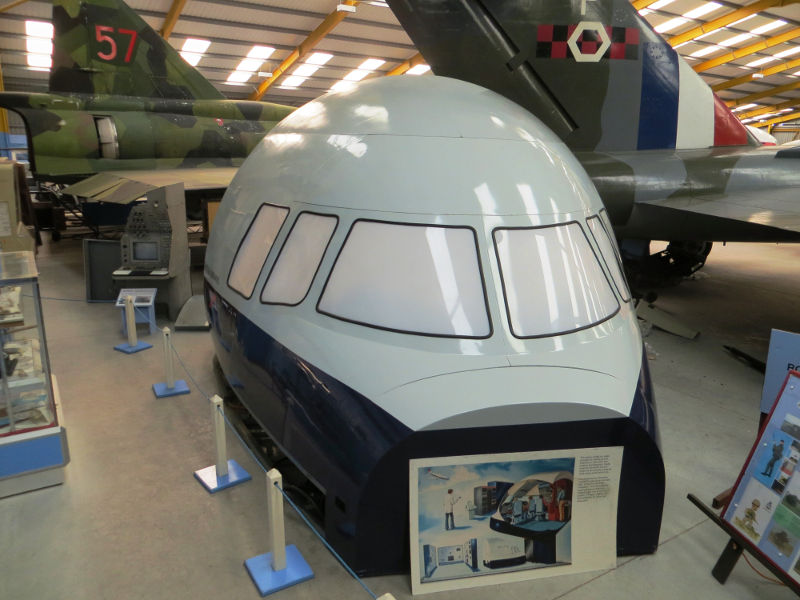
TriStar Simulator Reassembly

Tristar

In recent weeks a significant amount of effort has been expended on the reassembly of the Lockheed TriStar simulator at Newark Air Museum’s site in eastern Nottinghamshire, close to the border with Lincolnshire.

The exhibit was donated to the museum by the Royal Air Force Museum at Hendon, back in autumn 2015; and arrived on site in February 2016. Initially it had been anticipated that the simulator would arrive in one piece, but this was not the case as the simulator had already been disassembled.

After various location options were considered the reassembly is now taking place in an area of Display Hangar 2 behind the Gloster Javelin and Saab Viggen aircraft. The reassembly work has focused around the main instrument panel, which is now in situ; along with the majority of the external cockpit panels. This is proving to be quite a complex task, but one that is being tackled in a methodical manner; but this will culminate in quite an impressive exhibit in the future.

At this time it is still not confirmed to what extent the simulator will be returned to an operational condition; although an appropriate power is located nearby. This latest acquisition complements the museum’s growing collection of ‘synthetic’ trainers and adds part of a notable airliner cockpit to the museum collection.

www.newarkairmuseum.org

The French Airman who Fell out of the Sky on Christmas Eve 1944

Leroy Elvington

As the “Big Day” approaches, it is perhaps worth bearing in mind that 70 years ago those involved in World War II did not stop for Christmas. However, for one French airman, flying from RAF Elvington with one of the two unique French Squadrons of RAF Bomber Command, Christmas Spirit was to turn into a miracle – of sorts.

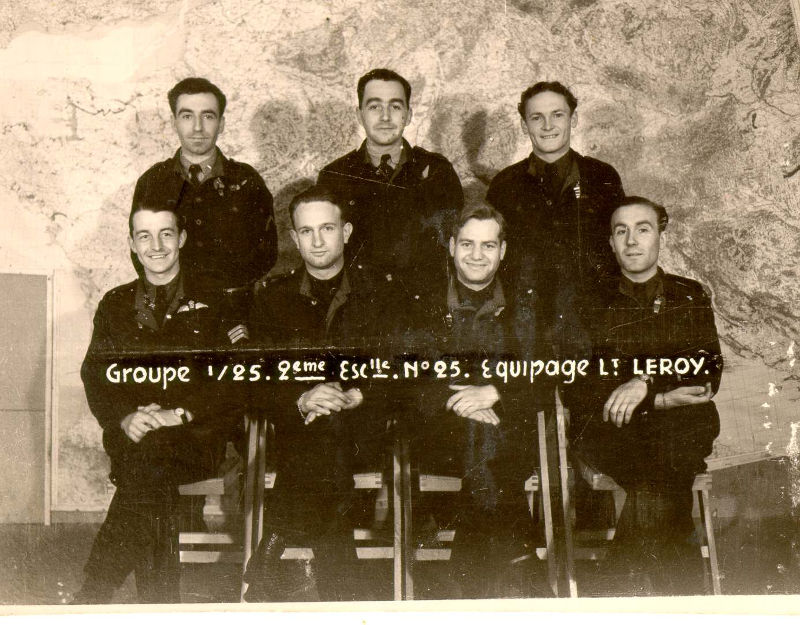
24 year old André Guédez, with 6 other crew-mates of their Halifax bomber “L for Love”, was looking forward to going on well-earned evening leave to celebrate Christmas Eve in York with their girl-friends, when suddenly – “All Leave Cancelled” was announced.

Somewhat disheartened and unable to tell their girl friends that they could no longer meet, they began preparations for an urgent mission over Germany to try to help support the Allied defence against the surprise German attacks, known later as “The Battle of the Bulge”.

They took off from Elvington at 11:31am on Christmas Eve 1944 in their huge, lumbering, Halifax 4-engined bomber, MZ489 L8-L, “L for Love”, with other members of 347 “Tunisie” French squadron aircraft, with André in the mid-upper gunner position. After almost 4 hours flying in the freezing, foggy conditions they were above Essen Mülheim, location of the huge Krupps armaments factory. Almost immediately “L for Love” was hit by anti aircraft fire in the notoriously highly defended Ruhr Valley, known as “Happy Valley” by the airmen. Probably the most heavily defended area ever created.

As André recalls:

“The Ruhr sky was, at that time, the most explosive place in the world. The Germans had more than 30,000 anti aircraft batteries around their factories and towns. It was the industrial heart of the 3rd Reich, even though it was tottering at that time. On each incursion, especially at night, we were floodlit like in a parade, with continuous fire from anti-aircraft guns. We knew one in two aircraft might not come back, and until that day, I had been lucky”.

André remembers that the first shell hit the inner port engine. “It was quickly on fire, but we still had three engines. The second shell cut the aircraft controls. This time, it was lost.”

No parachute – nearly!

“The pilot and the co-pilot gave us the order to jump. I then disconnected the heating of my suit and my oxygen mask. At 6000m high, the temperature was –50 degrees C and the oxygen is very rare. In a few minutes I knew I would be unconscious.”

In his signature gesture of bravado, André had thrown his parachute into a corner. He discovered with horror a huge hole in the fuselage and initially thought his precious parachute has been blown away. But he found it, and had just enough time to fasten the parachute before he began to lose consciousness – just at the same moment as another explosion rocked the aircraft with a direct hit on another engine.

“I was scared, paralysed by the cold and the lack of oxygen. The Flight Engineer who was behind me pushed me out of the hatch into the open air. I must have opened my parachute instinctively, because the next second I was unconscious and don’t remember anything!

He thus fell the 18,000 feet to earth amidst all the screaming engines, guns firing and explosions and remembers nothing until he woke up sometime later. He was lying on desk in an office with an injured face and back. The first thing he noticed was that those around him were speaking German, so André knew he was a prisoner. But somehow he had survived.

“Opening my eyes, I saw kids with noses pasted to a window looking at me. An old German soldier, a poor guy who had been called-up, was looking after me.”

André’s first thoughts were for his English girlfriend waiting for him in York and how he could let her know he wouldn’t be able to meet her in town that night: “We really were in clover at the station (RAF Elvington), cherished and pampered, and I said to myself the dream was over and there would be no Christmas that night by the fireplace.”

This was not a good time to be a captured airman. “At that time the Germans were furious against the Allied airmen. The terrible bombings in Dresden, which caused the death of 45,000 people, were considered war crimes”.

They threw him into a civilian prison on the night of 24th December and later he found his Flight Engineer, Sgt. François Duran, who had survived as well. “We were happy to see each other again. The day after, we were sent to an interrogation centre. We had a really hard time when a Wehrmacht Officer, threatened us”. As France was “German Occupied territory”, French airmen & soldiers fighting with the Allies were considered as traitors, and André learnt afterwards that they were the only two survivors out of the seven man crew of Elvington’s Halifax ‘L for Love’. The others were shot as they parachuted to Earth or killed when the aircraft crashed in the outskirts of Düsseldorf at Wersten im Brücherbach.

Prisoner in Germany.

André spent four and a half months as a prisoner in Germany and during that time André remembers being marched through the devastated German towns and cities.

“We were eventually sent to a camp near Munich. Hitler had the crazy idea of setting up a prison of war camp in the Bavarian Alps. The Americans released us on 29th April 1945.”

Amazingly, André and François also survived one of the Great Marches, as the Nazi’s moved prisoners of war away from the Russian front in the winter of early 1945. For 67 years, André and François Duran telephoned each other every 24th December to remember the close friends they had lost that tragic night. Francois died in 2012.

After the war André continued in the French Air Force eventually becoming a Colonel. His youngest daughter Genevieve Monneris and his grandson Thomas Lesgoirres made several documentaries about the French Squadrons at Elvington, and in particular, a documentary about André’s wartime experiences won the prestigious IWM London Film Festival in 2012. Her book “The French Squadrons” was released in 2016.

Ian Reed, Director of the Allied Air Forces Memorial & Yorkshire Air Museum which is based on the former airfield, commented: “As each year passes, there are fewer and fewer veterans of the famous French Squadrons, and indeed all those of RAF Bomber Command, left with us. It is an honour to know him today and we are thankful that André Guédez is still going strong as we remember his incredible story, and give our thanks that because of people like him, Europe has seen the longest period of peace in modern history. We must never forget”

www.yorkshireairmuseum.org

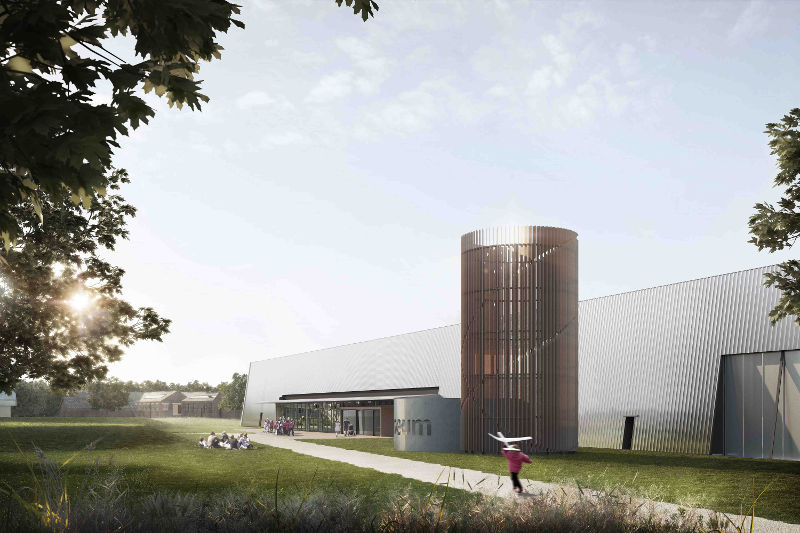
New playground inspired by Queen Elizabeth aircraft carrier to be built at the Fleet Air Arm Museum

Fleet Air Arm Museum logo

Funding of £74,350 has been secured to transform the entrance to The National Museum of the Royal Navy’s Fleet Air Arm Museum (FAAM) with an exciting new playground inspired by the flight deck of HMS Queen Elizabeth, one of the new aircraft carriers due to enter Royal Navy service in 2017.

Aircraft from the Fleet Air Arm are routinely deployed on carriers and the launch of two new Queen Elizabeth Class ships presents an exciting opportunity for both visitors and the local Royal Navy community to engage with the museum, its collection and story.

The project will significantly alter visitor’s first impressions of the Fleet Air Arm Museum and introduce the inspirational story of Royal Navy aviation in a novel, attractive and engaging way.

The funding issued by the Viridor Credits Environmental Company, is sourced from The Landfill Communities Fund, an innovative tax credit scheme enabling landfill operators to contribute money to organisations to benefit a wide range of community and environmental projects in the vicinity of landfill sites.

Gareth Williams, Funded Projects Manager at Viridor Credits Environmental Company said: “The Fleet Air Arm Museum at Yeovilton is an important part of aviation heritage in the South West, and the new play area will enhance its status as a local attraction for visitors and local families alike.”

Marc Farrance, General Manager at the Fleet Air Arm Museum (FAAM) added: “We are delighted to secure this funding stream from Viridor Credits. This is a great opportunity for the museum to develop its visitor experience as we tell the ongoing story of naval aviation heritage. 2017 is set to be the year of the Carrier programme and the world will be transfixed by the scale of these vessels. We hope to be able to capture a little bit of that excitement here!”

The museum’s aim is to carry the theme of the new Queen Elizabeth Class playground throughout the entire site. This work will also set the foundation for other potential future funding bids and a larger development plan for the future. Plans for a crowdfunding campaign to assist will be announced early in 2017.

www.fleetairarm.com

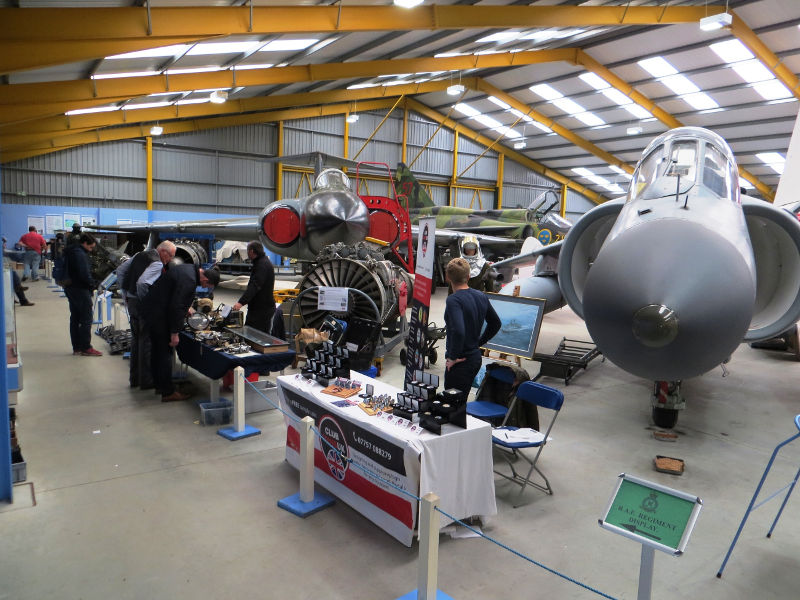
2017 Events at Newark Air Museum

Newark Air Museum Aeroboot

4 March, 2017 – Indoor Aeroboot / Aerojumble Table Top Sale
48 sellers tables all hosted inside Display Hangar 2 amongst the aircraft at the museum site in eastern Nottinghamshire. {Special discount admission rates apply, open to everyone to attend.}

20 & 21 May, 2017 – Hastings & Shackleton 40th Anniversary Weekend
Two day event to commemorate 40 years since these iconic aircraft arrived at the museum; this will also involve the Lincolnshire’s Lancaster Association. {Normal admission rates apply}

17 & 18 June, 2017 – Cockpit-Fest & Aeroboot
This annual gathering provides the perfect opportunity for the public to view a diverse range of visiting aircraft cockpits {Normal admission rates apply}

12 & 13 August, 2017 – 1940’s Weekend
A follow-up event from the successful 2015 Victory Days weekend, with an American focus to reflect their operations from RAF Balderton {Normal admission rates apply}

14 October, 2017 – Indoor Aeroboot / Aerojumble aviation & avionic sale
48 sellers tables all hosted inside Display Hangar 2 amongst the aircraft at the museum site in eastern Nottinghamshire. {Special discount admission rates apply, open to everyone to attend.}

For further details visit: www.newarkairmuseum.org

Northrop Grumman Supports Centenary Programme to Transform Royal Air Force Museum, London

RAF Museum London

Northrop Grumman Corporation (NYSE: NOC) has entered into a sponsor partnership with the Royal Air Force (RAF) Museum to support the museum’s RAF Centenary Programme that will transform its London site as part of the Royal Air Force’s centenary celebrations in 2018.

The museum’s plans include a series of new permanent exhibitions which will open in the summer of 2018. Northrop Grumman will be a themed sponsor in the new Now & the Future exhibition area with a particular emphasis on air intelligence, surveillance and reconnaissance, and unmanned aircraft systems. The Now & the Future exhibit area will enable visitors to understand the story of the RAF from its earliest years in the First World War to its global role today.

“The RAF Museum plays an important role in ensuring the RAF’s story endures and inspires future generations,” said Andrew Tyler, chief executive, Northrop Grumman Europe. “Through our partnership with the museum we have an exciting opportunity to play our part in educating and informing visitors about the technology innovations of today and the future, and encourage a deeper interest in aeronautics among all age groups.”

The multi-million pound development programme will transform the London site through investment in new exhibitions, improved education and volunteering opportunities, and landscaping that will emphasise the site’s importance as a heritage airfield. It will improve the visitor experience, extend the museum’s reach to new audiences and create a lasting legacy to mark the Centenary. The museum has received substantial funding from Heritage Lottery Fund grants as well as public and corporate benefactors. It needs just under £7m to reach its target.

“The Trustees of the RAF Museum would like to take this opportunity to thank Northrop Grumman for their generous support. The museum is committed to sharing the story of the women and men of the Royal Air Force and we are looking forward to redeveloping the site to make it more engaging and accessible for future generations,” said Karen Whitting, director of public programmes, RAF Museum.

The RAF Museum was established in 1968 as a legacy of the RAF’s 50th anniversary. It opened its London site at Hendon in 1972. The museum is a National Museum and a registered charity and welcomes approximately 700,000 visitors a year.

Northrop Grumman is a leading global security company providing innovative systems, products and solutions in autonomous systems, cyber, C4ISR, strike, and logistics and modernization to customers worldwide. Please visit www.northropgrumman.com for more information.

www.rafmuseum.org

Newark Restoration Updates

Newark Air Museum Monospar

The winter restoration work at Newark Air Museum is refocusing onto two of the long-term in-depth restoration projects at the museum’s site in eastern Nottinghamshire.

In the on-site workshop work continues on the North American Harvard II B, 42-12417 (Dutch AF B-163 and RCAF FE930). At the present time work is focused on the rear fuselage and cockpit areas of the airframe; with some additional panel repair work being undertaken on one of the wings.

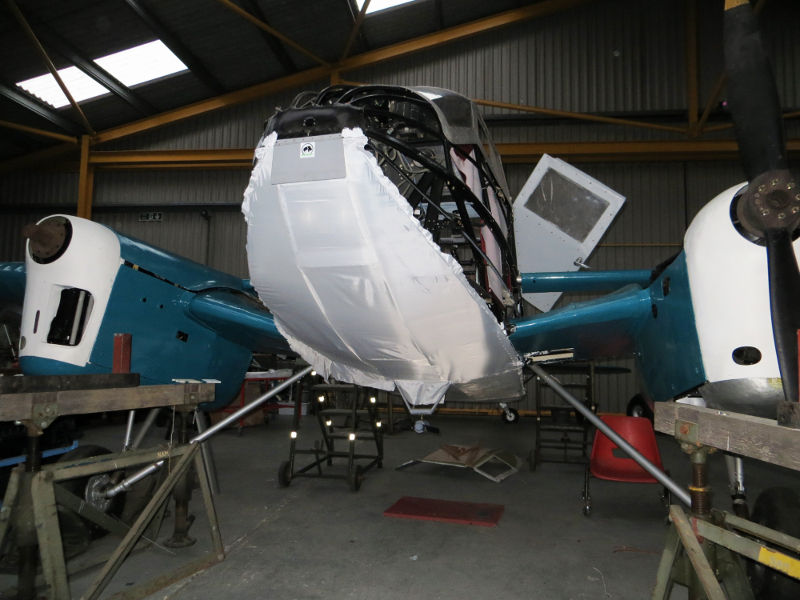
Elsewhere on site, work is also ongoing on the General Aircraft Monospar VH-UTH. Now that much of the internal work on the cockpit and fuselage areas has been completed the aircraft has been taken off the trestles. This has also allowed work to be started on the application of the fabric to the underside of the fuselage.

www.newarkairmuseum.org

Take a flight with Santa!

Sleigh Ride at RAF Museum

For the Christmas period, up to and including 31st December, our 4D theatres will be taking on a Christmas theme.

Dates: Saturday 3rd Dec – Saturday 31st December
Tickets: £5 (£16 discount for families)

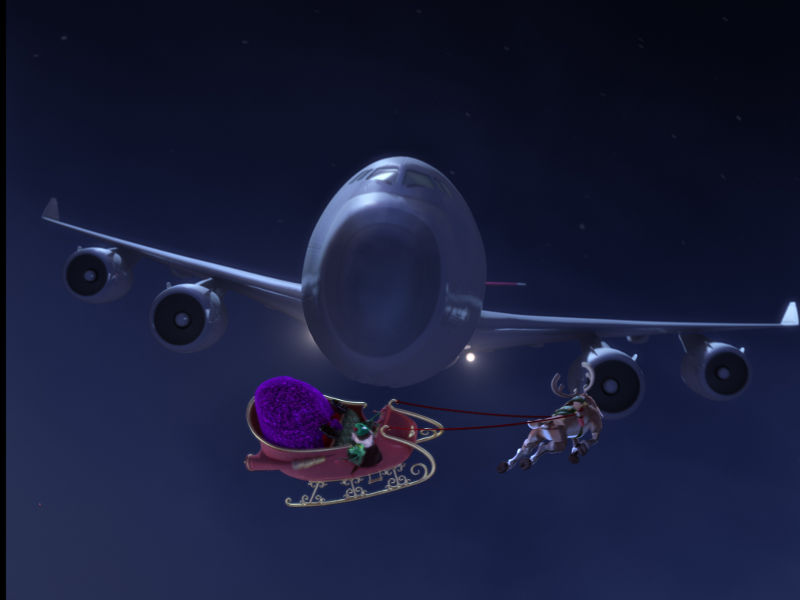
The 4D “Sleigh Ride” experience takes you to Christmas Eve where Santa is making last minute preparations for the big night.

But when disaster hits, it only leaves a stuffy reindeer and a brave but clumsy elf to take the reins. Will this unlikely duo be able to save Christmas by putting their differences aside?

Find out by taking a making a magical journey across a starry Christmas-tide sky.

Available from 3 December at the Royal Air Force Museum London until December 31.

Cost £5 for a single ticket : £16 for a family ticket.

Sleigh Ride 4D is suitable for all.

Tickets may be purchased at the Museum shop, Main Entrance or 4D Theatre itself.

Check out the trailer: https://www.youtube.com/watch?v=FCTAQznWFy4

www.rafmuseumshop.com

The National Museum of the Royal Navy secures medals and log books of Captain Eric ‘Winkle’ Brown for the nation

Eric

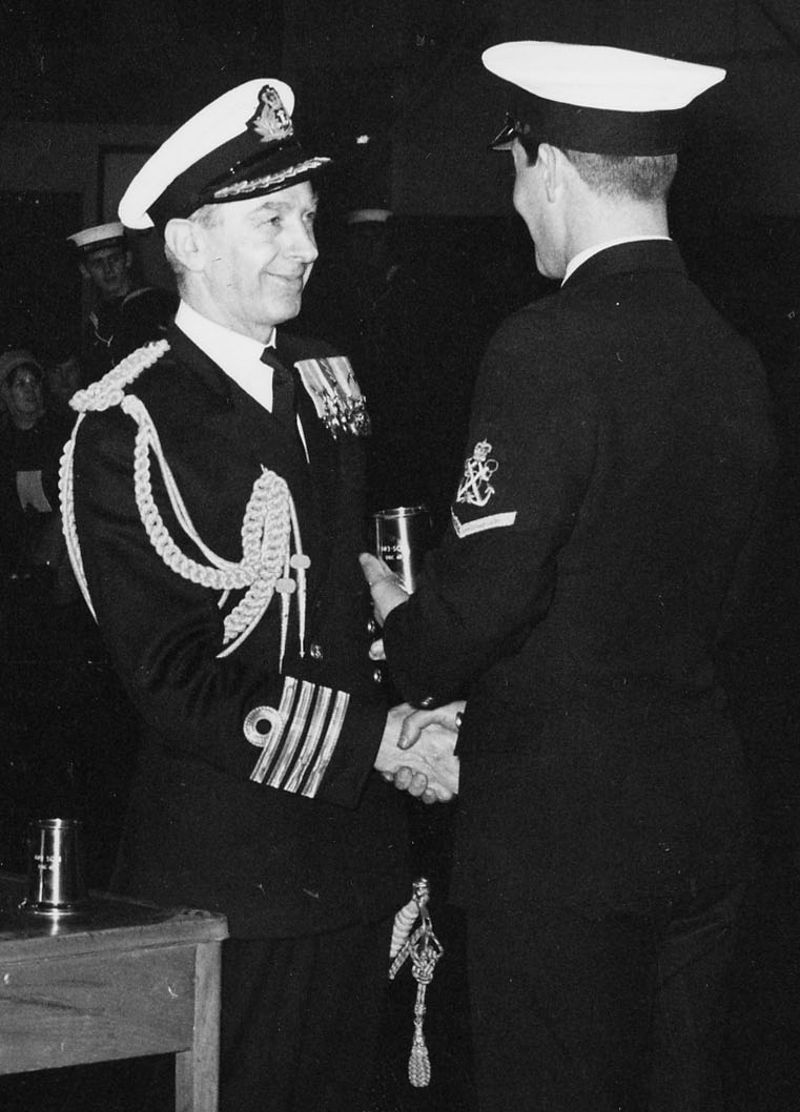
We are delighted to announce that The National Museum of the Royal Navy has been able to secure the medals and log books of Captain Eric “Winkle” Brown following the intervention of an incredibly generous donor. It is fair to say that Captain Brown was by many measures the Fleet Air Arm’s most significant pilot of the post-war period and we are thrilled and honoured to be able to class this collection as one of our own.

We can now preserve the record of innovation which is contained within Captain Brown’s log books which includes previously untapped information and display them for the world to see. The Fleet Air Arm Museum is the spiritual home of the service and a right and fitting place for the medals and logbook to be displayed at.

Captain Brown holds a world record for the most aircraft carrier take-offs – 2,407 and the most landings – 2,271, and on 3rd December 1945 became the first ever pilot to take off and land a jet aircraft – the Sea Vampire – on a carrier. He went on to make many contributions of wider significance to aviation history , using his Fleet Air Arm experience to fly a world record breaking 486 types of aircraft, and to test aircraft for other services and for allies.

The Fleet Air Arm Museum was fortunate to work with Captain Brown in the last decades of his life and have been able to mark and honour his contribution in a number of ways.

The Museum’s collections include the very Vampire Mk1 in which he completed his jet-powered flight, as well as the goggles and gloves which he wore during his tests; in 2015 Captain Brown himself unveiled a new bronze bust commissioned by the Museum which stands proudly in our galleries.

Just as importantly the Museum worked with him to record in detail the long span of his service to form a key part of the archive – which includes the nation’s most significant collection of naval pilots’ flying logs – of the Fleet Air Arm.

www.fleetairarm.com

Christmas has come early at Cosford!

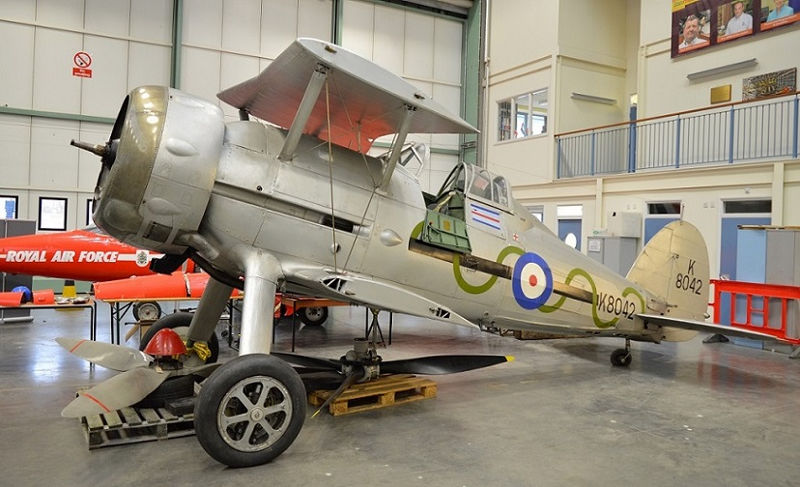
RAF Museum Cosford Gladiator

It’s being to look a lot like Christmas at the Royal Air Force Museum Cosford, as the Shropshire attraction has received a rather large delivery in the form of three Second World War aircraft!  The Boulton Paul Defiant Mk 1, the Gloster Gladiator 1 and the Westland Lysander III have all been safely transported by road from the museum’s London site and are currently being prepared for display at Cosford.

It is a homecoming for the Boulton Paul Defiant Mk 1, the last surviving example of its kind, built by Boulton Paul at its Pendeford, Wolverhampton factory in 1938.  This two-seat turret fighter, operated with mixed fortunes during the Battle of Britain period but found its niche as a night fighter during 1940-42.  They were used extensively later in the war for air-sea rescue and target tug roles in the UK and Middle and Far East. The museum’s example, serial number N1671 was operated by the newly formed No 307 (Polish) Squadron RAF, who became operational in December 1940.  It was painted in its all black night fighter colour scheme the following January and carried out 15 patrols before moving to No 285 (Anti-aircraft Co-Operation) Squadron in June 1942, its last operational user.  It was originally set aside for preservation in 1944 and spent several years moving between RAF bases for display.  N1671 was eventually acquired by the RAF Museum in 1971 and after almost four decades on display at the museum’s London site, the aircraft was completely restored by Medway Aircraft Preservation Society at Rochester Airport in 2009, going back on display at the museum in 2012. Now the sole surviving intact example of its type has made the 130 mile journey from London to Cosford where it will go on public display early in the New Year.

Another new aircraft to wing its way to Cosford is the Gloster Gladiator 1, the first enclosed cockpit and last biplane fighter introduced into RAF service.  Although Gladiators saw operational service at home it was most successfully employed overseas particularly in the defence of Malta.  At the outbreak of the Second World War, four home based RAF fighter squadrons equipped with Gladiators were sent to France and after just ten days of hard fighting, all the aircraft had been lost. In a desperate attempt to provide fighter cover for the ‘little ships’ involved in the Dunkirk evacuation, a detachment of home based aircraft known as ‘G’ Flight was formed at RAF Manston, Kent.  They were quickly deployed to assist with the rescue of more than 338,000 British and French soldiers trapped on the beaches. During the early war years, Gladiators were used by the RAF in several other overseas operations including; Norway, Greece, North Africa and the Middle East.

The museum’s example, serial number K8042 has been displayed at the RAF Museum London since opening in 1972 and this is the first time the aircraft will be displayed at the museum’s Cosford site.  It’s not however, the first time the aircraft has visited the Midlands, having been stationed with No 5 Squadron at RAF Ternhill and No 61 Squadron at RAF Rednal, Shropshire in the early 1940s.  K8042 was also used for gun trials and experiments, whereby an additional pair was fitted under the top wing, giving a total of six guns instead of the usual four. Also joining the aircraft collection at the RAF Museum Cosford is the Westland Lysander III, the only surviving Special Duties variant of this aircraft.  It was designed to operate closely with the Army and had a remarkable performance which enabled it to get into and out of extremely small fields.  A radical change in Army co-operation tactics meant that its lasting fame is not in this role but as a Special Duties aircraft ferrying Allied agents in and out of enemy occupied Europe.  Four Lysander squadrons went to France in 1939 and despite some notable successes the Army Co-operation units suffered extremely high casualties – over 170 Lysander’s were sent to France; only 50 came back.  After their withdrawal from France, they patrolled the coastal areas of south and east England as an anti-invasion reconnaissance measure. Late in 1940 they began air-sea rescue duties in the Channel and North Sea – not only could the Lysander spot airmen in the sea and bring surface vessels to them, it was able to drop a lifesaving dinghy and supplies.

The museum’s example, serial number R9125 first became operational with No 225 Squadron in 1940 as a coastal patrol and photo reconnaissance aircraft, based along the south coast of England.  It took on the Special Duties role with No 161 Squadron in 1944 and was operational for a further two years until they became obsolete from the RAF in 1946.  For a brief period in 1961 the aircraft was placed into storage at RAF Cosford and ten years later it was acquired by the museum and placed on display at its London site, where it has remained until its recent move to Cosford.

The Defiant and Gladiator will both go on public display in the museum’s ‘War in the Air’ hangar in January 2017, whilst the Lysander will be heading to the museum’s Conservation Centre for an in depth inspection and condition assessment, before work is carried out over the next few years to replace its fragile linen outer skin.

Head of Collections at the RAF Museum, Ian Thirsk said:

“It’s been a busy month at Cosford with five new aircraft arrivals.  We took delivery of the Bf109 and the Tiger Moth earlier this month and now we welcome the Defiant, Gladiator and Lysander to the collection at Cosford.  The Junkers Ju 88R-1, a sub-type of the most versatile German combat aircraft of the Second World War will complete the new line-up and is due to arrive before the New Year.  The museum’s centenary plans have provided an exciting opportunity to relocate significant aircraft in the collection closer to aviation fans in the Midlands. In total Cosford will have received six new aircraft in the final few months of this year.”

The new collection of aircraft will enable the RAF’s story to be more comprehensively represented to museum audiences in Shropshire and is in preparation for the centenary of the Royal Air Force in 2018. The centenary plans at Cosford will also include exploring the first 100 years of the RAF, the role it plays today and its future contributions by sharing this story online with a global audience.

Aviation fans can keep up to date with the centenary aircraft moves and on-going developments by signing up to the museum’s free e-Newsletter http://www.rafmuseum.org.uk/contact-us/newsletters.aspx

Visitors will be able to see five of the new arrivals fully reassembled and in their new display positions by early 2017.  Entrance to the museum is free of charge and the museum is open daily from 10am until 4pm.  For further information, please visit the museum’s website www.rafmuseum.org/cosford or call 01902 376200.