RAF Museum’s oldest Volunteer celebrates milestone birthday!

Les Cherrington

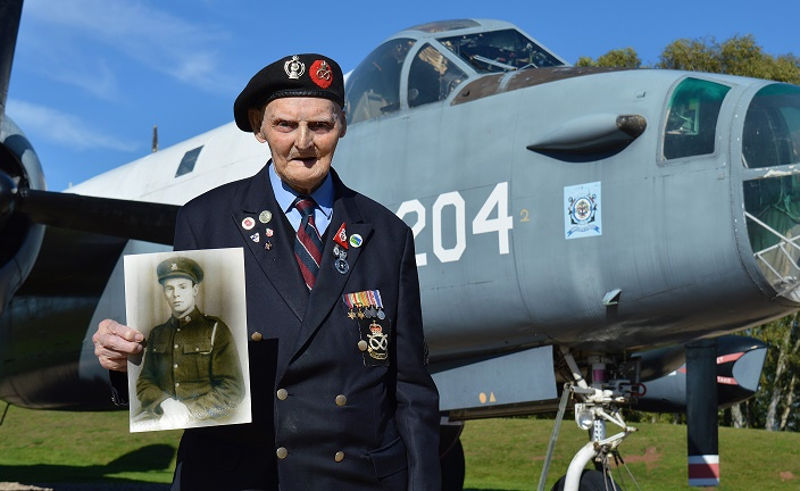
Second World War Veteran Les Cherrington, a Volunteer at the Royal Air Force Museum Cosford will be celebrating a milestone birthday this week when he turns 100 years old!

To celebrate his big birthday, the Museum will host a special Birthday gathering for its team of staff and volunteers in early November, where Les will be the star of the show, cake included of course! As the Museum’s oldest volunteer, Les enjoys engaging with visitors and school groups, sharing his experiences of his time serving in the Army with the Staffordshire Yeomanry Queens Own Royal Regiment.

RAF Museum Cosford Volunteering Manager, Judith Karena said:
“On behalf of the Museum, we wish Les a very happy 100th Birthday! He’s an absolute delight and we are privileged he continues to visit us each week and share his truly remarkable experiences with our visitors of his time serving with the Army during the war. Working with Volunteer veterans like Les who tell their story is one of our most valuable assets and we would like to thank him for all that he does for us. We have a team of over 400 volunteers across our two sites who regularly give up their time to assist the Museum in a wide variety of roles, but Les is the first to reach 100!”

Local lad Les, from Shifnal, began his military career in June 1938 at a Yeomanry camp at Patshull Park, Wolverhampton, where he practiced using both sword and rifle while mounted. By September the following year, he was called for War Service, reporting to Drill Hall, Wolverhampton and then spent the first six months at Welbeck Abbey, Nottinghamshire.

He travelled to France and later sailed to Palestine, arriving in January 1940. Making their way through the regions along the Jordan valley and into Syria, his regiment became engaged in combat with the Vinchy French Forces. By 1942 horses had been replaced by tanks and Les was sent to the western desert to fight Italian forces who were later joined by the German Afrika Korps. As the war in the desert began to build, the Staffs Yeomanry were transferred into the 7th Armoured Division where it’s exploits in the Western Desert Campaign gained it the ‘Desert Rats’ nickname.

Les took part in the infamous outflanking manoeuvre through Tabega Gap, Tunisia in the Battle of the Mareth Line, where over 100 tanks from three regiments lined up to face the Afrika Korps who were armed with far superior weaponry. In one battle eight British tanks were knocked out by one enemy shell causing a fire to rage through the line of tanks. Les’s tank suffered a direct hit by an 88mm enemy gun capable of more rapid fire, the shell pierced the tank and exploded. Les was the only survivor.

After regaining consciousness to find the tank engulfed in flames and his left arm almost completely severed by shrapnel, Les was almost completely blinded from the effect of Cordite. With one arm, Les dragged himself up and through the open turret, slid down the front of the tank on his belly and was hit in the back by machine gunfire before landing on the ground. He crawled into a slit trench where he lay until the next morning when he was found by an Australian soldier.

After spending weeks in hospital abroad, Les returned to the UK in August 1943 and underwent a number of skin graft operations to his face and hand at the Barnsley Royal Military Hospital in Bromsgrove. These proved so painful that he refused to undergo any more operations to repair the burns on his ear and nose. Unable to continue in service, Les later went on to become a security policeman at RAF Cosford and later transferred to the M.O.D. Police Force and served for 40 years at various stations.

RAF Museum Volunteer and Veteran, Les Cherrington said:
“I’ve got many career highlights, my time in Palestine is one of them. I used to enjoy going out on patrol with the horses around the Arab villages searching for arms and ammunition. I was also a member of the Army Regimental boxing team during this period and I competed in 8 contests against other regiments before we were sent to the desert – we only won one though!

After my accident, I took some time to recover. Once I was back on my feet and feeling better I went back to the Regiment and I was looking forward to going to Normandy the following week, but when they did the medical assessment of my injuries they said my time was over. I was sad I couldn’t go and now I’m the only one from my Troop who is still alive.

I’ve been volunteering at the RAF Museum for three years. I met fellow Volunteer Arthur at a 1940’s do in Ironbridge. I saw the Desert Rat badge on his sleeve so I went over to him and said, ‘hello fellow Desert Rat’ and that’s how we got talking. He volunteered already and suggested that I joined him, so I did and now I come every week. I love talking to the school children and being in the company of Arthur and Denis.

Everyone asks me what’s the secret to enjoying life at 100 and I always say that I live an ordinary life. I do my crosswords every day and I’m a member of the Shifnal Male Voice Choir which I love. I’ve been involved with the Shifnal Carnival since 1950 and get to go on the float and dress up as King of the carnival every year! I take life as it comes, I’m not one for anything fancy, but I do enjoy a drop of whisky in my tea in a morning!”

Any members of the public who are interested in finding out more about Les’s story can do so each Tuesday in the Museum’s Visitor Centre when he’s joined by Volunteers Arthur Jones 92, ex-Army and Denis Thompson 93, ex-Royal Air Force.

More information about volunteering at the RAF Museum can be found online: https://www.rafmuseum.org.uk/support-us/volunteering.aspx. Or anyone wanting to share their RAF story can now do so via the Museum’s RAF Stories project, a digital online collection of engaging, historical and contemporary stories of people’s personal connections to the RAF and the service’s influences on their lives. For more information visit www.rafstories.org.
Aerospace Bristol celebrates its 1st birthday

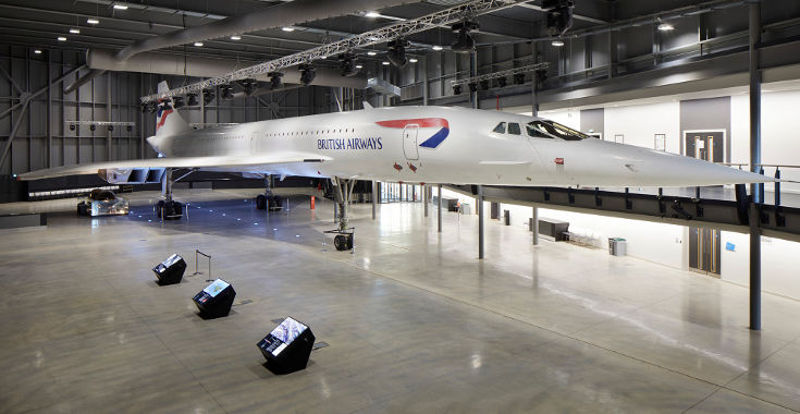
Concorde at Aerospace Bristol

Aerospace Bristol is celebrating its 1st birthday today. Situated on the historic Filton Airfield, the museum opened its doors twelve months ago and has quickly established itself as one of Bristol’s must-see family attractions. A remarkable 160,000 people have already visited Aerospace Bristol; embarking upon a journey through more than a century of Bristol’s aerospace achievements and stepping aboard the last Concorde ever to fly.

Lloyd Burnell, Executive Director of Aerospace Bristol, said: “We always knew there was huge enthusiasm and passion for Concorde, and great pride in our aerospace heritage, but the incredible number of visitors – 160,000 in just twelve months – and the fantastic feedback we’ve received, has exceeded all expectations. We’re now looking forward to the next phase of the museum’s development and to celebrating the 50th anniversary of the first Concorde flight in 2019.”

Aerospace Bristol is planning a year-long ‘Concorde50’ celebration, with a programme of special events, opportunities to share Concorde memories, and the chance to support the charity in its mission to inspire the next generation of engineers.

Over 6,000 schoolchildren have already taken part in the museum’s national curriculum-linked science, technology and engineering workshops, with younger visitors also enjoying fun children’s trails around the exhibition, hands-on interactive exhibits, and even an aviation-themed outdoor play area.

Find out more about Aerospace Bristol at www.aerospacebristol.org.

Cessna 310 Repaint Completed

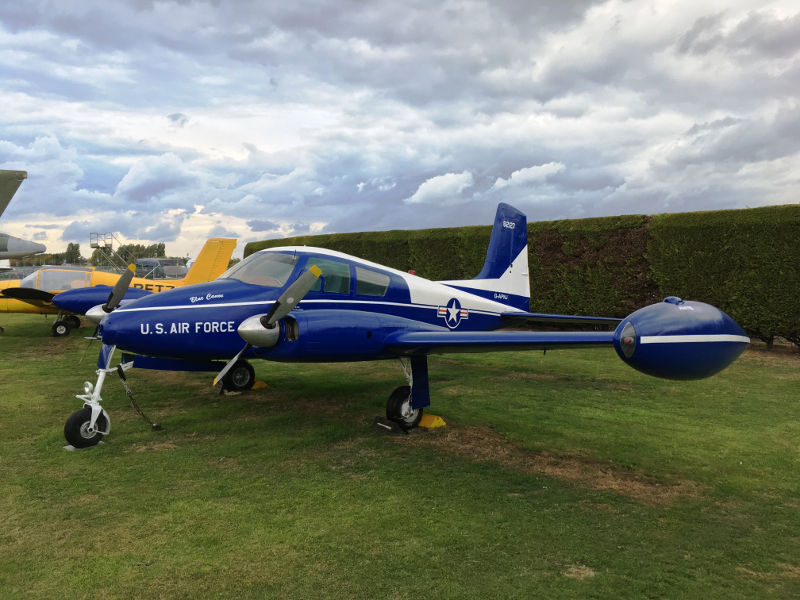
Cessna 310

Recent good weather has enabled the restoration and repainting work on Newark Air Museum’s Cessna 310 to be completed
The Cessna 310, G-APNJ aircraft has been repainted into a representative USAF colour scheme that the type wore operationally as a U-3 ‘Blue Canoe’ utility communications aircraft.

As previously reported, the selected colour scheme is similar to the last civilian colour scheme worn by G-APNJ and it is hoped that the change of markings will stimulate additional interest in this particular aircraft.

Recent information released via the museum indicates that this aircraft will be one of several to feature in a Night Photo Shoot to be hosted by the museum in spring 2019.

www.newarkairmuseum.org

Cosford commemorates Armistice Day with Service of Remembrance

NCWE Poppies

Date: Sunday 11 November 2018
Time: 10.30am arrival / 10.45am service commences
Cost: FREE

The Royal Air Force Museum Cosford will hold a Service of Remembrance on Sunday 11 November, paying respect to those service men and women who made the ultimate sacrifice during their tours of duty.

Visitors who wish to pay their respects and reflect on the sacrifices made by our brave service men and women are invited to join the service, led by the Station Chaplain at RAF Cosford. Those attending will also be treated to renditions from the Cosford Military Wives Choir, who will perform for visitors on arrival and during the service.

The service will take place in the Museum’s Hangar 1 and visitors are politely requested to assemble no later than 10:30am ready for the Service to commence at 10.45am. As well as readings, there will be hymns and the sounding of ‘The Last Post’, followed by a two minute silence.

Students from Castle Bromwich Junior School in Birmingham will also be in attendance, reading poems they have written especially for the service. Year six students recently took part in a workshop delivered by the Museum’s Access and Learning team, exploring the history behind Remembrance Sunday and the significance of the poppy, using a handling collection to spark discussion. A wall of poems written by the students will go on display in the Museum’s ‘War in the Air’ Hangar over the remembrance period for visitors to view.

RAF Museum Cosford Events Executive, Nathan Davis said:
“The Royal Air Force’s centenary year has been a reminder of the vital role our armed forces personnel have played and still continue to play in all our lives. As the celebrations draw to an end, we invite visitors to join us on Remembrance Sunday for a poignant service so we can remember together. We are delighted to be working in partnership with the RAF, the Station Chaplain and the Cosford Military Wives Choir again this year and I’m confident visitors will enjoy the special service we have planned.”

During the service, wreaths will be laid by representatives from RAF Cosford, RAF Museum staff and volunteers, Cosford Military Wives Choir and Castle Bromwich Junior School in honour of those who have fallen in the line of duty. Following the service visitors are free to explore the Museum at their own leisure.

If you would like to find out about Service Personnel who fell serving in the Royal Flying Corps and the Royal Air Force during the Great War of 1914 to 1918, or to dedicate a digital poppy, please visit the RAF Museum’s online story vault: www.rafmuseumstoryvault.org.uk

The Museum is open daily from 10am and entry to the Museum is FREE of charge. For further information please visit www.rafmuseum.org/cosford.

‘Weeping Lancaster’ Commemoration in Lancaster Corner at Newark Air Museum

Weeping Lancaster

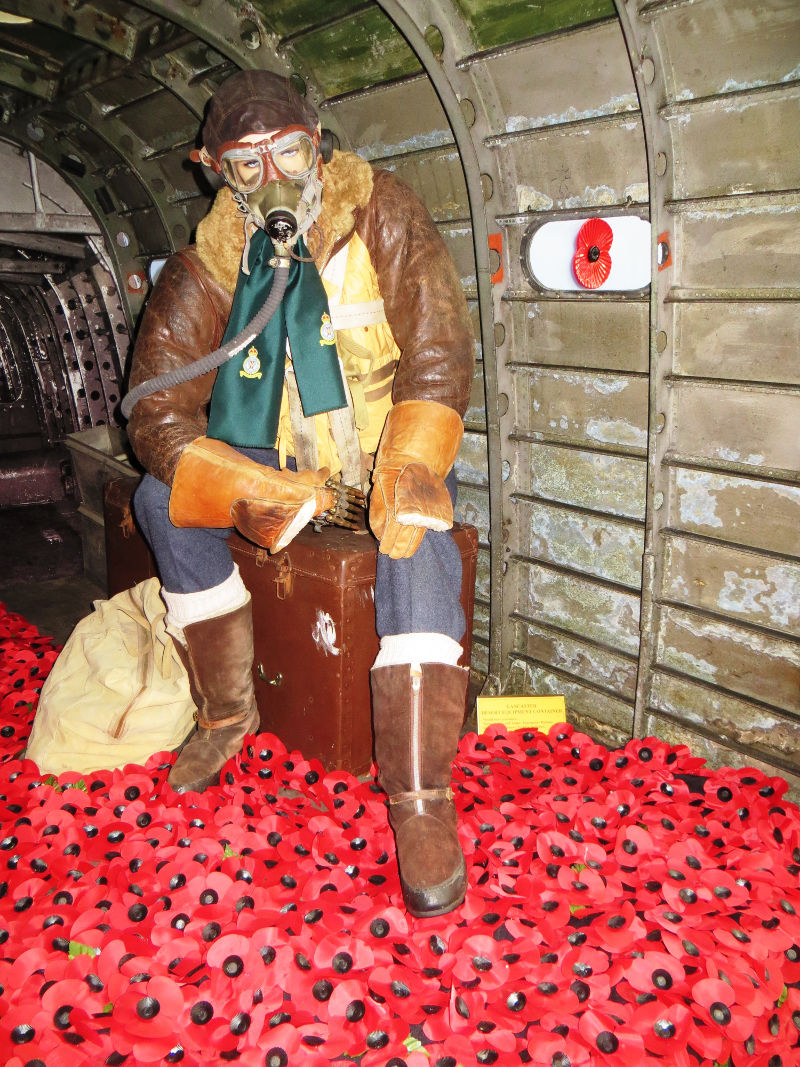
A revitalised version of the ‘Weeping Lancaster’ commemoration has again been added to the artefact display in Lancaster Corner in Hangar 1 at Newark Air Museum, which is located close to the Nottinghamshire / Lincolnshire county border.

‘Weeping Lancaster’ features a stream of poppies that have been added to the floor of the Lancaster fuselage section from IX(B) Squadron Lancaster W4964, WS-J that was donated to Newark in 1974. These complement the added air gunner figure and will form a fitting reminder of the aircrew that trained at RAF Winthorpe during World War II with 1661 HCU (Heavy Conversion Unit).

The inspiration for this commemoration came from the various poppy displays around the country and they were installed in the Lancaster fuselage section by Nigel & Jude Bean.

The fuselage section is of major significance to the history of Bomber Command as it came from Lancaster W4964, that flew 106 Ops and its 100th Op was a ‘Tallboy Mission’ on the Tirpitz battleship in Alten Fjord, Norway.

W4964 carried the nose art of the ‘Johnnie Walker’ whiskey company and the exhibit still wears its original wartime paintwork. Its ends had been boarded up and it had been used as a road repairers ‘mess hut’ and also garden shed before being donated to the museum in 1974.

www.newarkairmuseum.org

Date Confirmed For The Royal Navy International Air Day 2019

Rafales at Yeovilton

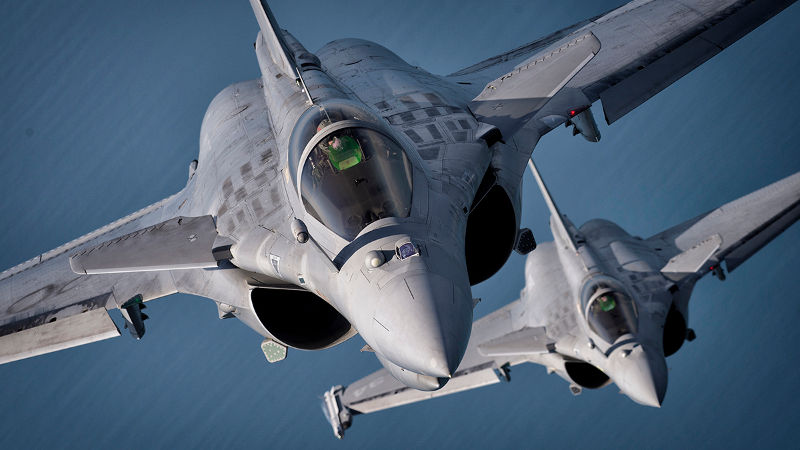
Planning is well underway for one of the Royal Navy’s premier public events – the International Air Day at Royal Naval Air Station (RNAS) Yeovilton in Somerset. As the Royal Navy’s only air show, it will now be known as the Royal Navy International Air Day and will take place on Saturday 13 July 2019.

The Royal Navy has been at the forefront of technological innovation in Maritime Aviation for over 100 years. This is destined to continue with the first landing, this autumn, of an F-35B Lightning II on HMS Queen Elizabeth – the world’s first aircraft carrier designed around operating a fifth-generation fighter jet. The subtle but significant name change reflects this but also the aspiration to build on the growing reputation of the airshow by attracting further participation by foreign naval air arms and maritime aircraft.

Commodore Nick Tindal, Commanding Officer, RNAS Yeovilton, states that:

“The Royal Navy International Air Day will celebrate modern and historical Air Power in its many forms not least its central role for Maritime Capability and for the capabilities of our sister services, the Army and Royal Air Force. 

It is also an opportunity to welcome our NATO, European and other close Allies and Partners from across the globe underlining the importance of international cooperation and the international nature of Royal Navy and UK military operations.”

RNAS Yeovilton, the spiritual home of the Royal Navy’s Fleet Air Arm, will open their gates to up to 40,000 visitors to enjoy the magnificent five hour flying display, meet our Armed Forces personnel and see their equipment up close. There will also be a huge array of educational ground attractions from interactive Service displays to engineering fairs and state-of-the-art defence technology exhibitions. Families will also be able to enjoy trade stalls, arena displays, helicopter pleasure flights, simulators and fairground rides. Further information on tickets will be announced in due course.

http://www.royalnavy.mod.uk/yeovilton-airday

Newark Air Museum Indoor Aeroboot Aviation & Avionics Sale

Newark Aeroboot

Saturday 13th October 2018

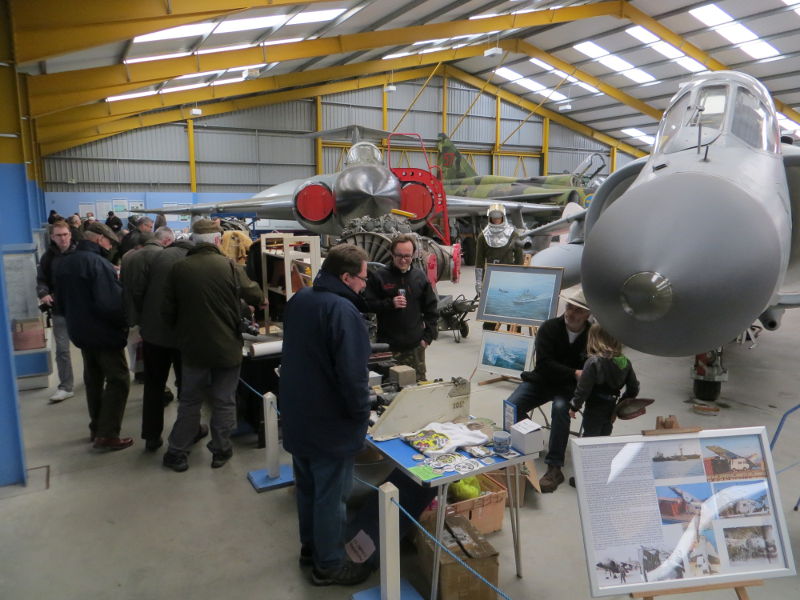
The next Newark Air Museum Indoor Aeroboot / Aerojumble Sale at the museum’s site in eastern Nottinghamshire takes place on Saturday 13th October 2018. This charity fund raising event has attracted interest from a wide range of sellers and once again is a sell-out event.

The funds that the museum raises from organising the event will be used to support the development of facilities at its Gateway Aviation Site, which is located in eastern Nottinghamshire close to the Lincolnshire border.

Forty eight (48) tables, featuring a host of different sellers, who come from around the UK will be arranged amongst the aircraft in Display Hangar 2 at the museum.

Buyers / visitors who attend this fund raising event will have the opportunity to search through a varied selection of aviation and avionic items: including books, paintings, prints, DVDs, plastic kits, die-cast models, clothing, radio equipment and aircraft parts. Regular updates / seller’s information are being posted on the news page of the museum website www.newarkairmuseum.org

Buyers / visitors at this event will be able to access the museum site on Saturday 13th October, 2018 at a special discounted admission price of just £4.50 per person.

The museum opening times will be 09.00 to 17.00 hours; with the sale taking place between 09.00 and 14.00 hours; to get the best bargains we suggest that you get there early.

Further details are available on the Events Page of the museum website www.newarkairmuseum.org or by telephoning 01636 707170.

Lysander restoration work will soon be on show

Lysander at Cosford

Date: 12-18 November 2018
Time: 10:15am-1:00pm
Cost: £5.00 per person

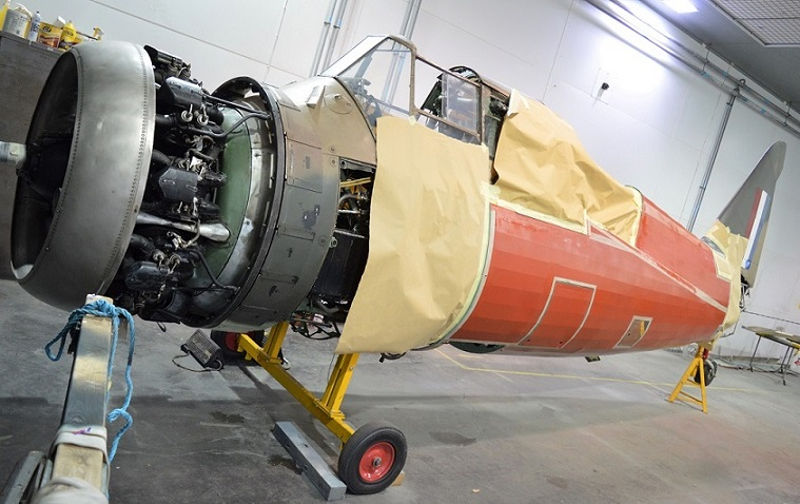
A Second World War Westland Lysander III (S.D.), the only surviving Special Duties variant of its type will soon be on show to the public. The aircraft is currently undergoing conservation work in the Michael Beetham Conservation Centre at the Royal Air Force Museum Cosford and this November the centre will be opening its doors, allowing visitors behind the scenes access to aircraft conservation projects and the chance to speak with the team who make them happen.

From 12-18 November visitors can get up close to the current projects undertaken by the team at Cosford and a highlight during this special event will be the remarkable progress on the Westland Lysander III (S.D.) last seen by the public in the static display line-up at the RAF Cosford Air Show in June.

Upon arrival at the Museum some 22 months ago, the Lysander underwent an in-depth inspection and condition assessment and work was carried out on a few minor repairs. The damaged fabric outer skin was removed and focus was put into the aircraft’s engine, preservative treatments were removed and mechanical systems were cleaned and lubricated and are now functional again.

Since it was last viewed in June the aircraft has undergone a major transformation, mainly the recovering of the fuselage in a traditional Irish linen using original doping techniques. The new outer skin has already received its UV microwave protection layer and is currently being primed ready for its 161 Squadron Special Ops colour scheme to be applied within the next few weeks. Aviation fans will be able to view the newly painted fuselage section during the November Open Week and speak with members of the team who have carried out the work.

The Lysander has been a largely Volunteer led project with a team of 4-6 volunteers working two days a week on the cleaning and mechanical elements, whist the new outer skin and paintwork has been applied by the Museum’s skilled Surface Finish Technician.

RAF Museum Conservation Centre Manager, Darren Priday said;
“During the inspection phase, we discovered some original fabric and we’ve taken the decision to conserve this item and keep the original paintwork. Once the fuselage section is complete, work will begin on attaching the ailerons and other flying controls which have already been covered in Irish linen; these will go through the same doping and paint process as the fuselage. The metal cowlings will be resprayed before being refitted. Over the next few months our team of Volunteers will be focussing their efforts on the wings. This work will all be on display to the public in November and in the New Year the undercarriage will be refitted as part of the rebuild phase which is expected to take upwards of 12 months.”

The Museum’s Westland Lysander III (S.D.) is the only surviving Special Duties variant of this aircraft. It was designed to operate closely with the Army and had a remarkable performance which enabled it to get into and out of extremely small fields. A radical change in Army co-operation tactics meant that its lasting fame is not in this role but as a Special Duties aircraft ferrying Allied agents in and out of enemy occupied Europe. Four Lysander squadrons went to France in 1939 and despite some notable successes the Army Co-operation units suffered extremely high casualties – over 170 Lysanders were sent to France; only 50 came back. After their withdrawal from France, they patrolled the coastal areas of south and east England as an anti-invasion reconnaissance measure. Late in 1940 they began air-sea rescue duties in the Channel and North Sea – not only could the Lysander spot airmen in the sea and bring surface vessels to them, it was able to drop a lifesaving dinghy and supplies.

The Museum’s example, serial number R9125 first became operational with No 225 Squadron in 1940 as a coastal patrol and photo reconnaissance aircraft, based along the south coast of England. It took on the Special Duties role with No 161 Squadron in 1944 and was operational for a further two years until they became obsolete from the RAF in 1946. For a brief period in 1961 the aircraft was placed into storage at RAF Cosford and ten years later it was acquired by the Museum and placed on display at its London site, where it remained on display until its recent move to back to Cosford.

Visitors will also be able to view the continuing progress on the Vickers Wellington, Range Safety Launch, a project being run by a team of Volunteers, plus see a glimpse of the Dornier Do 17 smaller objects including propellers and engines, plus the First World War German LVG aircraft will also be on display to visitors. Museum Technicians, Apprentices and Volunteers will be available throughout the week to speak with visitors about their work and answer any questions they may have.

The Conservation Centre will open from 12-18 November between 10.15am and 1.00pm each day and admission is £5.00 per person (children under 16 are free and must be accompanied by an adult). The Museum’s other hangars will be open from 10am until 5pm and entry to the Museum is free of charge. For further information, please visit the Museum’s website www.rafmuseum.org/cosford or call 01902 376200.

Phantom Arrival at RAF Cosford

RAF Cosford Black Phantom

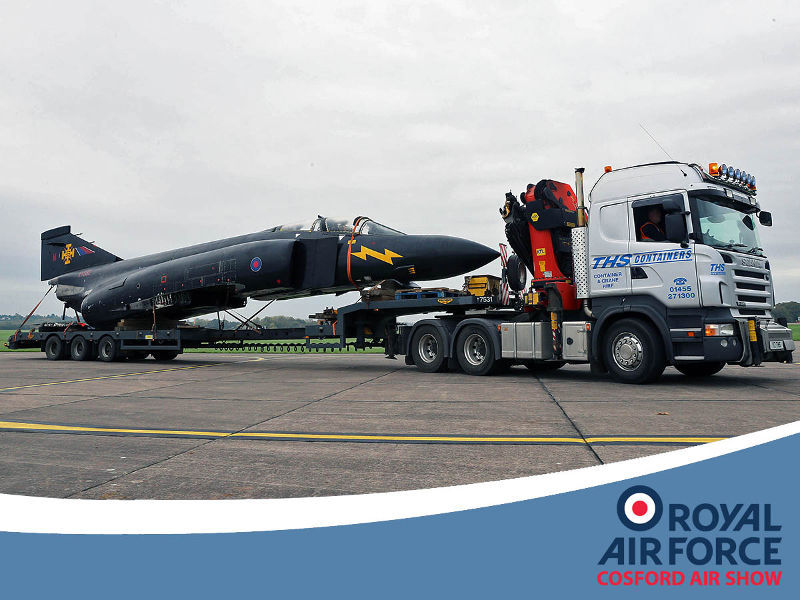
Following last week’s launch of the RAF Cosford Air Show 2018, a cold-war era F-4 Phantom aircraft, known as ‘Black Mike’, was delivered by road to the airfield, in preparation for the Air Show on Sunday 10th June 2018.

The F-4 Phantom II was operated by the Royal Air Force between 1969 and 1992, principally as an air defence fighter. Although the jet was an American design, produced by McDonnell Douglas, the UK’s Phantoms were a special batch built separately and containing a significant amount of British technology including the addition of Rolls-Royce Spey engines. Of all the UK’s Phantoms, the airframe which arrived today at RAF Cosford is perhaps one of the most iconic, known as ‘Black Mike’ due to its unique paint scheme applied by 111(F) Squadron in the late 1980s.

The airframe, now owned by GJD Services Ltd, has been the centre of a campaign by aviation enthusiasts, who plan to restore her to exhibition standard. David Butterfield, from the British Phantom Aviation Group, said, “The British Phantom Aviation Group (BPAG) are extremely proud and honoured to participate with Phantom XV582 ‘Black Mike’ at the RAF Cosford Air Show 2018. Our hardworking, dedicated team of volunteers have shown outstanding knowledge, skills and aptitude to make the move from RAF Leuchars happen. We look forward to working with RAF Cosford over the coming months and we are certain that the aircraft will be a great attraction as part of the RAF100 static displays.”

Air Show Operations Manager, Mr Peter Reoch, said, “The Royal Air Force’s Phantoms played a critical role in defending the UK’s airspace during the height of the Cold War. Therefore, having an example of the type was essential as part of our RAF100 static exhibition at the Air Show on Sunday 10th June 2018. It will be the first of many aircraft which will be transported by road to RAF Cosford over the coming months specifically for display at the Air Show.”

Tickets for the Air Show, which is promising to be a spectacular and interactive tribute to the Royal Air Force’s centenary, are already on sale via the event’s website. Tickets will again only be available in advance, and are priced £25.00 per adult, with accompanied under-16s attending the Air Show for free, presenting excellent value for money.

www.cosfordairshow.co.uk

Rare aircraft on show during Open Week

Hampden Fuselage

Date: 13-18 November 2017
Time: 10:15am-1:00pm
Cost: £5.00 per person

A rare example of a Handley Page Hampden being restored at the Royal Air Force Museum Cosford will be one of the highlights at the Conservation Centre Open Week taking place on 13-18 November 2018.

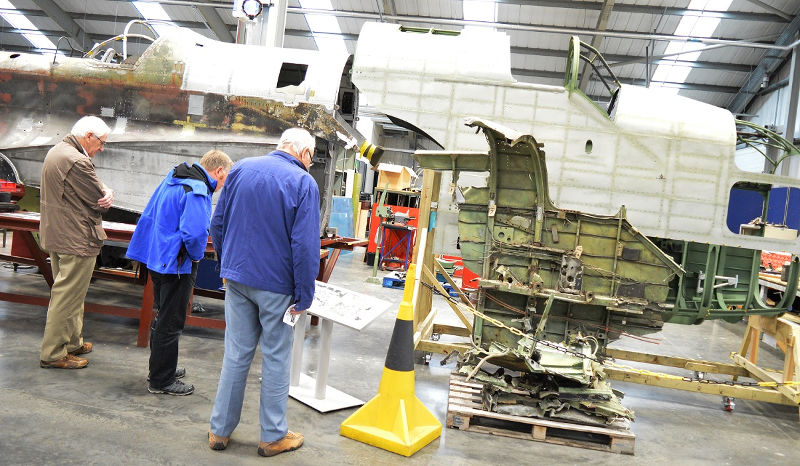
The Handley Page Hampden’s forward and rear fuselage sections will be placed in line for aviation fans to view during the behind the scenes week. Since it was last viewed by the public almost 12 months ago, the forward fuselage and cockpit section has been completed, manufactured entirely from scratch by one of the Museum Technicians, using pre-production drawings. The new section also includes some original components from the P1344 Hampden and aviation fans will be able to get up close to view the progress during the forthcoming Open Week. Work is continuing on the aircraft fuselage section and it is hoped that work will be completed sometime in 2018. Once complete, the aircraft at Cosford will be one of only two examples and one nose section in existence from a total of 1,430 built.

Other aviation treasures on show to visitors will include the Vickers Wellington, one of only two complete examples anywhere in the world, out of 11,461 built. This popular aircraft is a favourite with aviation fans and has undergone work to treat small amounts of corrosion to its famous geodetic framework, both wings and fuselage, since its arrival at Cosford in June 2010. Now free of corrosion, both wings have been painted in a protective layer and one has already been re-covered in Irish linen, doped and painted in its Bomber Command Night colour scheme. Work is now underway to repeat the process on the aircrafts second wing and eventually the fuselage.

The Westland Lysander III, the only surviving Special Duties variant of this aircraft (which were used to ferry allied agents in and out of enemy occupied Europe). The aircraft which has undergone an in depth inspection and condition assessment over the last six months will also be on display to visitors. This project is being run by the Museums team of Volunteers and work over the next few years will include replacing its fragile linen outer skin.

Another aircraft spending a short period of time in the Conservation Centre is the Hawker Siddeley Gnat T1 – the first aircraft used by the RAF Red Arrows, superseded by the current aircraft, the Hawk in 1979. The aircraft was previously on public display at Cosford and is destined to move to the Museum’s London site before the end of the year. The Open Week in November is a last chance for Red Arrow fans to see the aircraft in the West Midlands. As the aircraft is being prepared for transportation by road, it is also a chance to see it in a partial stripped condition.

RAF Museum Conservation Centre Manager, Darren Priday said:
“It’s that time of the year again when the Conservation Centre opens its doors to the public. The Open Week has become a firm favourite with the aviation enthusiasts and local people who have been regular attendees over the years. This year we are highlighting the Westland Lysander, a WW2 aircraft that was used on SOE ops amongst other things. The aircraft will be in a stripped condition allowing visitors to view the usually closed up areas in detail. If you want a day out with a difference, why not come along and see what we are doing.”

Visitors will also be able to view the continuing progress on the Range Safety Launch, a project being run by a team of Volunteers, plus see a glimpse of the Dornier Do 17 smaller objects including propellers and engines. The First World War German LVG aircraft will also be on display to visitors along with some more unusual objects including the Skynet satellite and a missile collection, which are both being prepped ready for a move down to the Museum’s London site in preparation for the new centenary plans in 2018. Museum Technicians, Apprentices and Volunteers will be available throughout the week to speak with visitors about their work and answer any questions they may have.

The Conservation Centre will open from 13-18 November between 10.15am and 1.00pm each day and admission is £5.00 per person (children under 16 are free and must be accompanied by an adult). The Museum’s other hangars will be open from 10am until 5pm and entry to the Museum is free of charge. For further information, please visit the Museum’s website www.rafmuseum.org/cosford or call 01902 376200.

PLUS…in addition to the open week, visitors will also have the exciting opportunity to climb on board the Hawker Siddeley Nimrod R.1 XV249 during daily tours running from 13-18 November. Tickets are available to purchase online via the Museums website http://www.rafmuseum.org/cosfordor on the day, subject to availability.