Tackling the guerrillas of Oman is focus of museum lecture

Date: 19 August 2016

Time: 12.30pm

Cost: FREE

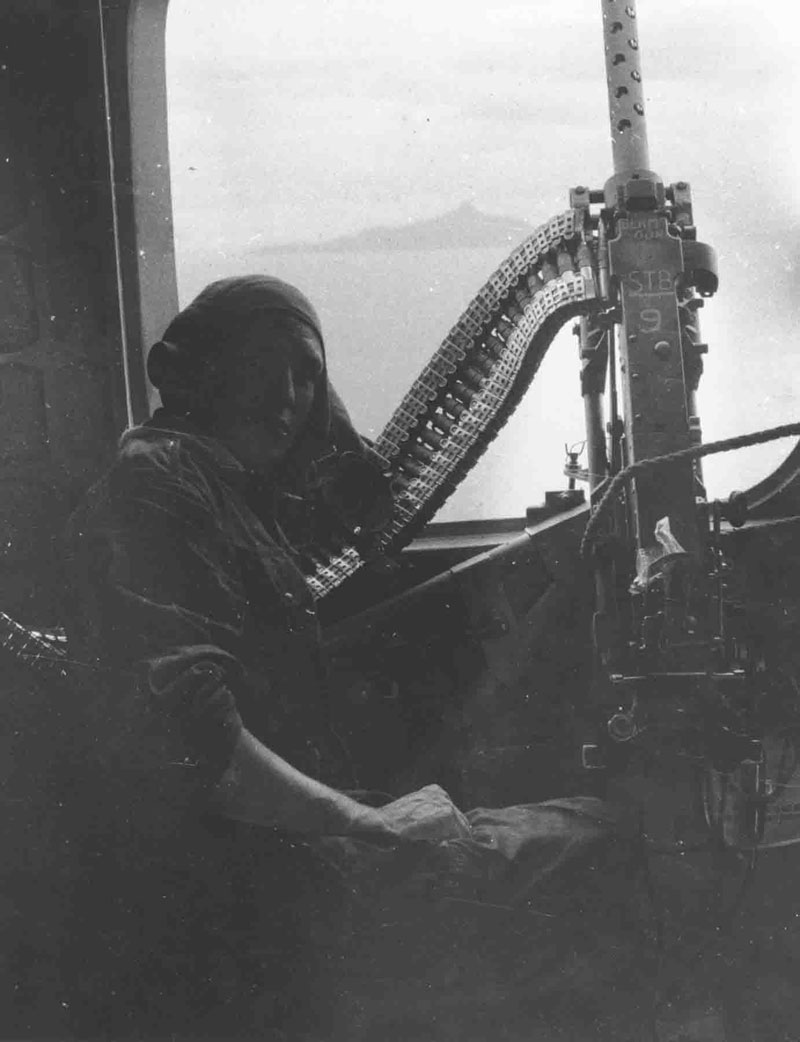
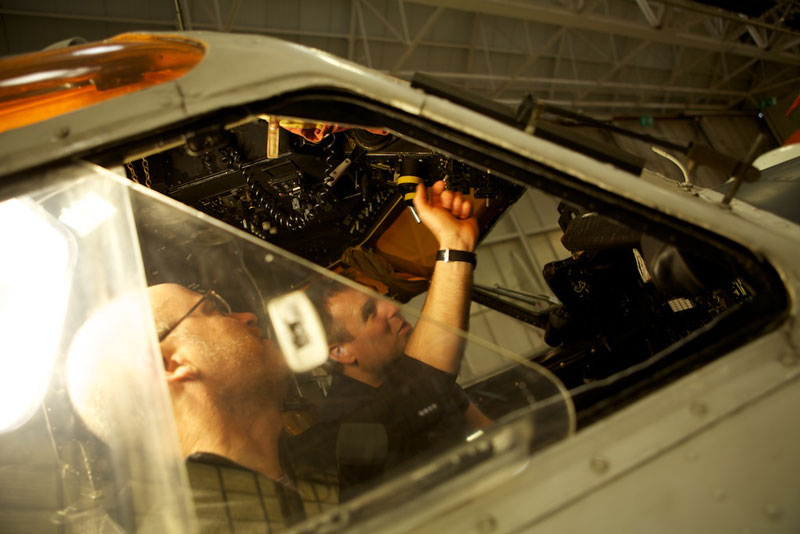
For more than two decades a series of counterinsurgency operations were fought in the Sultanate of Oman on the South-eastern coast of the Arabian Peninsula. The military action taken against the activities of guerrillas in these regions will be the focus of the next Cold War Lunchtime Lecture held at the Royal Air Force Museum Cosford later this month. The lecture entitled ‘The RAF and Counterinsurgency Warfare in Oman during the Cold War’ will be presented by Dr Ross Mahoney, Aviation Historian at the RAF Museum on Friday 19 August at 12.30pm.

This forthcoming lecture is the third in the new series of lectures launched earlier this year, which each cover a different topic related to the Cold War. During this next lecture, Ross will discuss two major counterinsurgency campaigns fought in the Sultanate of Oman from the early 1950s through to the mid-1970s and how air power played a vital role in defeating the revolutionaries. Up for discussion will be the campaign fought against an uprising in the Jebel Akhdar during the 1950s and the campaign conducted in the Dhofar region against insurgents supported by Yemen which ran for just over a decade.

The role of air power during this period ranged from strike operations, such as the role played by BAC Strikemasters at the Battle of Mirbat in 1972, through to the support of ‘hearts and minds’ operations using helicopters and light aircraft. Based on research undertaken for the RAF Museum’s exhibition on the relationship between the Royal Air Force and Royal Air Force of Oman (RAFO) at its London site, this lecture will explore the origins of these campaigns, the role of air power in supporting their conduct and the formation of the Sultan of Oman’s Air Force. Finally, the lecture will consider the development of relations between the RAF and RAFO, after the end of the Dhofar War through to the present day.

RAF Museum Aviation Historian, Ross Mahoney said:

“It gives me great pleasure to be delivering one of the Museum’s Cold War lunchtime lectures at Cosford. The lectures, which form part of our research programme, are a significant activity for the Museum. Additionally, the opportunity to lecture on research undertaken for one of our exhibitions is important as it allows us to examine further the RAF’s role in this region of the world and the impact the Service has had on the development of air forces around the globe.”

The Cold War lunchtime lectures form part of the RAF Museum’s Research Programme for 2016.  ‘The RAF and Counterinsurgency Warfare in Oman during the Cold War’, is the third of four lectures taking place at Cosford this year.  The programme also consists of the Trenchard Lectures in Air Power Studies and the First World War in the Air Lunchtime Lectures, which are held at the University of Wolverhampton, the Royal Aeronautical Society in London and the RAF Museum in London respectively.

This FREE lecture will be held in the RAF Museum’s National Cold War Exhibition lecture theatre at 12.30pm on Friday 19 August.  As spaces are limited, organisers advise visitors to book their tickets in advance via the museum’s website to avoid disappointment.

For further information about the museum’s research programme or to book your FREE ticket to the lecture, please visit the museum website www.rafmuseum.org/cosford.  The museum is open daily from 10am and entry to the museum is FREE of charge.

Student helps restore Great Grandfather’s Hampden bomber

Student helping restore Hampden bomber

A young student from London is nearing the end of a week’s work experience placement at the Royal Air Force Museum Cosford, working on her Great Grandfather’s aircraft.  Beth Halbard, aged 16 has spent the last few days working alongside the museum’s Technicians and Apprentices, helping to restore the wing box section with seat from the Handley Page Hampden P1344.  This particular section of the aircraft has close family links and was the seat where her Great Grandfather, George Shepherd, sat on the Hampden’s final flight on 4 September 1942.

George Shepherd was a Corporal Engine Fitter on 144 Squadron Royal Air Force and serviced the Hampden currently being restored at the museum.  As a Technician, he rarely had the opportunity to fly in the aircraft he serviced, but the lack of Ground Crew in Russia meant there was a need for each aircraft to carry a technician as fifth crew member. George ended up flying on his aircraft, P1344, which turned out to be the aircraft’s final flight.

Hampden’s were required to provide aerial protection for Arctic Convoy’s and to meet this demand, 16 aircraft from 144 Sqn and 16 from 455 Sqn RAF flew out to Vaenga, northern Russia. After departing from Sumburgh, Shetland Islands on the evening of 4 September 1942, the museum’s Hampden example, with George aboard, suffered with icing problems and diverted slightly north to find lower ground, avoiding the mountains. This action took the aircraft directly above a Luftwaffe base at Petsamo in northern Norway and was subsequently hit by ground fire from anti-aircraft battery, followed by attacks from two Messerschmitt 109 fighters who helped bring it down. 

This air battle resulted in Flight Sergeant Miller and Sergeant’s Robertson and Garrity’s loss of life, and whilst Pilot Officer Perry and George both survived the crash landing; Perry was badly injured.  George covered him in cloth to help keep him warm before going on the run for over 30 hours, eventually being captured.  He spent the rest of the war in Stalag Luft V111b and was involved in the long marches, where he walked over 500 miles in 52 days in temperatures as low as -20 degrees Celsius.  Eventually liberated by the US Army, George returned to the UK and was demobed at RAF Cosford, just a stone’s throw away from the museum where his aircraft now lives. 

Six decades later, Beth visited the RAF Museum Cosford with her parents and Great Grandfather to view the Hampden.  She was studying the Second World War at school and George surprised the whole family when he wrote notes to help with her project, detailing what happened during his flight in the Hampden back in 1942, something he had kept from the family for over 60 years. 

Almost a decade after first viewing the Hampden and with an interest in aviation and engine mechanics, Beth was on the lookout for a hands-on, engineering work placement and the RAF Museum Cosford was her number one choice.  Beth has now spent five days in the museum’s Conservation Centre, temporarily part of the team, helping to restore the aircraft to its former glory.

Beth Halbard said:

“There is a huge respect within the family for my Great Grandfather about everything he went through.  Seeing the aircraft being restored to its former glory and playing even just a small part of that is a huge honour.  My Great Granddad didn’t really speak about his experiences in the RAF, but I remember how emotional he got when he was reunited with his Hampden and it was after this that we could appreciate what he went through.”

 Beth has been put to work in a variety of roles during her placement, including helping with aircraft moves, the removal of aircraft wheels from the Catalina as well as bench work learning how to work with various metals.

RAF Museum Conservation Centre Manager, Darren Priday said:

“I first met Beth aged 9, when she visited the project with George and other family members.  Last year Beth approached me about attending work experience with us as she is interested in completing an aeronautical degree. How could we refuse such a request with her connections to our Hampden. Hopefully after spending time with us she will have a better understanding of the aviation industry; she will always be welcome back.”

The Hampden is one of the museum’s longest running conservation projects, which has progressed considerably over the last year.  As one of only three examples of the type remaining, the significance of this project is huge and is being led by one of the museum’s skilled Aircraft Technicians.  This work includes manufacturing a forward fuselage (above the lower longeron) hand built and where possible, incorporating existing fixtures and fittings from the original cockpit.  Another major component manufactured on site has been the aircraft’s tailplane which now has an operational flying control system (elevator and rudder) and the surfaces have been covered in Irish Linen and sprayed into Bomber Command green/brown camouflage pattern.  The rear fuselage external structure is close to being finished with just a few small tasks to be completed on the bomb bay sidewalls.  Internally, the wooden floor is being fitted; once installed this will allow for further rebuilds to be progressed. 

From 9-14 November visitors will be able to get up close to all of the current conservation projects undertaken by the team at Cosford, which include the Wellington bomber, Dornier Do 17 and the Range Safety Launch.  For more details on the open week, visit www.rafmusuem.org/cosford.

Museum aircraft join Air Show line-up

RAF Museum Gnat T1

A collection of aircraft from the Royal Air Force Museum Cosford will be joining the line-up in a static display at the RAF Cosford Air Show, taking place on Sunday 19 June. Aircraft already confirmed to appear include the experimental jets; Bristol 188, Fairey Delta II and the Avro 707. The recently added Hawker Siddeley Gnat T1 will be the fourth aircraft to complete the museum’s display at this year’s show.

As part of the Air Show’s key theme this year ‘Speed: Evolution of the Jet Engine’, the Bristol 188, Fairey Delta II, Avro 707 and Gnat T1 will be rolled out from the museum hangars and exhibited outside on the airfield, forming part of a unique display of vintage British jet aircraft. All four aircraft played a vital role in the advancement of British aviation technologies in the 1950s and 1960s, and are sure to be a popular attraction for aviation fans visiting the show, which attracts in excess of 50,000 visitors each year.

Known as the ‘flaming pencil’ for its sleek looks and intended role as a supersonic research aircraft, the Bristol 188 will be one of the key highlights for aviation fans. Sure to be popular with families is the Gnat T1, made famous by the RAF Red Arrows display team. Not only will visitors see the Red Arrows fly overhead, they will also have the opportunity to get up close to one of the team’s former aircraft on the ground. Plus, Red Arrow fans now have the opportunity to add their name onto one of the iconic planes and see it fly at shows throughout the 2017 season thanks to the museum’s ‘Names on a Plane’ campaign. Speak to museum staff on the day or visit www.namesonaplane.org to find out more.

RAF Museum Cosford Curator, Al McLean said:

“This is the perfect opportunity for aviation fans and photographers to get stand-alone photos of our aircraft outside of the hangar, particularly the Avro 707 which has been off display for a little while. We are delighted to be able to support the show again this year with static aircraft displays and we hope they will prove popular with visitors.”

In addition to the aircraft displays, the museum’s Access and Learning team will be running workshops in the STEM hangar throughout the day, where families can take part in rocket car activities, in free drop-in sessions. There will also be the opportunity to try on some of the jackets, hats and flying goggles from the museum’s handling collection and view some of the objects used by RAF personnel through the years. To find out more about the museum and the wide range of learning opportunities available, head to the STEM hangar and speak with the team.

RAF Museum Cosford Access and Learning Assistant, Julie Brierley said:

“This is the first time the Access and Learning team have exhibited at the Air Show and we are excited to be able to showcase some of the activities we run with schools to all the families visiting the show. We will be running rocket car workshops throughout the day and alongside this a competition on our Twitter stream for visitors to share photos of their rocket car, with a prize bundle for one lucky winner.”

Tickets for the show are advanced sale only and cost £25 per person with free entry for accompanied under 16s. Tickets will not be available to purchase on the gate so to avoid disappointment, visit the shows website www.cosfordairshow.co.uk and book online.

Museum celebrates Armed Forces Day with concert and flypast

Armed Forces Day logo

Date: 25 June 2016

Time: 1.00pm and 2.15pm

Cost: FREE (Register at www.rafmuseum.org/cosford)

Flypast: Battle of Britain Memorial Flight Hurricane 3.20pm (weather permitting)

The Royal Air Force Museum Cosford will once again celebrate the contributions made by Her Majesty’s Armed Forces, by hosting an orchestra concert and a Hurricane flypast on Saturday 25 June for Armed Forces Day.

The highly decorated Glebe Symphonic Winds Orchestra will be performing for veterans, serving personnel and visitors alike, in an hour long concert. This intimate musical performance will have a very British theme with classical pieces from Edward Elgar and Gustav Holst, mixed up with more modern music from Elton John and David Bowie!

The concert will take place in the museum’s National Cold War Exhibition Auditorium which seats 200 guests. As places are limited, the Glebe Symphonic Winds will be performing twice, at 1.00pm and again at 2.15pm, allowing up to 400 visitors to enjoy their harmonious renditions. Attendance to the concert is free of charge and anyone interested in attending is asked to pre-register now via the museum’s website in order to guarantee their place.

The annual Armed Forces Day is an opportunity to reflect and pay tribute to our heroes past and present, including current serving personnel, service families, veterans and cadets. In addition to performances from one of the UK’s leading orchestras, organisers have lined-up a flypast from the Battle of Britain Memorial Flight Hurricane at 3.20pm (weather permitting). This icon of the Second World War will be flying overhead at Cosford and is sure to be popular with visitors young and old.

Abi Betteridge, RAF Museum Cosford Public Events Manager said:

“We are thrilled to be welcoming back the Glebe Symphonic Winds Orchestra for our Armed Forces Day event. Their performances truly have the wow factor and we are confident that visitors will have a memorable day. To top it off, we have a flypast from the Battle of Britain Memorial Flight Hurricane which will be a real treat for our guests and all visitors to the Museum. Spaces to the concert are limited and are filling up fast, so we would advise anyone wanting to be part of the day to book soon.”

The museum’s on-site caterers Kudos will be offering all serving personnel and veterans a 20% discount off their Armed Forces Day lunch menu, on production of ID, which visitors can enjoy in the Refuel Restaurant overlooking the museum grounds.

To guarantee your place at the concert, book your ticket now via the museum website www.rafmuseum.org/cosford. Tickets on the day will be subject to availability. Guests are asked to arrive 10 minutes before the performance starts in order to be seated.


Air Show Hospitality Makes Perfect Present For Fathers Day

The RAF Cosford Air Show 2016, taking place on Sunday 19th June falls on Father’s Day, giving families everywhere the perfect way to spend the day. With a range of hospitality options available for all budgets the RAF Cosford Air Show is set to be an entertaining day for all.

The Frank Whittle Enclosure includes unbeatable views of the flying display from a dedicated and personal crowd line enclosure. Including your entry ticket, VIP parking, guaranteed seating along with a buffet lunch and afternoon tea the Whittle Enclosure is the perfect gift for Dads everywhere!

Marilyn Summers, Commercial Manager said, ‘With this year’s show being held on Father’s Day, it’s the perfect opportunity for the whole family to get together in one of our hospitality chalets where everything is organised for you so all you need to do is concentrate on spoiling Dad!’

Highlights of the flying display already confirmed include eternal favourites such as the RAF Red Arrows, inspiring historic aircraft including Spitfires, Hurricanes and Mustangs, thrilling jets such as the Sea Vixen, MiG-15 and Eurofighter Typhoon and an assortment of helicopter displays including the display debut of The Gazelle Squadron.

On the ground there’s plenty to see and do for the whole family; including four hangars full of exciting exhibitions from the UK armed forces and wider aerospace industry, the Vintage Village, static aircraft displays and of course funfair!

General Admission tickets for the RAF Cosford Air Show are available to purchase from selected Mid Counties Coops, the RAF Museum at RAF Cosford and Hendon, Midlands Air Museum in Coventry and on our website www.cosfordairshow.co.uk. Tickets are £25.00 per adult with accompanied children under 16 entering free.

New lecture will examine Britain’s tactical air power during the Second World War

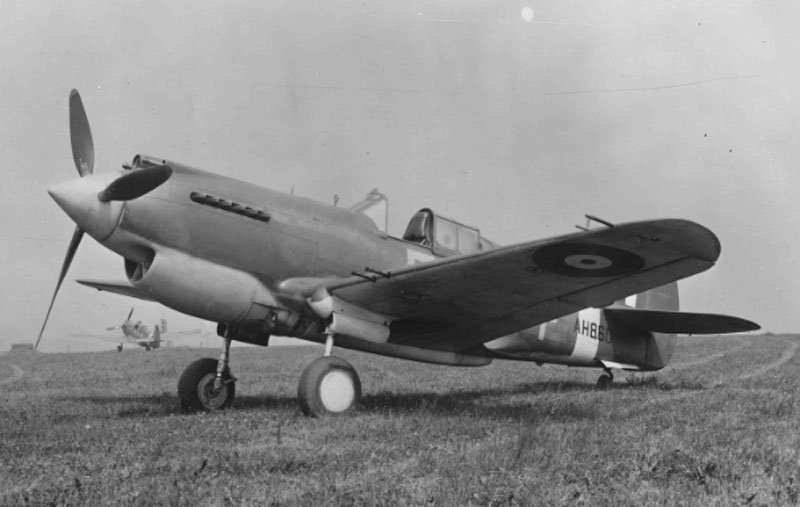
Curtis Tomahawk

Date: 9 June 2016

Time: 6.30pm

Cost: FREE

The development of tactical air power in Britain during the early years of the Second World War will be the focus of a lecture taking place at the University of Wolverhampton next month. The lecture entitled ‘Tactical Air Power Development in Britain, 1940-1943′ will be presented by Dr Matthew Powell, an independent scholar and military history author. The lecture is a continuation of the joint partnership between the University’s Department of War Studies and the Royal Air Force Museum and takes place on Thursday 9 June 2016.

The history of Britain’s tactical air power development during the Second World War has largely neglected the work done by Army Co-operation Command. The Command was influential in developing the theoretical air support system used in the Western Desert, North Africa, and Europe and was responsible for trials conducted in the wake of the Battle of France, 1940. Working closely with the army’s School of Artillery, they also developed the Air Observation Post Squadron, used to great effect in several different theatres.

In this lecture, Dr Matthew Powell will discuss how the RAF had neglected the development of tactical air power during the inter-war period and how this decision impacted on their ability to provide this support when war broke out. The army’s experiences in the Battle of France and the subsequent investigations, which placed the blame firmly on the shoulders of the RAF, forced the hand of the RAF into taking tactical air power development more seriously. As a result, the RAF created the Army Co-operation Command, designed to be as toothless as possible while appearing to be what the Army wanted.

The lecture will explore the fast pace of tactical air power development during 1942, which led to discussions on a new formation: the Army Air Support Group (AASG) and the rise of Fighter Command in this field. Disputes between the Air and General Staffs over which command the AASG should be placed into ran for the entire summer and were eventually resolved by Winston Churchill, before the Army Co-operation Command was disbanded in 1943. Its replacement was however, an upgraded Army Co-operation Command with the responsibilities it had been denied during its existence.

Dr Ross Mahoney, RAF Museum Aviation Historian said:

“The RAF Museum is once again delighted to be working in conjunction with our colleagues at the University of Wolverhampton to bring the Trenchard Lectures in Air Power Studies to a wide audience. This lecture highlights the challenges the RAF faced in the realm of the development tactical air power with particular reference to the history of Army Co-Operation Command, a subject much understudied by historians.”

The Trenchard Lectures in Air Power Studies form part of the RAF Museum’s Research Programme for 2016. ‘Tactical Air Power Development in Britain, 1940-1943′ is the second of three joint lectures taking place at the University of Wolverhampton this year, also in partnership with the Royal Aeronautical Society.

Dr Peter Preston-Hough, from the University’s Department of War Studies, said:

“We’re delighted to be hosting this prestigious series of lectures, which promise to provide an interesting insight into this fascinating area of history. The University has a strong relationship with the RAF Museum and we look forward to continue to work closely with them on this prestigious lecture series.”

This FREE lecture will be held in the main lecture theatre (MC001) at the University of Wolverhampton at 6.30pm on Thursday 9 June. As spaces are limited, organisers advise visitors to book their tickets in advance via the museum’s website to avoid disappointment.

For further information about the museums research programme or to book your FREE ticket to the lecture, please visit the museum website www.rafmuseum.org/cosford.

Classic Jet Showcase at RAF Cosford Air Show

RAF Cosford MiG15

Organisers of the RAF CosfordAir Show today outlined plans for their theme showcasing the evolution of the jet engine, which will dominate the flying displays on Sunday 19th June.

The latest aircraft to be added to the flying display is a Folland Gnat, which was used by the RAF during the 1960s and 1970s for flying training and also for air displays by the world famous Red Arrows. The Gnat Display Team will be joined at the show by the Sea Vixen, a unique carrier-borne fighter of which only one example remains flying worldwide. Another jet appearing at the show is the Mikoyan-GurevichMiG-15UTi, a type never seen before at RAF Cosford. The MiG-15 is a cold war soviet fighter which is now operated by the Norwegian Air Force Historical Squadron to showcase the cold war ‘enemy’ of NATO. The MiG-15 is believed to have been one of the most widely produced jet aircraft ever made; in excess of 12,000 were manufactured.Of course, the Royal Air Force’s main combat jet, the Eurofighter Typhoon, will also be displaying as part of the jet engine theme to showcase the power and agility of the modern combat jets of today.

Peter Reoch, part of the Air Show Operations Team, said “Classic jets are always a crowd favourite, and we’re excited to have such a diverse array of them taking part in the flying display this year. With these exciting additions we’re reminding people that tickets for the air show will not be available to buy on the gate so they need to buy them soon to avoiding missing out!”

The Speed theme continues on the ground with rare experimental aircraft being rolled out from the RAF Museum to join the static aircraft exhibitions including the Bristol 188, Avro 707 and Fairey Delta II, which held the world airspeed record for a short time in 1956. There will also be an aircraft hangar dedicated to speed displays, including an exhibition of jet engines and displays detailing the life of Sir Frank Whittle, the British inventor of the jet engine.

Tickets for the RAF Cosford Air Show are available to purchase from selected Mid Counties Coops, the RAF Museum at RAF Cosford and Hendon, Midlands Air Museum in Coventry and on our website
www.cosfordairshow.co.uk. Tickets are £25.00 per adult with accompanied children under 16 entering free.

Nimrod tours are ready for half term take-off

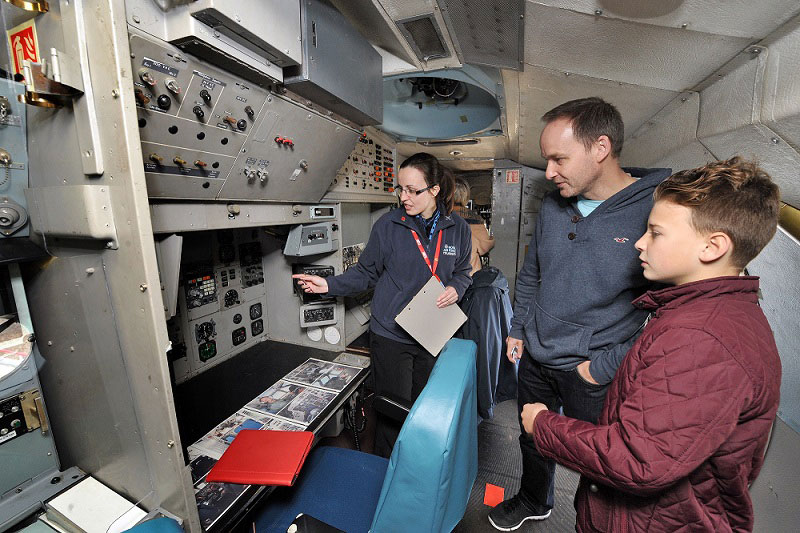
Nimrod Tour RAF Museum

Date: 28 May – 5 June 2016

Time: Tours run between 10am and 4pm, each tour lasts 15 minutes

Cost: Adult and children £5 per person

As May half term fast approaches, organisers at the Royal Air Force Museum Cosford are gearing up for a busy week of family tours on-board one of the RAF’s most sophisticated aircraft. From Saturday 28 May until Sunday 5 June, families can step inside the Hawker Siddeley Nimrod R.1 XV249 and learn about its intelligence gathering role in the Royal Air Force.

Tours will run throughout the day for groups of up to six people, lasting approximately 15 minutes. During the tour visitors will learn about the history of the aircraft, hear about the crews on board and view the sophisticated surveillance equipment up close. Perfect for any budding aviators, there will be plenty of opportunities for photos and tour guides will be on hand to answer any questions the inquisitive youngsters may have.

Families will discover why this aircraft and its missions were so secret that even the existence of 51 Squadron who operated it wasn’t mentioned in official documents until 1992, after the end of the Cold War. They will learn why the aircraft’s capabilities were such that even flying through friendly and allied nation airspace required diplomatic clearance. Mixed with a few light hearted stories of the crew stationed on board the Nimrod, including tales of the giant tea pot that could brew almost a gallon of tea, these fascinating tours led by museum staff will have visitors wondering what really goes on in the skies above us. Eagle eyed youngsters are challenged to see if they can find the Argos controls? This equipment was so secret that there was never any mention as to what it was or what it did even in the restricted crew manuals.

RAF Museum Cosford Events Manager Abi Betteridge said:

“Nimrod tours have proved popular with aviation fans in the past, but there is also a real demand from families and our younger visitors who are eager to get on-board and find out more – for some children, this is the first time they have stepped inside an aircraft and what a fascinating one it is! We are able to tailor the tours depending on our audience so the youngsters visiting us during half term will learn lots about the aircraft’s capabilities as well as quirky stories about what it was like to work on board the Nimrod, keeping it fun and not too overwhelming.”

The Nimrod flew in both the maritime patrol and electronic intelligence gathering role. Maritime surveillance, anti-submarine operations and intelligence gathering have been key tasks for the Royal Air Force for much of its long history. When the Nimrod was finally retired from service in 2011, the type had operated with distinction for over forty years in all these roles, and more.

Nimrod tours are available daily throughout May half term week from 10am – 4pm and tickets cost £5.00 per person. Organisers are advising any interested visitors to pre-book their time-slot now via the museum’s website www.rafmuseum.org/cosford to avoid disappointment. Tickets can be purchased on the day subject to availability. All children must be accompanied by an adult, tours are not recommended for children under the age of 5. For further information please call the museum on 01902 376200. The museum is open daily from 10am to 5pm and entry to the museum is FREE of charge.

Lecture highlights the RAF’s forgotten role during the Korean War

Korean War

Date: 20 May 2016

Time: 12.30pm

Cost: FREE

The forgotten role of the Royal Air Force during the Korean War will be the focus of the next Cold War Lunchtime Lecture held at the Royal Air Force Museum Cosford later this month. The lecture entitled ‘The RAF in the Korean War, 1950-1953′, will be presented by Ewan Burnet, Curator of Film and Sound at the RAF Museum and examines an often overlooked aspect of the RAF’s history. The lecture will take place on Friday 20 May 2016 at 12.30pm.

This forthcoming lecture is the second in the new series of lectures launched earlier this year, which each cover a different topic related to the Cold War. During this discussion, Ewan will look back to 1950 when the Korean War broke out and how at that time, British resources, severely depleted by the Second World War, were already stretched by existing commitments in parts of the world such as Malaya. As a result, the RAF’s involvement and British involvement more generally, was limited by this and by more pressing Cold War concerns over Soviet intentions.

Despite limited resources and the global unrest in the midst of the Cold War, the RAF was there to offer support with Sunderland flying boats. Based at Iwakuni in Japan, they patrolled the sea around the Korean peninsula and RAF pilots often served on exchange tours with the United States Air Force and the Royal Australian Air Force. Offering additional support, Auster’s, still under RAF authority although often manned by Army personnel, provided reconnaissance and artillery spotting capability and aircraft such as the Hastings evacuated casualties back to the UK.

RAF Museum Curator of Film and Sound, Ewan Burnet said:

“Korea highlighted the importance of effective aircrew training and the inadequacy of the Gloster Meteor against modern Soviet designs such as the MiG-15. It underscored the flexibility of air power; a Shorts Sunderland could be patrolling the sea around Korea on one day, and very soon after be on search and rescue duty from Hong Kong or bombing targets in Malaya while based in Singapore. During this lecture I will explore the RAF’s involvement in Korea, and attempt to place it in a broader Cold War context.”

The Cold War lunchtime lectures form part of the RAF Museum’s Research Programme for 2016. ‘The RAF in the Korean War, 1950-1953′, is the second of four lectures taking place at Cosford this year. The programme also consists of the Trenchard Lectures in Air Power Studies and the First World War in the Air Lunchtime Lectures, which are held at the University of Wolverhampton, the Royal Aeronautical Society in London and the RAF Museum in London respectively.

This FREE lecture will be held in the RAF Museum’s National Cold War Exhibition lecture theatre at 12.30pm on Friday 20 May. As spaces are limited, organisers advise visitors to book their tickets in advance via the museum’s website to avoid disappointment.

For further information about the museums research programme or to book your FREE ticket to the lecture, please visit the museum website www.rafmuseum.org/cosford. The museum is open daily from 10am and entry to the museum is FREE of charge.
Last few tickets available for Open Cockpits Evening

RAF Museum Cosford Open Cockpits Evening

Date: 13-14 May 2016

Time: 6.00pm to 9.00pm

Cost: £12.50 per person

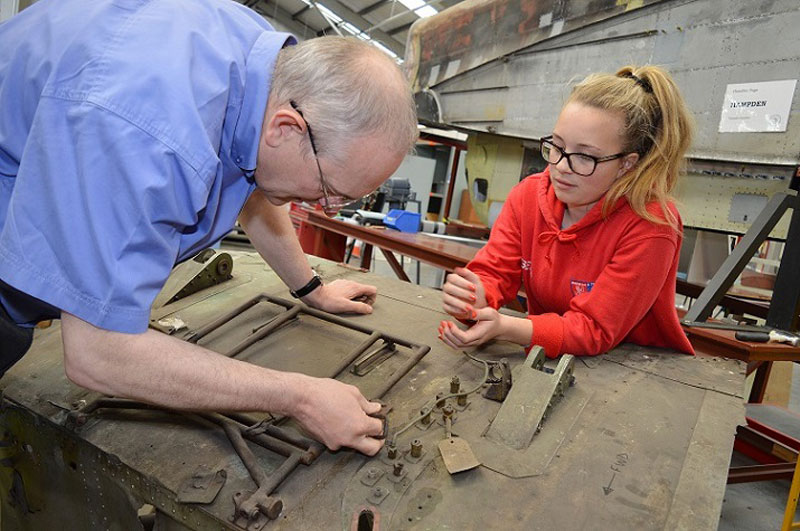
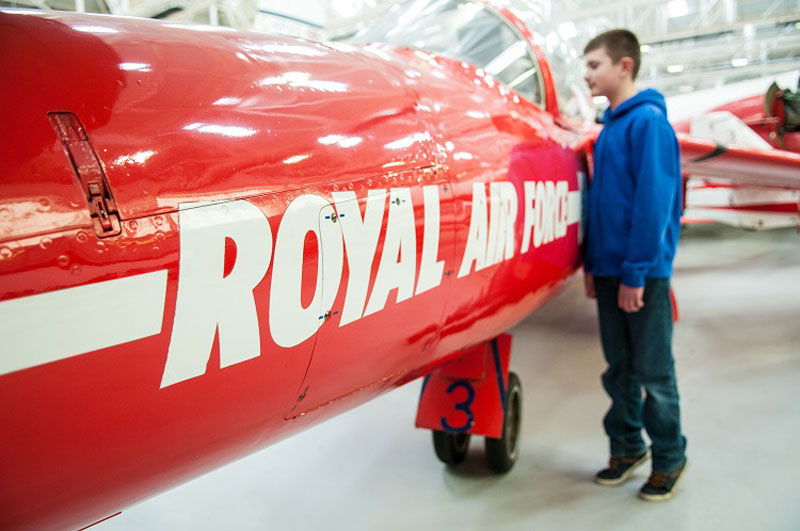
Tickets to the popular Open Cockpits Evening event taking place at the Royal Air Force Museum Cosford next weekend are almost sold out. Less than 70 tickets are available for the event on Friday 13 May and all tickets for Saturday 14 May have now gone.

With new aircraft recently added to the line-up, the evening is packed with a mix of modern jets and nostalgic wartime aircraft, meaning there is something to please aviation enthusiasts young and old. The new line-up includes the Folland Gnat F1 – the forerunner of the Gnat T1 trainer which achieved fame with the ‘Red Arrows’ aerobatic team. It was also used by the Finnish Air Force and the Indian Air Force with whom it was successful in combat in the 1965 and 1971 wars against Pakistan, becoming known as the ‘Sabre slayer’ for it success in downing Pakistan Air Force Sabres. Also new to the line-up is the Hawker Hunter nose section – part of an aircraft that served on the front line of the Cold War in RAF Germany from 1955 to 1957 and the FMA 1A58 Pucara – flown by Argentina’s military government during the 1982 Falklands conflict.

With fifteen historic aircraft available for a close viewing both evenings, aviation fans who would like to climb on board are encouraged to purchase their tickets soon, before they sell out. Admission on the evening is by advance ticket only which are available to purchase via the museum’s website www.rafmuseum.org/cosford, where you can also view a full list of aircraft open on the night.

Visitors will have exclusive after-hours access to the museum which displays a collection of over 75 aircraft, military vehicles, engines and aviation artefacts within three wartime hangars and the National Cold War Exhibition. To ensure visitors get the most out of this unique experience, the museum’s team of volunteers will be on hand to talk through the aircraft controls and answer any questions they may have.

The museum will close at 5.00pm both days, however the Visitor Centre and Refuel Restaurant will remain open for visitors attending the evening event which commences at 6.00pm and finishes at 9.00pm. Tickets cost £12.50 per person which includes parking. Minimum height restrictions of 1.07 metres will apply.