Chancellor provides RAF Museum with £3m in Autumn Statement

Age of Uncertainty

Financial penalties levied on banks involved in the LIBOR lending rate-fixing scandal will benefit the RAF Museum in North West London, the Chancellor Philip Hammond announced today.

In today’s Autumn Statement, the Chancellor Philip Hammond announced that the RAF Museum will receive £3m LIBOR funds for its 2018 RAF Centenary Programme. The money will specifically support the development of a new exhibition and a dedicated Learning Centre – both of which are part of the Museum’s wider RAF Centenary Programme which celebrates and commemorates 100 years of the RAF in 2018.

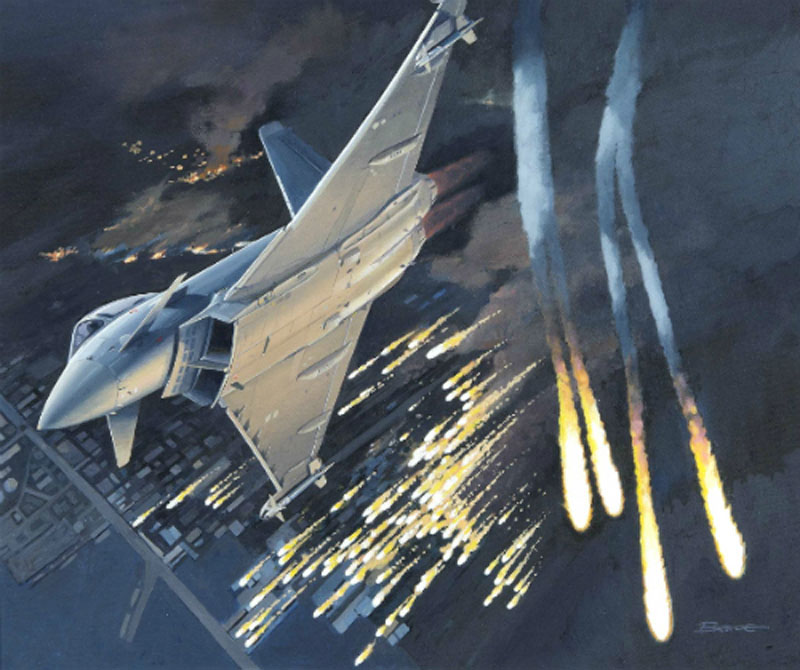
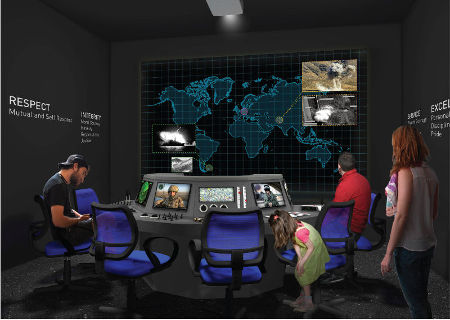
The new exhibition will explore the impact of the Royal Air Force on world events, society and technology since the Cold War through its many roles during the past 40 years – during an ‘age of uncertainty’. As part of the Museum’s contemporary collecting strategy, it is actively seeking out inspiring objects and stories that will engage visitors with the RAF’s recent history, to display in this innovative new gallery.

The dedicated Learning Centre will underpin the Museum’s Science Technology Engineering and Maths (STEM) programme along with hosting both formal and lifetime learning activities in history, literacy, art and design.

Chief Executive of the RAF Museum Maggie Appleton said “It’s wonderful to be given such a high level of support from the Chancellor of the Exchequer for the Museum’s RAF Centenary Programme. The stories we want to share reflect the bravery, ingenuity and dedication of RAF men and women  working in today’s complex and challenging environment with space for our visitors to reflect on and join in the discussion from their own personal perspectives..” 

The RAF Museum’s RAF Centenary Programme is a £23.5m project which will transform the site in North West London making it more accessible and welcoming to a new generation of visitors. Work has already begun for a completion date of summer 2018 and today’s grant of £3m means that the Museum is now in the final stretch of fundraising.

To find out more on the Museum’s exciting RAF Centenary Programme for 2018 CLICK HERE
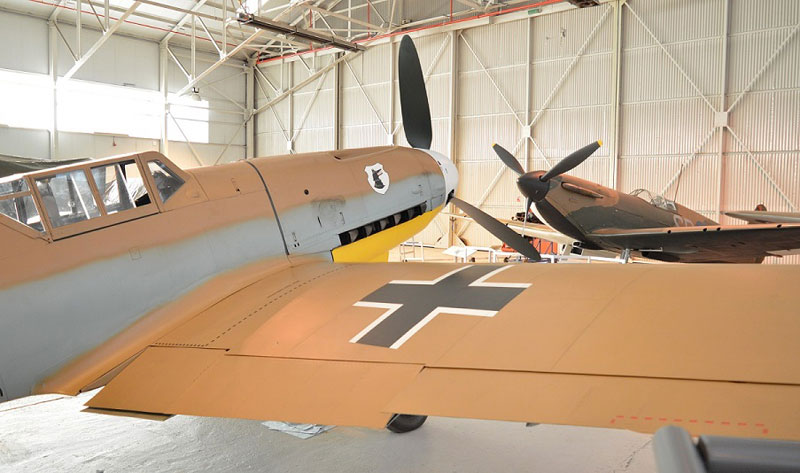
 

Two new aircraft wing their way to Cosford

BF109 RAF Museum Cosford

A Messerschmitt BF109G-2 and a de Havilland Tiger Moth II, are the first of six new aircraft to arrive at the Royal Air Force Museum Cosford, having been transported by road from the museum’s sister site in London.  Visitors can now view the brand new arrivals on display in the museum’s hangars with four more aircraft due to arrive before Christmas.

The Messerschmitt BF109G-2, designed by Willi Messerschmitt, is a legend alongside the British Spitfire, American P51 Mustang and the Japanese Zero.  First flown in 1935, the Bf109 was obsolescent by the second half of World War Two yet it remained the backbone of the German Air Force’s day fighter force and was flown by many of her allies. In production right up to the end of hostilities, more than 33,000 were built second only to the Russian ‘Sturmovik’ as the most prolific military design, and post-war versions served with the Czech, Israeli and Spanish Air Forces, the latter until the mid-1960s – with Rolls Royce Merlin engines.  Compact, rugged, fast and heavily armed the Bf109 has the distinction of being flown by the highest-scoring fighter aces in history. With the promised availability of the new Daimler-Benz DB 605A German built engine, design work began on the Bf109G series where higher speeds were obtained, but manoeuvrability and handling were adversely affected. The Bf109G series will be forever linked with the daylight bomber-killing missions in defence of the Reich. German fighter pilots found themselves facing heavily armed American B17 Fortress and B24 Liberator bombers and later long range P38 Lightning, P47 Thunderbolt and P51 Mustang fighters. Ground down by the overwhelming odds, few survived the war. 

The museum’s rare example was disassemble by the museum’s team of Aircraft Technicians and Apprentices in London and transported on a low loader lorry along the M1, M6 and M54 before being reassembled in its new display hangar at Cosford. Members of the public can now view the aircraft in the museum’s ‘War in the Air’ hangar alongside fellow German fighter the Focke Wulf Fw190, facing their British equivalents the Supermarine Spitfire 1 and Hawker Hurricane IIc.

The second of the two new arrivals is the 1930s bi-plane the de Havilliand Tiger Moth II, originally produced as a development of the well-known Gipsy Moth.  The Tiger Moth went on to become one of the world’s most famous training aircraft and provided the majority of RAF pilots with their elementary flying training during the Second World War.  In the aftermath of the Dunkirk evacuation in 1940, almost any anti-invasion idea was considered and three extraordinary Tiger Moth conversions were put forward.  Some were fitted with light bomb racks ready to undertake the bombing of enemy troops attempting a landing, whilst others were fitted with a tank in the front cockpit with powder dispensers located under the wings intended to dust the German troops with a poisonous insecticide as they waded ashore.  A more revolutionary idea was the ‘paraslasher’; a scythe-like blade fitted to the aircraft and intended to cut parachutist’s canopies as they descended to earth. Fortunately none of these ideas had to be used, leaving Elementary Flying Training Schools to their vital role of pilot training. 

The Tiger Moth was eventually succeeded and replaced by the de Havilland Chipmunk in the early 1950s and both aircraft can now be viewed alongside each other in Hangar 1 at Cosford, positioned next to the Scottish Aviation Bulldog T Mk 1, a further progression in training aircraft.  The Tiger Moth also travelled by road to Cosford, alongside the Bf109 .

Other aircraft still to wing their way to Cosford before Christmas include the Wolverhampton built Boulton Paul Defiant M1, Junkers Ju 88R-1, Gloster Gladiator 1 and the Westland Lysander III.  Work is already underway at the museum’s London site to prepare the aircraft for transportation by road to Cosford.  Visitors will be able to see all of the new aircraft fully reassembled and in their new display positions by early 2017, with the exception of the Lysander which will spend a short period in the museum’s Conservation Centre before eventually going on display.

RAF Museum Cosford Curator, Al McLean said:

“This will be the first time that we have been able to display a Bf 109 in the War in the Air hangar at Cosford and appropriately it will be seen confronting a Hurricane and a Spitfire.”

The new aircraft arrivals will enable the RAF’s story to be more comprehensively represented to museum audiences in Shropshire, as the museum prepares to celebrate and commemorate the centenary of the Royal Air Force in 2018.  Whilst there are major transformations planned for the museum’s London site, some exciting additions for Cosford will include exploring the first 100 years of the RAF, the role it plays today and its future contributions, as well as sharing the story online with a global audience.

Aviation fans can keep up to date with the centenary aircraft moves and on-going developments by signing up to the museums free e-Newsletter http://www.rafmuseum.org.uk/contact-us/newsletters.aspx

Entrance to the museum is free of charge and the museum is open daily from 10am until 4pm.  For further information, please visit the museum’s website www.rafmuseum.org/cosford.

Voices to soar for Christmas Concerts at the Fleet Air Arm Museum

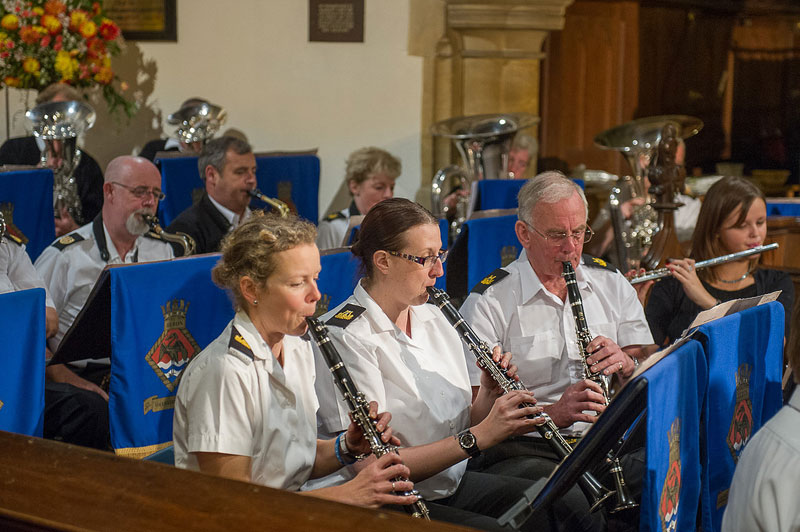
HMS Heron volunteer band

All the right Con-chords will be played as this year’s Christmas Concerts return to the Fleet Air Arm Museum on 1st and 2nd December.

Visitors can join the HMS Heron Royal Navy Volunteer Band for the event, which takes place under the museum’s Concorde 002. The concert features several classics and festive numbers. Doors open at 6.30pm and the concert starts at 7.30pm.

General Manager of the Fleet Air Arm Museum, Marc Farrance, said: “Our Christmas Concerts are very popular and they’re held in such a unique setting – under the Concorde 002. We are delighted to host the HMS Heron Royal Navy Volunteer Band again this year.”

“The event has been incredibly popular in recent years. Last year we held it over two nights to make sure no one missed out on tickets and this year will be the same.”

Tickets are £12 each and include a mince pie and mulled wine on arrival. A bar and refreshments will also be available. It is strongly recommended that those wishing to go purchase their tickets in advance.

They can be purchased from the museum during normal opening hours, by calling 01935 840565 or online at www.fleetairarm.com

For more information about the HMS Heron Royal Navy Volunteer Band, please visit: http://www.hmsheronband.co.uk/

Visitors invited to join Remembrance Service at Cosford

RAF Museum Cosford Remembrance

Date: Sunday 13 November

Time: 10.30am

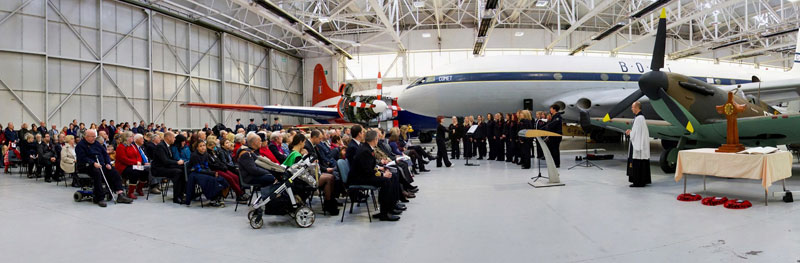
On Sunday 13 November, the Royal Air Force Museum Cosford will hold a Service of Remembrance, paying respect to those service men and women who made the ultimate sacrifice during their tours of duty. 

Visitors who wish to pay their respects and reflect on the sacrifices made by our brave service men and women are invited to join the service, led by Rev (Sqn Ldr) Andrew J L Chapman, Station Chaplain RAF Cosford.    Those attending will also be treated to renditions from the Cosford Military Wives Choir, who will perform for visitors on arrival and during the service. 

The service will take place in the museum’s Hangar 1 and visitors are politely requested to assemble no later than 10:30am ready for the Service to commence at 10.45am.  As well as readings from museum volunteers, there will be hymns and the sounding of ‘The Last Post’, followed by a two minute silence.

RAF Museum Cosford Events Manager, Abi Betteridge says:

“The RAF Museum is a fitting location for this poignant occasion and we hope that local residents will choose to join us on Remembrance Sunday so we can remember together.  I would like to thank the Station Chaplain and the Cosford Military Wives Choir for their involvement in this years’ service. I’m sure visitors will enjoy the special service we have planned as well as the performances from the choir.”

 During the service, wreaths will be laid by representatives from RAF Cosford, the museum and a Second World War veteran in honour of those who have fallen in the line of duty. Following the service visitors are free to explore the museum at their own leisure.

If you would like to find out about Service Personnel who fell serving in the Royal Flying Corps and the Royal Air Force during the Great War of 1914 to 1918, or to dedicate a digital poppy, please visit the RAF Museum’s online story vault: www.rafmuseumstoryvault.org.uk

The museum is open daily from 10am to 4pm and entry to the museum is FREE of charge.  For further information please visit www.rafmuseum.org/cosford.

Remember! Remember the 5th of November

Halifax Yorkshire Air Museum

The date of the 4th / 5th November 1944 is indeed remembered here at the Allied Air Forces Memorial, as it was the night of another heavy RAF Bomber Command raid on the German steel producing city of Bochum, which was of high importance to the Nazi war machine. It was the 150th time the city had been visited by Bomber Command.

On this night, Bomber Command launched a raid of 749 aircraft from Nos. 1, 4,6 and 8 Groups, comprising of 384 Halifax bombers, 336 Lancaster’s and 29 Mosquito fighter / bombers upon the city. RAF Elvington, part of 4 Group, put up 25 aircraft from the two French Squadrons of 346 “Guyenne” and 347 “Tunisie”. For Guyenne Squadron, the night was to be particularly horrific, as, bringing up the final wave of the attack in the early hours of 5th November, their 16 Halifax bombers were the most vulnerable to attack by enemy fighters. Consequently, they lost 5 aircraft, each with seven aircrew aboard, amounting to 35 men, no, friends, on this fateful night. Of these, 11 were taken as Prisoner of War after bailing out, one successfully evaded capture but the rest lost their lives. Interestingly, there was also a ‘passenger’ on board the aircraft of Commander Robert Baron (on his 26th and last operation), this being Lt. Col. N. Dagan from the Free French Air Force HQ in Whitehall, who also lost his life. He was undertaking an assessment operation of a typical mission and the hazards encountered by aircrew.

It was the longest of nights for base Commander Puget, as he paced the floor of Elvington’s Control Tower, which still exists today, until it was clear that these aircraft were not coming home. It was the worst night of losses that the French were to endure during their service with Bomber Command.

The Allied Air Forces Memorial & Yorkshire Air Museum will be represented at the annual Mass commemorating this fateful mission, which takes place at the cathedral of Les Invalides, the Military Museum in the heart of Paris on 4th November. Ian Reed, Museum Director, will make the journey to join members of Groupes Lourds, the French veterans association for the ceremony.

Ian Reed commented: “The memory of this raid is one of the factors that makes the following annual Remembrance Sunday Service at the French Memorial, Elvington, so important and poignant, and draws a significant contingent from France every year, gathering with the hundreds of villagers, Yorkshire Air Museum Members and military personnel from various nations who come to pay their respects to the fallen of all nations.”

The Service takes place at 11:00am on Sunday 13th November, at the French Memorial, York Road, Elvington, with a later Service at the Station Chapel at the Yorkshire Air Museum at 13:30pm, which all our visitors are welcome to attend.

www.yorkshireairmuseum.org

RAF Museum concludes 2016 lecture series

br Bruce Mackay

Academics, military enthusiasts and interested members of the public are being invited to attend two forthcoming lectures next month, concluding the 2016 series of lectures from the Royal Air Force Museum’s Research Programme.

‘The Development of RAF Air Power Doctrine, 1999-2013’

Date: 10 November 2016

Time: 6.30pm

Cost: FREE

Location: University of Wolverhampton, MC001, Millennium City Building, Wolverhampton Campus.

The first of two lectures is being held on Thursday 10 November at the University of Wolverhampton and is a continuation of the joint partnership between the University’s Department of War Studies and the Royal Air Force Museum. This evening lecture commencing at 6.30pm will examine how the Royal Air Force has adapted to the post-Cold War strategic environment and the influencing factors that have contributed to the change in military doctrine. The lecture entitled ‘The Development of RAF Air Power Doctrine, 1999-2013’ will be presented by Dr Viktoriya Fedorchak, an independent researcher who recently completed her PhD on the subject.

Dr Viktoriya Fedorchak will discuss the variations in the RAF’s policies over the last two decades and the role it has played in the development of the Service’s doctrine and the evolution of air power. It will consider the four major factors in doctrine preparation; operational experience, internal politics, the role of academics and the doctrine writer. Furthermore, Dr Fedorchak will discuss how new campaigns provided operational lessons and how the shift from a single-service to a joint authorship resulted in the change of purpose and functionality.

Dr Peter Preston-Hough, from the University’s Department of History, Politics and War Studies, said:

“We’re delighted to be co-hosting this prestigious series of lectures, which continues to provide an interesting insight into this fascinating area of history. This lecture is a topical analysis of the RAF’s history during an important and very recent period of political and military change.”

‘Coming to Terms with the Air-Atomic Age’

Date: 18 November 2016

Time: 12.30pm

Cost: FREE

Location: RAF Museum Cosford, National Cold War Exhibition Lecture Theatre

On Friday 18 November, Colonel Edward A. Kaplan, Director of Aerospace Studies in the Department of National Security and Strategy at the U.S. Army War College will be presenting the final Cold War lunchtime lecture, being held in the Museum’s lecture theatre at 12.30pm. Entitled ‘Coming to Terms with the Air-Atomic Age’ Colonel Kaplan looks at the notion that air power makes unique and potentially decisive contributions to national security and how this can have different meanings over time. He will illustrate these shifts using the history of the first twenty years of post-Second World War strategic air power, the “air-atomic age”.

He will explore the shift from an early air-atomic period where American strategic air power sought to destroy enemy industry, through a later period that prioritised blunting a Soviet nuclear offensive, to the rise of Mutually Assured Destruction. The latter idea abandoned conventional notions of victory and substituted signalling an enemy through violence with a final fallback of punishment. Civilians seized control of these air operations to support these efforts to signal or punish an enemy, undermining the professional standing of Airmen. As a result, airpower began a search for a new identity that ultimately led to the substitution of precision for blunt force and the restoration of operational control to professional Airmen.

Dr Ross Mahoney, RAF Museum Aviation Historian said:

“The final two lectures of the RAF Museum’s Research Programme for 2016 examine two fascinating areas related to the development and importance of air power on both sides of the Atlantic. They should be of interest to those interested in the development of air power since the Second World War to the present. Also, we are pleased to be running our Trenchard Lectures with our partners at the University of Wolverhampton who continue to support the series.” 

As spaces are limited to both lectures, organisers advise visitors to book their FREE tickets in advance via the museum’s website to avoid disappointment www.rafmuseum.org/cosford.  Additional information about both lectures and the Museum’s Research Programme is also available online.

Visitors arriving early for the ‘Coming to Terms with the Air-Atomic Age’ lecture being held at the museum’s Cosford site can also take up the opportunity to see inside the Museum’s Conservation Centre during the annual open week which runs from 14-19 November. Doors to the Conservation Centre open at 10.15am until 1.00pm and entry is just £5 per person. 

Red Arrows Gnat and Hampden fuselage are open week highlights

Red Arrows Gnat

Date: 14-19 November 2016

Time: 10:15am-1:00pm

Cost: £5.00 per person

A newly painted Vickers Wellington bomber wing, the Handley Page Hampden fuselage and a Red Arrows Gnat are just three of the aviation treasures on show to visitors next month at the Royal Air Force Museum Cosford’s Conservation Centre Open Week. 

An exciting highlight to this year’s open week is the newly fabric covered and painted Vickers Wellington bomber outer wing.  This popular aircraft is a favourite with aviation fans and has undergone work to treat small amounts of corrosion to its famous geodetic framework, both wings and fuselage, since its arrival at Cosford in June 2010.  Now free of corrosion, both wings have been painted in a protective layer and in the last 6 months, one of the wings has been re-covered in Irish linen, doped and painted in its Bomber Command Night colour scheme by one of the museums Aircraft Technicians.  Work is now underway to repeat the process on the aircrafts second wing and eventually the fuselage.  Initially a five year project, the Wellington is expected to be completed within the next two to three years.

The team in the museums Conservation Centre are also lining up another treat for visitors, quite literally.  For the first time ever all four sections of the Handley Page Hampden’s fuselage will be placed in line showing an almost fully complete Hampden silhouette.  Work has been advancing on the Hampden considerably over the last 12 months and large sections of the badly damaged aircraft have been built from scratch on site at Cosford.  Since it was last viewed by the public almost 12 months ago, the forward fuselage and cockpit section has been manufactured using pre-production drawings and where possible castings and a few components from the original P1344 Hampden have been incorporated.  The new section will be placed alongside the rear fuselage, tailboom and tailplane for visitors to get an up close view of this rare example.  All effort on the aircraft is going into manufacturing the fuselage section which is hoped will be completed sometime in 2018.

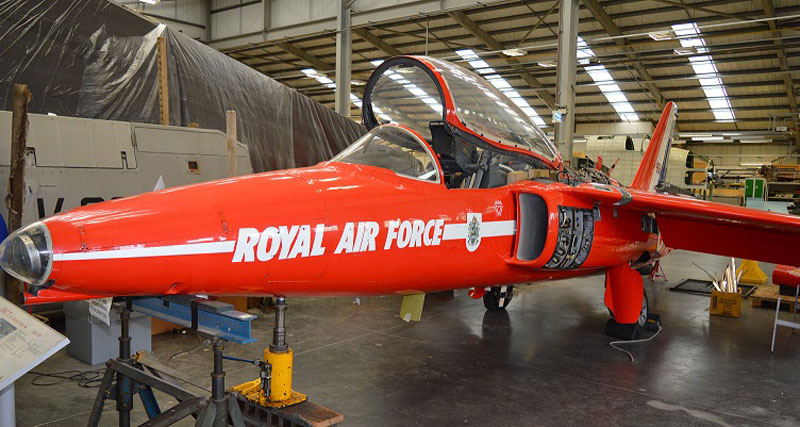
Another aircraft spending a short period of time in the Conservation Centre is the Hawker Siddeley Gnat T1 – the first aircraft used by the RAF Red Arrows, superseded by the current aircraft, the Hawk in 1979.  The aircraft was previously on public display at Cosford and was moved into the Conservation Centre in June.  The aircraft is destined to move to the museum’s London site in 2017 and the open week in November is a last chance for Red Arrow fans to see the aircraft in the West Midlands.  As the aircraft is being prepared for transportation by road, it is also a chance to see it in a partial stripped condition.  

RAF Museum Conservation Centre Manager, Darren Priday said:

“With the museum fully engrossed in the RAF Centenary Programme the Conservation Centre team have spent a lot of 2016 away from Cosford at our London site preparing aircraft for moving. Another task that has taken us away from home is the Spitfire XIX that is currently on display in the Bahrain National Museum, the forth location it has been on display in the Middle East country in 2017.  With all these task going on away from Cosford it would have been easy to ‘down tools’ on the long term projects, but we haven’t.  The Wellington wing with its new covering and surface finish is a work of art.  In respect to the Hampden, regular visitors will notice how much the forward fuselage section has come on since last year’s open week. The chance to line up all four fuselage sections was something I have been looking forward to for a long time.  Finally the time has come and we will be able to show a Hampden fuselage in the UK; the last time this would have happened would be over 70 years ago.  We look forward to greeting our repeat visitors but also a warm welcome awaits anyone visiting for the first time”.

 Visitors will also be able to view the continuing progress on the Range Safety Launch, a project being led by a team of Volunteers, plus see a glimpse of the Dornier Do 17.  Now clear of all the marine crustaceans, the Dornier is currently housed in a controlled environment with de-humidifiers whilst the museum awaits further advice from the project advisor on how best to treat the metal. 

Museum Technicians, Apprentices and Volunteers will be available throughout the week to speak with visitors about their work and answer any questions they may have.  In addition, from Wednesday through to the Saturday, family members of the crew from the museum’s ill-fated Hampden’s last flight will be in-attendance. 

The Conservation Centre will open from 14-19 November between 10.15am and 1.00pm each day and admission is £5.00 per person (children under 16 are free and must be accompanied by an adult).  The Museum’s other hangars will be open from 10am until 5pm and entry to the museums is free of charge.  For further information, please visit the museum’s website www.rafmuseum/cosford or call 01902 376200.

PLUS…in addition to the open week, visitors will also have the exciting opportunity to climb on board the Hawker Siddeley Nimrod R.1 XV249 during daily tours.  Tickets are available to purchase on arrival, for more details visit the museum website.

Winter maintenance on rare Lancaster aircraft can be seen by visitors to IWM Duxford

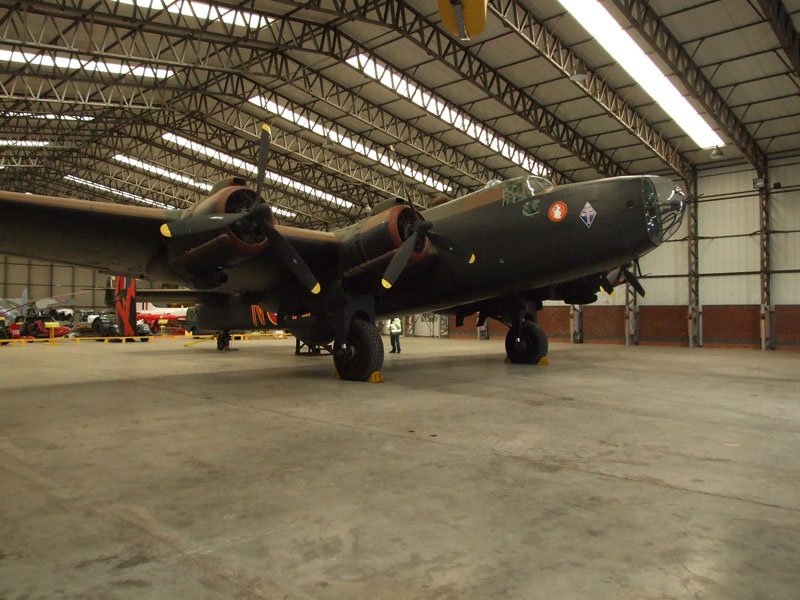
Duxford Lancaster in the Hanger

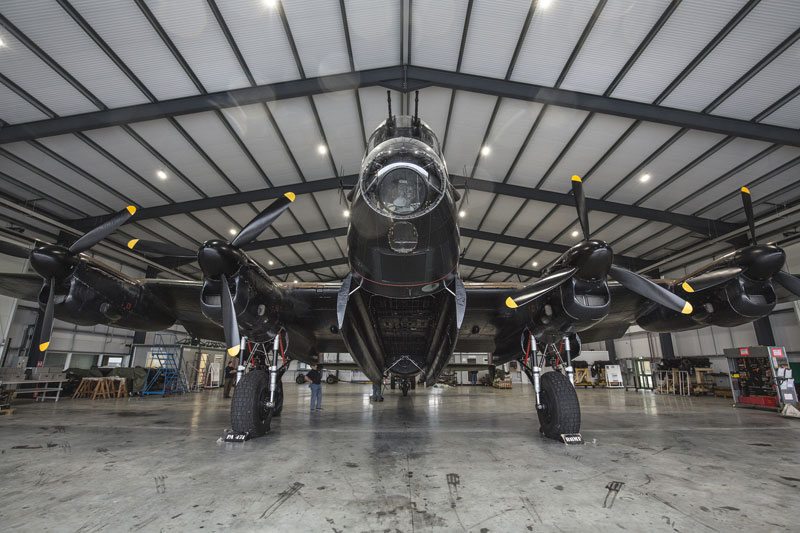
The Royal Air Force Battle of Britain Memorial Flight’s Avro Lancaster recently arrived at the Aircraft Restoration Company’s new Stephenson Hangar at IWM Duxford.

The Lancaster, the sole flying example in Europe of the most successful heavy bomber of the Second World War, will undergo major maintenance work in the Stephenson hangar over the winter months.

For the first time, visitors to IWM Duxford will be able to see the maintenance work in progress from a viewing gallery on the ground floor of the hangar.

Included in the major inspection is the servicing of all of the instrument systems and undercarriage.

At the conclusion of the major inspection, the aircraft will be repainted in a new scheme that commemorates the sacrifice of thousands of Bomber Command aircrew during the bombing campaign of the Second World War.

The major service is due to be completed in April 2017.

www.iwm.org.uk

Royal Air Force Museum secures National Lottery investment for RAF Centenary Programme

RAF Museum 2018

The Royal Air Force Museum is delighted to announce that it has been awarded £4,595,600 from the Heritage Lottery Fund (HLF) for the next phase of its RAF Centenary Programme at its London site.

2018 will mark the centenary of the Royal Air Force (RAF) and will be an occasion of national celebration and commemoration. As the oldest and longest serving independent air force in the world, the RAF has affected the lives of millions, driven technological innovations, pushed the boundaries of human achievement and become part of the UK’s cultural identity.

To connect a global audience with this remarkable story, the RAF Museum is delivering a series of ambitious capital changes to its London site, creating a world-leading visitor destination.

The first phase of this redevelopment, the ‘First World War in the Air’ exhibition, supported by HLF, opened to public acclaim in December 2014, winning Best Heritage Project in the National Lottery Awards 2015.

The Museum is delighted to announce that, with support from the Heritage Lottery Fund, the next phase of the transformation will be delivered for 2018.

Two innovative exhibitions will explore the first 100 years of the RAF through the stories of its people and invite visitors to imagine its future contribution and technology.

A warm welcome will be provided in a new visitor centre with clear orientation, café, shop, Members’ room and flexible-use spaces. A new restaurant will revitalise a disused historic building, connecting visitors with the site’s RAF heritage.

Through ‘RAF Stories’, a digital project, people will contribute personal stories to enhance our understanding and sharing of RAF heritage, onsite and online.

A new learning programme will aim to inspire young people in science, technology, engineering and maths (STEM). Additionally, new apprenticeships and volunteering activities will help the Museum conserve and display more of the incredible 1.3 million objects within its collection representing the national memory of the RAF at work and play, war and peace.

As a result, an expanded, more diverse audience will enjoy richer engagement with RAF heritage through our site, collections and people-focused  interpretation.

Further planned phases of the RAF Centenary Programme will bring to life the stories of the London Aerodrome and RAF Hendon – from which the first airmail, parachute jump, night flight and aerial defence of a city took place.

Maggie Appleton, CEO of the Royal Air Force Museum, said: “I would like to thank the Heritage Lottery Fund on behalf of all our staff, volunteers and Trustees for the generous support they have given us – we could not be happier! The story of the RAF is one of bravery, ingenuity and dedication which echoes within all our lives and will endure and enrich future generations. We are very excited to be given the opportunity to tell this story through the Museum’s collections and the voices of the individual men and women who served in the RAF and whose lives have been influenced by it.”

Stuart Hobley, Head of HLF London, said: “The RAF was one of the most significant legacies of the First World War and today, as we approach its Centenary of the organisation’s creation, millions of us have a direct family connection to the oldest and longest serving air force in the world. Thanks to National Lottery players, this investment will provide some fantastic learning opportunities and insight into the RAF’s heritage for people of all ages as well as give the stories and achievements of the men and women of the RAF a permanent legacy as part of the Royal Air Force Museum.”

www.rafmuseum.org

New aircraft arrivals heading to Cosford

PBY Catalina

The Royal Air Force Museum Cosford will be welcoming a collection of new aircraft to the site later this year as it prepares to celebrate and commemorate the centenary of the Royal Air Force in 2018.  New arrivals will include a Wolverhampton built Boulton Paul Defiant Mk 1, the last surviving example of its kind, plus a rare Messerschmitt BF109G-2.

As the RAF and family of RAF charities work towards celebrating a century of service, plans at the RAF Museum are already underway for a major transformation of its London site, with aircraft movements and some exciting new additions making their way to Cosford.  The centenary plans will also include exploring the first 100 years of the RAF, the role it plays today and its future contributions by sharing this story online with a global audience.

In preparation for 2018 there are a number of aircraft moves due to take place at both the museum’s London and Cosford sites in order to deliver the interpretation planned. The planned moves will see the largest single influx of new aircraft at Cosford since the National Cold War Exhibition building was opened in 2007, as six new aircraft are scheduled to arrive before Christmas.  As part of the centenary plans, Cosford will receive six aircraft from the collection in London, enabling the RAF’s story to be more comprehensively represented to museum audiences in Shropshire.

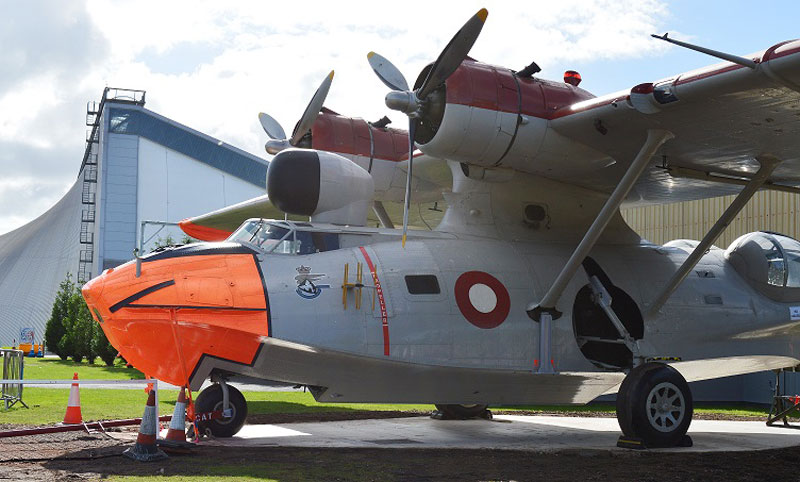
Over the coming months, visitors at Cosford will notice a number of aircraft movements and work is already underway to make room for the new arrivals.  In September the Consolidated PBY-6A Catalina was moved out of the War in the Air Hangar and placed on temporary external display at the entrance to the ‘History of the RAF’. The museum has also begun looking into long term plans for the site at Cosford to ensure that all aircraft, including any future arrivals are displayed undercover.

In addition to the Messerschmitt BF109G-2 and the Boulton Paul Defiant Mk 1, other new aircraft heading to Shropshire before the end of the year include the Junkers Ju 88R-1, a sub-type of the most versatile German combat aircraft of the Second World War, and the Gloster Gladiator 1, the first enclosed cockpit and last biplane fighter introduced into RAF service.  Following re-assembly, all four aircraft will go on public display in the museums ‘War in the Air’ hangar.

Also included in the new line-up is the de Havilland Tiger Moth II, one of the world’s most famous training aircraft which provided the majority of RAF pilots with their elementary flying training during the Second World War.  The Tiger Moth will be displayed next to the de Havilland Chipmunk and Scottish Aviation Bulldog T Mk 1 in Hangar 1, demonstrating progression in training aircraft.

Finally, the Westland Lysander III, the only surviving Special Duties variant of this aircraft (which were used to ferry allied agents in and out of enemy occupied Europe) will be heading to the museum’s Conservation Centre for an in depth inspection and condition assessment.  The Lysander will join other conservation projects which include the Wellington Bomber and the Handley Page Hampden and work will be carried out over the next few years to replace its fragile linen outer skin.

Head of Collections at the RAF Museum, Ian Thirsk said:

“The museum’s centenary plans have provided an exciting opportunity to relocate significant aircraft in the collection closer to our Midlands audience.  I’m particularly delighted that our Boulton Paul Defiant, an aircraft with such strong local links to Wolverhampton, will be going on public display at Cosford for the first time. Additionally, the arrival of the Junkers Ju 88 R-1 and Messerschmitt BF109G-2 will enhance our existing display of Axis Second World War aircraft, several of which are the last remaining examples of their type in the world.”

To make way for the new arrivals, the de Havilland Venom FB4, FMA IA58 Pucara and Folland Gnat F1 have all been moved into the museum’s storage facility on the airfield.

Work is already underway at the museum’s London site to disassemble the aircraft and prepare them for their journey by road to Cosford.  Aviation fans can keep up to date with the centenary aircraft moves and on-going developments by signing up to the museums free e-Newsletter http://www.rafmuseum.org.uk/contact-us/newsletters.aspx

Visitors will be able to see five of the new arrivals fully reassembled and in their new display positions by early 2017.  Entrance to the museum is free of charge and the museum is open daily from 10am until 5pm.  For further information, please visit the museum’s website www.rafmuseum.org/cosford or call 01902 376200.