June Update at Newark Air Museum

Newark Sigrist Desford

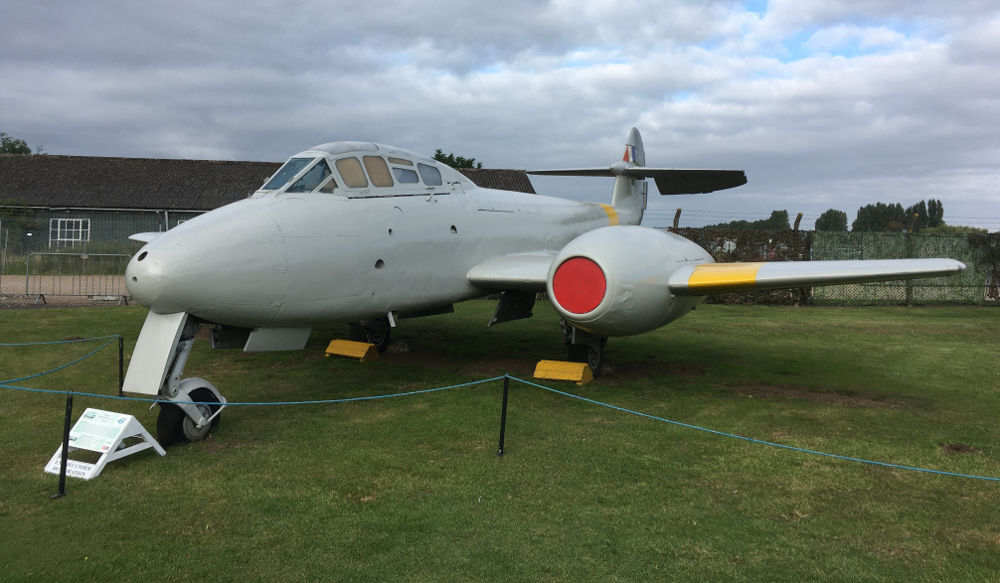
The recent spell of good weather has allowed the staff and volunteers at Newark Air Museum to complete the long-overdue move of the Reid & Sigrist Desford VZ728, G-AGOS into its final display position in Hangar 1. Here the aircraft will reside alongside contemporary airframes such as the General Aircraft Monospar, de Havilland Tiger Moth and Avro Anson.

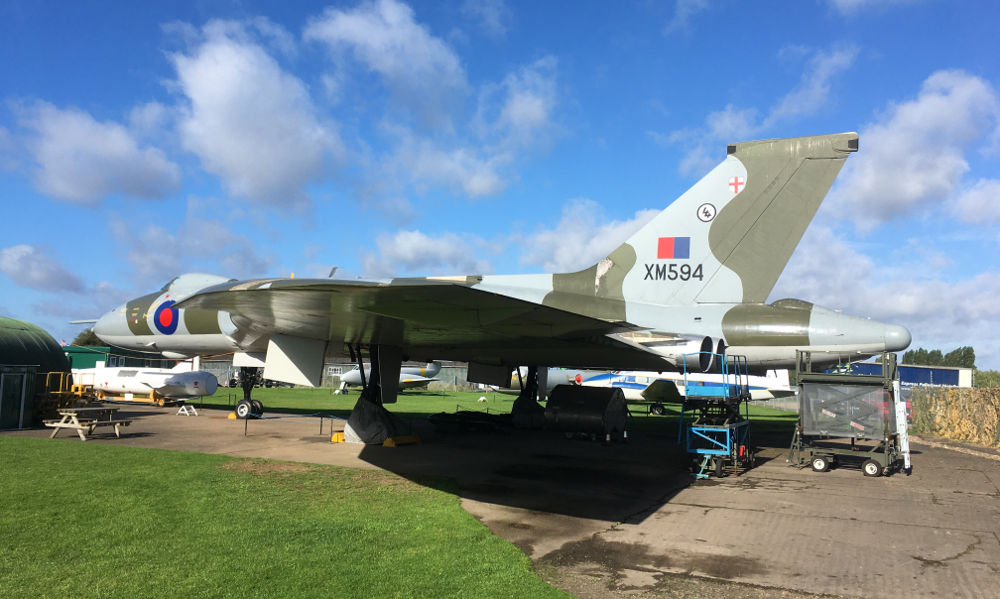
Good progress is also being made on the repaint of Gloster Meteor T.7 VZ634; and the final top-coat has now been applied to the repaired spine panels on Avro Vulcan XM594.

With continued good weather in the forecast other projects are expected to progress at a steady pace.

www.newarkairmuseum.org

Newark Air Museum Cockpit-Fest 2023

Newark Cockpit Fest 2023

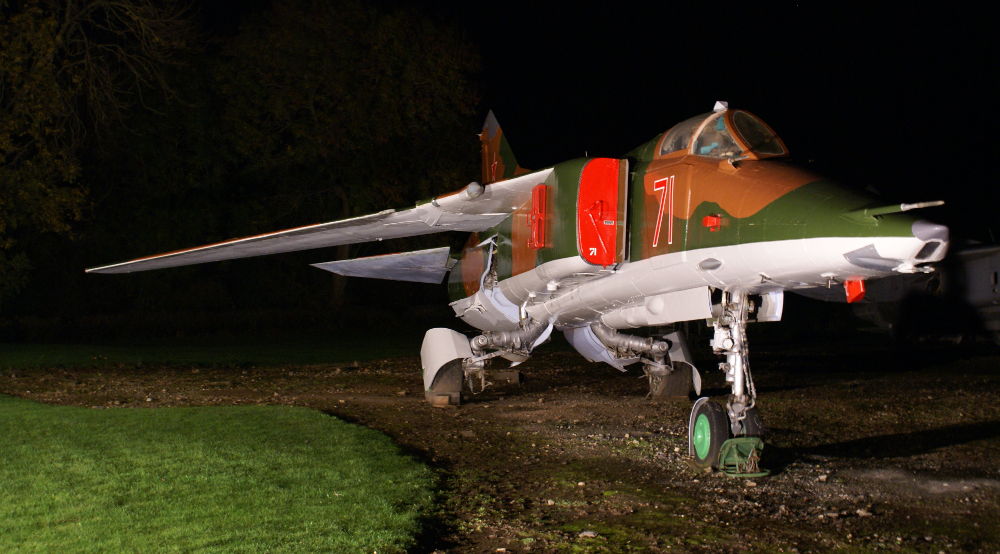
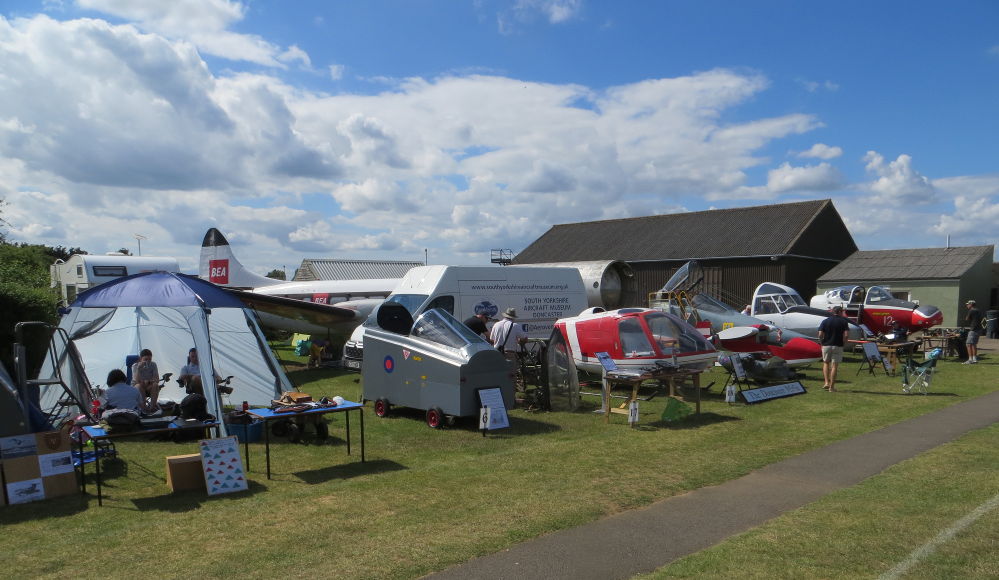
Arrangements for the 2023 Cockpit-Fest are well advanced at Newark Air Museum’s site in eastern Nottinghamshire; close to the border with Lincolnshire. The museum is a registered charity located on part of the former site of RAF Winthorpe; this year’s Cockpit-Fest is once again taking place in its traditional June time-slot; on Saturday 24th & Sunday 25th June, 2023.

This will be the twenty second (22nd) time that like-minded enthusiasts have displayed their aircraft cockpit sections at the museum. Cockpit-Fest has become a fixture on the aviation calendar and each year attracts many visiting cockpits and associated displays. Cockpit-Fest allows the owners the chance to display their prized exhibits to their fellow enthusiasts and the general public.

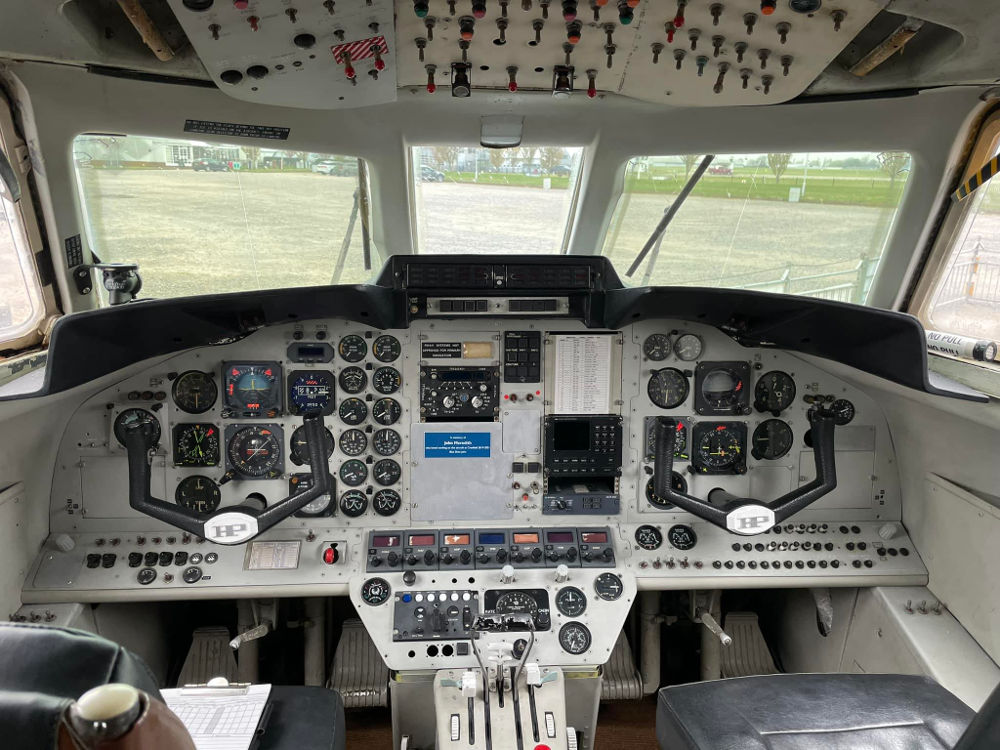
At this year’s event a diverse range of aviation will be represented; this incorporates a range of military jet cockpits and civilian types; plus, several of the on-loan cockpits that resident at the museum; some cockpits will be displayed at the event for the very first time.

In addition, a diverse range of visiting cockpit related exhibits are also expected to be displayed around the 16-acre site; alongside an Aeroboot / Aerojumble aviation and avionics sale. Here enthusiasts and the public can search out those aviation artefacts, books and models.

The event is supported by a range of organisations and individuals; with the visitors being encouraged to have a say in deciding, which is the best cockpit by voting on their favourite display and from these results, prizes are awarded.

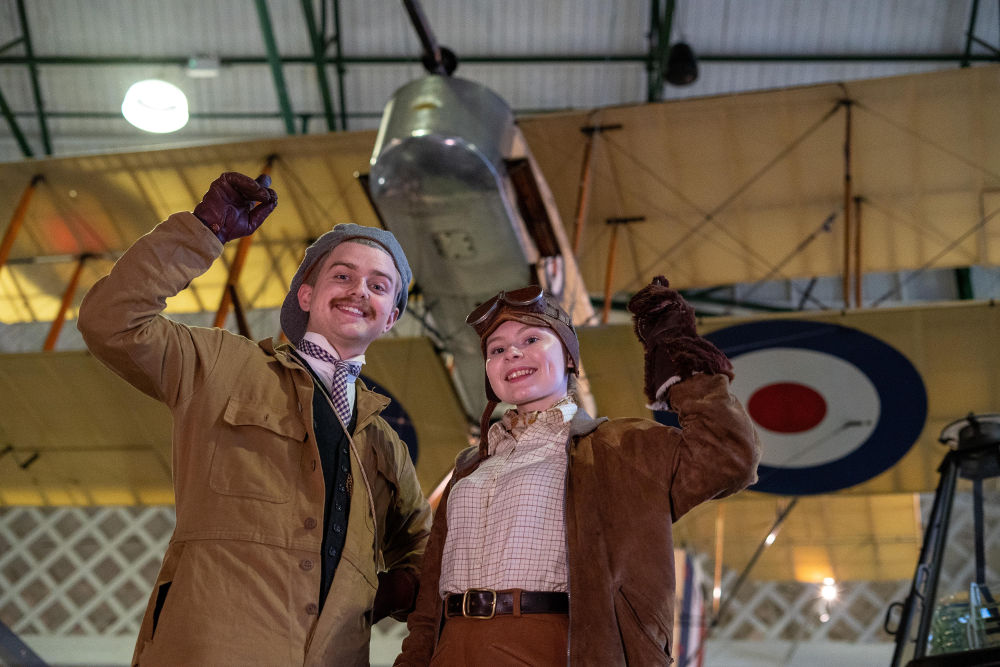
Cockpit-Fest also attracts other visiting displays like local history groups; re-enactors; and even more aviation related displays such as clothing and historical artefacts.

Full details about the events and a full list of visiting cockpits and displays can be found on the Museum Events page of the museum website at www.newarkairmuseum.org

Strike Hard, Strike Sure: Bomber Command 1939–1945

Bomber Command Exhibition - London

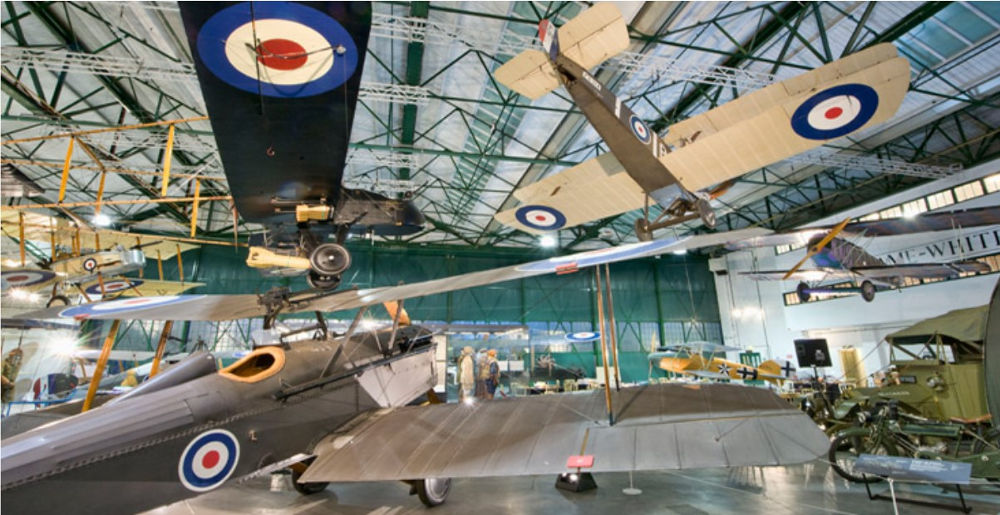
Marking the 80th anniversary of the famous ‘Dam Busters’ raid, the Royal Air Force Museum London has unveiled a new permanent exhibition dedicated to Bomber Command.

Around 125,000 aircrew from 60 nations served in Bomber Command during the Second World War, volunteering from Britain, the Commonwealth and Dominions, occupied and neutral countries as well as German nationals fleeing persecution. Their average age was just 23.

Our exhibition shares the Bomber Command story through the lens of the personal experiences of those who served. They were, in their eyes, just ordinary people from many different countries and backgrounds. In history’s, they gave extraordinary service. Men and women from across the world, on the ground and in the air, played a part.

Throughout the exhibition, silhouettes depict the stories of individuals who played crucial roles, like that of Barnes Wallis the genius inventor behind the ‘bouncing bomb’, used in the famous Dams raid, and the Vickers Wellington bomber; Wing Commander Raymond Hilton who was the first operational captain of Lancaster ‘S for Sugar’, currently on display at the Museum; and Corporal Lilian Bader who was one of the first Black women to join the British armed forces.

Also on display are other Bomber Command aircraft such as the Handley Page Halifax and the tail section of the Short Stirling Mk III surrounded by new hi-tech interpretation.

New showcases have enabled us to exhibit personal objects taken from storage such as the fire-damaged flying helmet, jacket and goggles belonging to Sgt John Hannah. This brave wireless op/air gunner was awarded the VC by extinguishing an on-board fire with just his bare hands – thereby saving his aircraft and crew against all odds.

On display are some of the innovative technical developments that supported Bomber Command in the delivery of their operations. Visitors can see the replica 9,250lb cylindrical Anti-Dam Mine (also known as the bouncing bomb); the 22,000lb Grand Slam Bomb; and a Rose Brothers Type R gun turret.

The exhibition’s themes cover training, tech and tactics, precision raids, and experience and loss. Context is provided by a timeline detailing key events in Bomber Command’s history and aircraft development while new exhibition features including augmented reality will help aid visitor understanding.

‘Strike Hard, Strike Sure: Bomber Command 1939–1945’ is now open.

The Museum is open daily from 10.00am and entry is free. Pre-book your arrival time at www.rafmuseum.org/london

New Bomber Command Exhibition opens at RAF Museum Midlands

RAF Museum Wellington Bomber

Marking the 80th anniversary of the famous ‘Dambusters’ raid, a new permanent exhibition, ‘Strike Hard, Strike Sure: Bomber Command 1939–1945’ is now open at the Royal Air Force Museum Midlands.

Featuring the newly restored Vickers Wellington bomber, Guy Gibson’s Victoria Cross, and new arrival the Bristol Blenheim, discover how the RAF’s Bomber Command took the war to the enemy. The new interactive displays tell the wider Bomber Command story, exploring stories of the crew, technology and raids that were crucial to Allied victory.

At the centre of the new exhibition is the Wellington B Mk X bomber, one of only two remaining examples, and on display for the first time in the Midlands after more than a decade of conservation work. The Wellington was widely used as a night bomber in the early years of the Second World War, and by 1942 Wellingtons were the most numerous aircraft in Bomber Command. They began to be replaced by more capable four-engined heavy bombers such as Halifaxes and Lancasters but continued to operate with Bomber Command as a training aircraft. The Wellington’s rear turret is displayed alongside the aircraft, allowing visitors to peer inside the fuselage and view its famous geodetic structure designed by Barnes Wallis. Interactive displays around the Wellington focus on the roles of the five-strong crew, their extraordinary service and the close bonds they developed when flying together.

On display for the first time in the Midlands is the Bristol Blenheim Mk IV, a light bomber and night fighter. Although Blenheims were faster than other RAF fighters when they entered service in 1937, by the start of the war they proved to be too slow and lightly armed to defend themselves adequately. As a result, they suffered high casualty rates. With no surviving RAF Blenheims, this Royal Canadian Air Force example represents aircraft of No.139 Squadron, the first RAF squadron to undertake an operational mission in the Second World War.

Personal artefacts from the Museum’s collection are now on display, many for the first time, sharing the stories of RAF aircrew and groundcrew, including Wing Commander Guy Gibson’s Victoria Cross and medal bar. Gibson received the medal for his leadership of No. 617 Squadron, The Dambusters, on their first operation over Germany, the daring Dams raid of 17 May 1943. He completed an astonishing 177 operations and was awarded the Victoria Cross as recognition of the leadership, determination and valour he demonstrated throughout his career. Other artefacts featuring in the new display include a collection of aircraft nose art, flying suits, aircrew lucky charms, uniforms and caps, log books, and post-raid reconnaissance photographs. Some of the innovative technical developments which supported Bomber Command to deliver their mission are represented through items including Barnes Wallis’s bouncing bomb test models and sketch.

People stories are at the heart of the Bomber Command storytelling. Men and women from across the world, on the ground and in the air, played a part. Throughout the exhibition, silhouettes depict the stories of individuals who played crucial roles, like that of Squadron Leader Ulric Cross DSO DFC. Born in Trinidad, Ulric Cross enlisted in the RAF in 1941 and trained as a navigator. He flew Pathfinder sorties on Mosquitos and completed 80 operations, his proficiency and skill leading to his award of both the Distinguished Service Order and the Distinguished Flying Cross. Of around 6,000 volunteers who came to the UK from the Caribbean to support the war effort, 450 were aircrew and 360 of these flew with Bomber Command.

Interactive elements of the display will encourage participation from visitors of all ages. Learn about ordnance, navigation, protecting the bombers, pathfinders, and an unpredictable enemy – the weather! A timeline shows the key activities of Bomber Command during the Second World War and illustrates how bomber aircraft and tactics changed. View animations, video footage and personal accounts in a series of videos. Have your say and contribute to the debate about the RAF’s contribution on the wall of reflection.

Other aircraft on display as part of the Bomber Command exhibition include; the de Havilland Mosquito, Junkers Ju 88, Messerschmitt Me 410, Focke-Wulf Fw 190, Messerschmitt Me 262, a section of a Short Stirling Mk III and a Tiger Moth in which many bomber pilots received their first flying experience. Interactive display panels allow visitors to delve deeper into the role of each aircraft including a view inside the cockpit. Displayed alongside the aircraft is a V-1 ‘doodlebug’ flying bomb and catapult ramp, and a V-2 supersonic ballistic missile.

The ‘Strike Hard, Strike Sure: Bomber Command 1939–1945’ exhibition is now open. The Museum is open daily from 10am and entry is free. Pre-book your arrival time online at www.rafmuseum.org/midlands.

May Update at Newark Air Museum

Sea Vixen XJ560

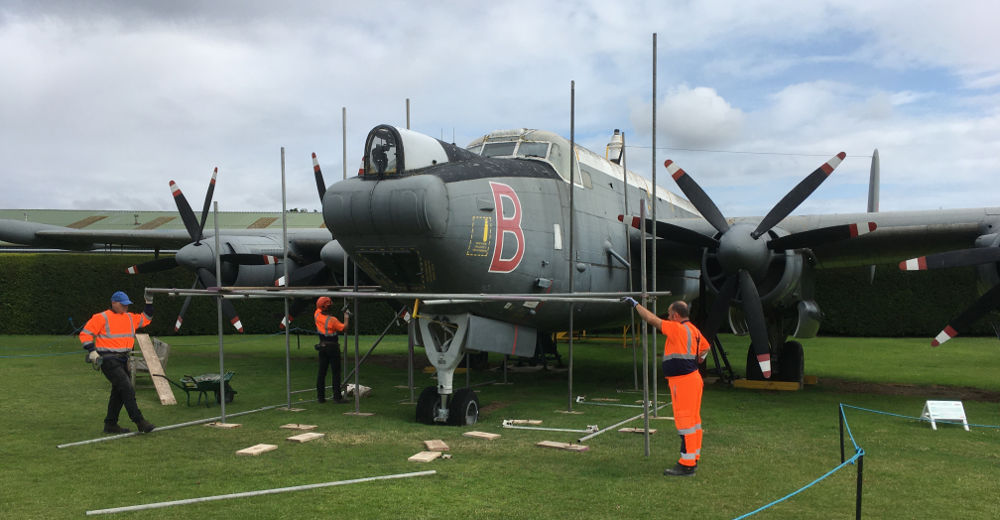
At Newark Air Museum along with the restoration work being undertaken on Fairey Gannet XP226; further museum volunteers have recently started work on a partial repaint of de Havilland Sea Vixen XJ560.

As with the Gannet, this work had been planned for 2022, but it was delayed by the major repaint work required on Vulcan XM594. In recent weeks some surface preparations work has been carried out on the upper surfaces of the Sea Vixen and in recent days the first primer has now been applied to the nose.

www.newarkairmuseum.org

RAF Museum saves Scarf VC for the nation

Scarfs medal bar

The Royal Air Force Museum is proud to announce the success of our campaign to keep the Arthur Scarf Victoria Cross and medal bar in the UK and on display at our London site.

The Victoria Cross awarded to Squadron Leader Arthur Scarf for his bravery during the Second World War is a unique and rare artefact which shares the story of the RAF in the Far East.

This important part of history was under risk of being lost to the nation after being sold at auction to a private overseas buyer. With the help of the National Heritage Memorial Fund, generous donations from the public and other charities, and coverage in the press, the RAF Museum has now matched the £660k winning auction bid in order to keep the medals in the UK.

Maggie Appleton, RAF Museum CEO, said:
‘A heartfelt thank you to every single person who supported us. Whether you donated or shared our campaign with friends and family, we couldn’t have done this without you. To have raised £660,000 in three months is simply amazing. Special thanks to the National Heritage Memorial Fund for their major donation of £390k, and to our good friends at the RAFHS and the Bomber Command Association. We will be displaying Arthur’s Medal at our London site this summer and will also make short tour of our Midlands site. So come and visit and discover more about this remarkable story.’

Eilish McGuinness, Chief Executive of the National Heritage Memorial Fund, said:
‘I am delighted that the RAF Museum’s campaign to acquire Arthur Scarf’s Victoria Cross has been successful and that the National Heritage Memorial Fund has been able to support this important acquisition with a grant of £390,000. The National Heritage Memorial Fund works to safeguard the UK’s most significant heritage and form a lasting memorial to those who gave their lives. This rare and unusual medal, which will now form part of the national collection, perfectly encapsulates what NHMF stands for’

www.rafmuseum.org

Rare example of Second World War Bomber unveiled after decade of conservation

RAF Museum Wellington

A Second World War Vickers Wellington bomber has been restored to its former glory after more than a decade of conservation at the Royal Air Force Museum Midlands.

The Wellington, one of only two remaining, has moved from the Conservation Centre into the public display hangar and will be the centre piece of a new Bomber Command exhibition opening in May.

The fuselage and inner wings section can now be viewed by visitors, while the remaining work of attaching the huge 31ft outer wings, engines, propellers and front turret to the aircraft will be carried out over the next few weeks. Members of the public will be able to view some of the final steps towards its completion as the Museum’s Conservation team work within the hangar.

The Wellington was widely used as a night bomber in the early years of the Second World War, and famous for its geodetic fuselage structure designed by Barnes Wallis. By 1942 Wellingtons were the most numerous aircraft in Bomber Command. They began to be replaced by more capable four-engined heavy bombers such as Halifaxes and Lancasters. Wellingtons continued to operate with Bomber Command as a training aircraft and served in North Africa, Italy, the Far East and Coastal Command.

The Museum’s example was constructed in 1944 and served with No. 1 Air Navigation Training School between 1949 and 1953. Although not operational in the Second World War, it represents the role played in the bombing campaign against Germany. This much-loved aircraft is one of only two Wellingtons to survive into the present day and the only one complete with its fabric outer skin. The aircraft is now on public display at the RAF Museum Midlands for the first time.

After almost 40 years on display at the Museum’s site in London, the aircraft was transported by road to the Museum’s Conservation Centre in the Midlands in July 2010, for work treating corrosion to its structure and a complete replacement of its fragile Irish linen outer skin.

The extensive restoration of the Wellington is one of the largest aircraft projects to be undertaken by the Museum’s Conservation Centre team. Work has been carried out by Technicians, Apprentices and a team of Volunteers, including one Volunteer who previously worked on Wellingtons during his RAF instructional airframes training more than half a century ago. During the conservation process the Wellington was regularly visited by the late Mary Stopes-Roe, daughter of the aircraft designer Barnes Wallis.

The final stages of the project will be completed within the next few weeks, in time for the Bomber Command exhibition opening on 16 May.

The Museum is open daily from 10am and admission is free. Pre-book your arrival time online at www.rafmuseum.org/midlands.

Model masterpieces on show at the RAF Museum

RAF Museum Model Mania

Date: 30 April 2023 / Time: 10.00am – 5.00pm / Cost: Free entry
Airfix Make and Take: £5.00 per Airfix kit
Weathering Workshop: £40.00 per person

Discover the exciting world of model aircraft at the Royal Air Force Museum Midlands’s Model Mania event on Sunday 30 April.

Explore the Museum hangars where you will find a collection of large models displayed under the wings of the real aircraft. Airfix model making activities are guaranteed to get the whole family gluing, building and painting together in this nostalgic hands-on hobby. Advanced modellers who want to fine tune their skills can pick up tips from an expert in an exclusive workshop. Or browse the trade stalls where you can pick up all the model kits and equipment you could ever wish for and continue the modelling fun at home!

The Museum has partnered with the Large Model Association to showcase almost 100 large model aircraft, many alongside their full-size counterparts. Some of these ‘not so mini’ models have a wingspan of more than 20ft including a replica Vulcan. Displays include large-scale model versions of Spitfires, a Wellington, Lancaster, and a host of aircraft drawn from the history of aviation. From high-tech jets to First World War bi planes, all models have been created and engineered with precision to mirror the originals.

The modelling fun will continue in the ‘Airfix Make and Take’ area – where better to get into Airfix kits for the first time, than under the wings of iconic aircraft! This family friendly model making activity will offer children aged 8+ the opportunity to build and paint their own aircraft model to take home. You don’t have to be a skilled modeller to take part as helpers are there to lend a hand. Participation in the activity is £5.00 per Airfix kit.

An introduction to scale model weathering workshop is perfect for modellers who wanted to develop their skills further, by learning how to weather and age their models, giving them a used look. During this hands-on four-hour workshop attendees will learn the fundamentals of weathering techniques in a step-by-step guide, to produce authentic and realistic results. The workshop begins at 11.00am and will cover a variety of techniques from general wear and tear effects to creating and applying rust and realistic colouring. Tickets cost £40.00 per person and places are limited to 15 people.

If the Model Mania activities inspire you to take up modelling, or if you’re a pro on the lookout for a rare model edition, several model traders will be selling everything from kits and paints to magazines.

If you thought getting into modelling was fun, how about getting into a real cockpit! In addition to the Model Mania activities, the Museum will be opening the Hunter and Phantom cockpits giving visitors the opportunity to sit in the pilot seat. There’s no need to pre-book, but youngsters must be a minimum of one metre tall to sit inside the cockpit and be accompanied by an adult.

For further information on Model Mania and to pre-book your arrival time visit www.rafmuseum.org/midlands. Entry to the Museum and the large model aircraft display is free, charges apply for some activities.

April Update at Newark Air Museum

Newark Air Museum Gannett XP226

Amongst the diverse efforts to prepare for the museum’s 50th Anniversary celebrations, the Restoration Manager at Newark Air Museum has signed off to start on the restoration work on Fairey Gannet XP226.

This much need work had been planned for 2022, but it was delayed by the major repaint work required on Vulcan XM594. In recent weeks some surface preparations work has been carried out on the Gannet, and with the warming temperatures in recent days the first primer has now been applied to the fuselage spine.

www.newarkairmuseum.org

Newark give early boost to competition prize pot

Vulcan at Newark

Newark Air Museum have confirmed their regular contribution of a pair of Family Entry tickets for the prize pot in the Airscene 2024 Airshow Calendar Competition.

Newark’s first airframe was secured in 1963 thereafter the museum was formally incorporated as a Limited Company no.930888 and registered as charity no.256434 in April and September 1968 respectively.

After a number of years spent preparing its permanent site on the Winthorpe Showground a former World War II training base, the museum was officially opened to the public on Saturday 14th April 1973.

At Easter 1990 the museum opened its first Aircraft Display Hall to the public it provided 1,860 square metres of space. In 1994 the trustees instigated negotiations to purchase farmland on the museum’s southern boundary with the aim of guaranteeing the museum’s long-term future. Formal searches and formalities were eventually completed, allowing the purchase of 5.01 hectares of farmland to be completed prior to Christmas 1995.

In November 2004 the Museum opened its second Aircraft Display Hall to the public on completion of an extremely successful project in conjunction with the Heritage Lottery Fund.We continue to evolve and have achieved Accredited Museum status and the VAQAS quality standard.

www.newarkairmuseum.org